

 Phoenix 24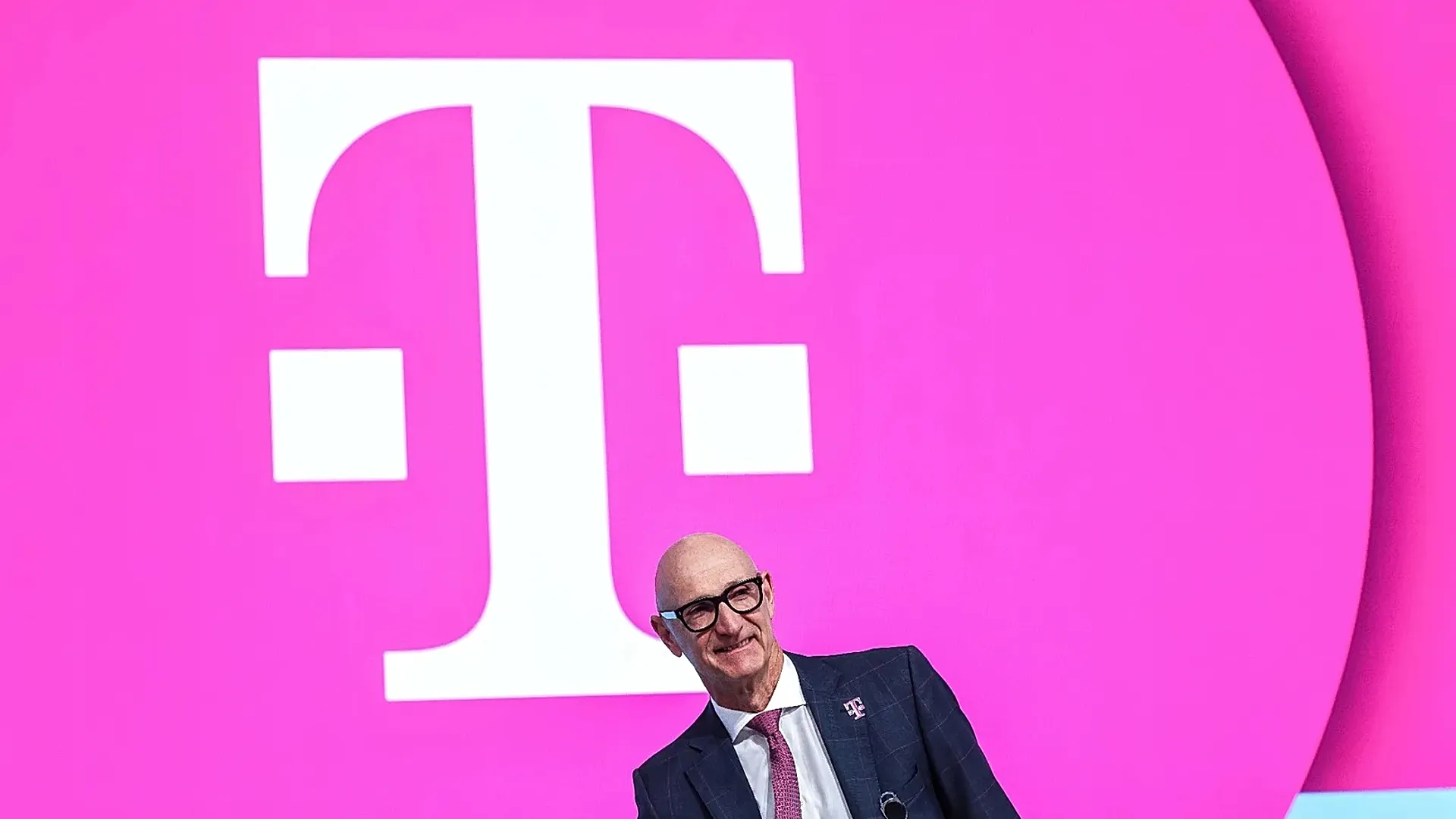
A telecom deal becomes strategic identity.
Bonn, April 2026. Deutsche Telekom is studying a full integration with T-Mobile US in what could become the largest corporate merger ever recorded. The German group already owns slightly more than 53% of its American subsidiary, but a complete merger would transform that relationship into a single transatlantic telecom giant. What appears to be a corporate transaction is, in reality, a test of Europe’s capacity to keep strategic companies anchored while their real value migrates abroad.
The proposed structure would reportedly involve a new company offering shares for both firms, creating an entity listed across the United States and Europe. The resulting group could reach a valuation close to 400 billion dollars, surpassing the historic Vodafone-Mannesmann deal that long stood as the benchmark for global mergers. That scale would not only redraw the telecom map; it would reposition Deutsche Telekom as a company whose center of gravity is increasingly American.
The political dilemma is immediate for Berlin. The German state and public development bank KfW together hold around 28% of Deutsche Telekom, making the government a decisive actor in any transaction. A full merger could reduce Berlin’s stake to roughly 17% or 18%, below the informal threshold historically viewed as necessary for influence over strategic assets. In a sector tied to data, infrastructure and national security, that dilution cannot be treated as a routine financial consequence.
T-Mobile US is the paradox at the heart of the deal. Once a troubled American bet, it has become the engine behind most of Deutsche Telekom’s market value and one of the strongest mobile operators in the United States. More than 70% of the German group’s stock-market capitalization is already linked to that stake. A full merger would not create the reality; it would formalize what markets have already priced.
Regulatory resistance could be substantial. U.S. authorities would examine foreign control, competition and security implications, while German approval would depend on whether Berlin accepts a structure that may be headquartered or organized outside Germany. Shareholder approval thresholds would also complicate execution. The talks remain early, but the strategic signal is unmistakable: Europe’s industrial champions are increasingly forced to choose between national identity and global scale.
Deutsche Telekom may be preparing to bring T-Mobile fully home, but the deeper question is where “home” would be after such a merger. If the company’s value, growth and political scrutiny are centered in the United States, Germany’s most strategic telecom group risks becoming European in origin and transatlantic in command. That is the real operation beneath the deal. It is not only about buying the rest of T-Mobile; it is about deciding who governs the infrastructure giants of the next decade.
Phoenix24: inteligencia para audiencias libres. / Phoenix24: intelligence for free audiences.