

 Phoenix 24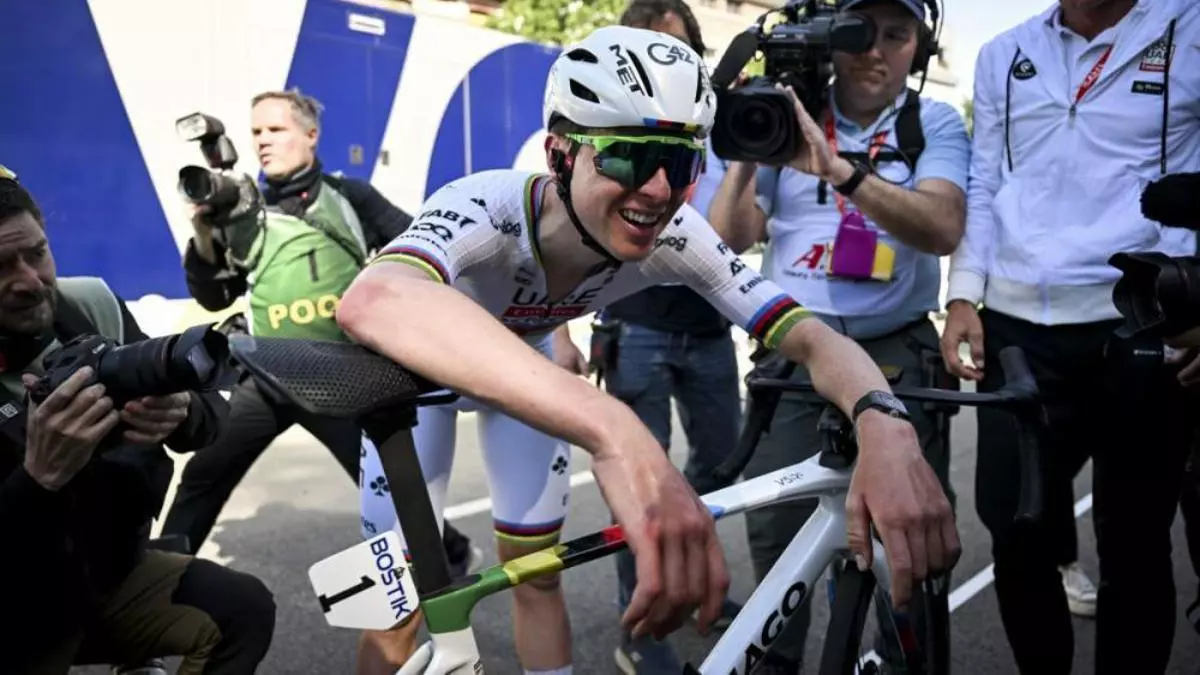
The Ardennes will judge every ambition.
Liège, April 2026. Liège-Bastogne-Liège returns with the same brutal truth that has defined cycling’s oldest Monument for more than a century: the race is not decided only by strength, but by where that strength is spent. La Redoute and Roche-aux-Faucons once again stand as the decisive ascents in a route designed to punish hesitation, isolate leaders and expose every tactical weakness before the final return to Liège. In this race, prestige is not inherited; it is earned through suffering, timing and the ability to attack when the road leaves no room for disguise.
The 2026 edition will stretch across more than 250 kilometers of Ardennes terrain, with a sequence of climbs that gradually transforms endurance into selection. The early hours may allow a breakaway to breathe, but the race’s real language begins much later, when fatigue has already entered the legs and teams can no longer hide behind control. That is when La Redoute and Roche-aux-Faucons stop being names on a profile and become instruments of elimination.
La Redoute remains the symbolic and strategic center of the race. Its distance from the finish makes it dangerous because an attack there requires conviction, not improvisation. A rider who moves on La Redoute is not simply trying to gain meters; he is declaring that the rest of the race can be controlled from the front, through pressure rather than calculation.
That is why Tadej Pogacar’s relationship with La Redoute matters so much. In recent editions, the Slovenian has turned that climb into a launchpad for dominance, attacking with the kind of clarity that forces the entire peloton into immediate crisis. Rivals know what may happen, teams prepare for it, and yet the climb still creates the same problem: when the strongest rider attacks at the hardest moment, strategy becomes survival.
Roche-aux-Faucons offers a different kind of cruelty. It comes closer to the finish, when the race is already broken and the remaining contenders are forced to decide whether they still have one violent effort left. Its gradients may not tell the whole story, because the climb arrives after hours of accumulated damage. By then, the question is not who can climb, but who can still accelerate.
Between La Redoute and Roche-aux-Faucons lies the tactical corridor where Liège often becomes irreversible. A solo attacker can consolidate advantage, a small group can form unstable alliances, and teams without numbers lose their capacity to shape the race. The decisive tension is not only in the climbs themselves, but in the exposed kilometers that follow them, where cooperation, fear and exhaustion begin to negotiate with one another.
Pogacar enters the conversation as the unavoidable reference point. His ability to convert long-range attacks into controlled victories has changed how rivals must read this Monument. Waiting too long can be fatal, but attacking too early against him can also become an act of self-destruction. That dilemma is exactly what makes Liège so severe: every option carries risk.
Remco Evenepoel represents the most compelling counterweight. His own history in Liège gives him legitimacy, and his capacity for sustained power makes him dangerous on terrain where hesitation is punished. If he reaches the decisive climbs with enough support and freshness, the race could shift from Pogacar’s preferred script into a duel of endurance, nerve and timing.
Yet the race is not only about the two names most associated with recent dominance. Liège rewards riders who can survive chaos and turn marginal openings into decisive moves. Tom Pidcock, Paul Seixas and other explosive climbers or puncheurs may find opportunity if the favorites mark each other too tightly. In a Monument this long, a secondary move can become the winning move if the strongest teams misread the emotional temperature of the race.
The role of teams will be decisive before the final fireworks. UAE Team Emirates will likely try to harden the race before La Redoute, stripping rivals of domestiques and forcing leaders into individual combat. Soudal Quick-Step, depending on its configuration and race condition, must decide whether to protect Evenepoel for a late strike or disrupt the rhythm earlier. Every squad with ambition faces the same question: control the race, or destabilize it before Pogacar does.
Weather may also intervene, as it often does in the Ardennes. Rain, cold or shifting wind can turn descents and narrow roads into additional selection points. Liège is rarely a clean mathematical contest; it is a race where terrain, climate and fatigue collaborate against certainty. A strong rider can lose here not because he lacks power, but because he spends it five minutes too early.
The modern version of the race has become more aggressive since the finish returned to central Liège. Without the old uphill finale in Ans, the decisive attacks have moved earlier, giving La Redoute and Roche-aux-Faucons greater strategic weight. The course now invites courage before the final kilometers, rewarding riders willing to break the structure of the peloton rather than wait for a narrow finish.
That change has made the Monument more cinematic but also more demanding. The winner must not only climb well; he must read the race as an unfolding system of pressure. He must know when domestiques are disappearing, when rivals are bluffing, when a group is losing commitment, and when one acceleration can turn fatigue into panic.
Liège-Bastogne-Liège is often called La Doyenne, but the nickname can make the race sound more ceremonial than it really is. This is not an old race preserved as tradition; it is a modern stress test disguised as heritage. Every generation must solve it again, because the climbs remain the same while the tactics, teams and physical limits keep evolving.
The 2026 edition will likely be decided in the old geography of suffering: La Redoute to break the race, Roche-aux-Faucons to confirm it, and the final run into Liège to expose who still has authority left in the body. Whether the winner arrives alone, in a small group or through a late counterattack, the pattern will be familiar. The Ardennes will reduce the field, then ask one rider to prove he deserves the Monument.
That is the essence of Liège. It does not hand victory to the strongest rider in theory, but to the strongest rider at the precise moment when theory collapses. The climbs do not simply decide the race; they interrogate it. And by the time the road returns to Liège, the answer will already have been written on La Redoute and Roche-aux-Faucons.
Detrás de cada dato, hay una intención. Detrás de cada silencio, una estructura.