

 Phoenix 24
Ambition becomes real when confidence breaks first.
Los Angeles, April 2026
Joel Kinnaman’s recollection of arriving in Hollywood cuts against one of the industry’s favorite myths. He did not describe a triumphant transition from European success to American opportunity. He described months without auditions, shrinking confidence, and the unsettling realization that talent in one system does not automatically translate into visibility in another. That detail matters because it restores something often erased from celebrity careers. The real beginning is not recognition. It is disorientation.
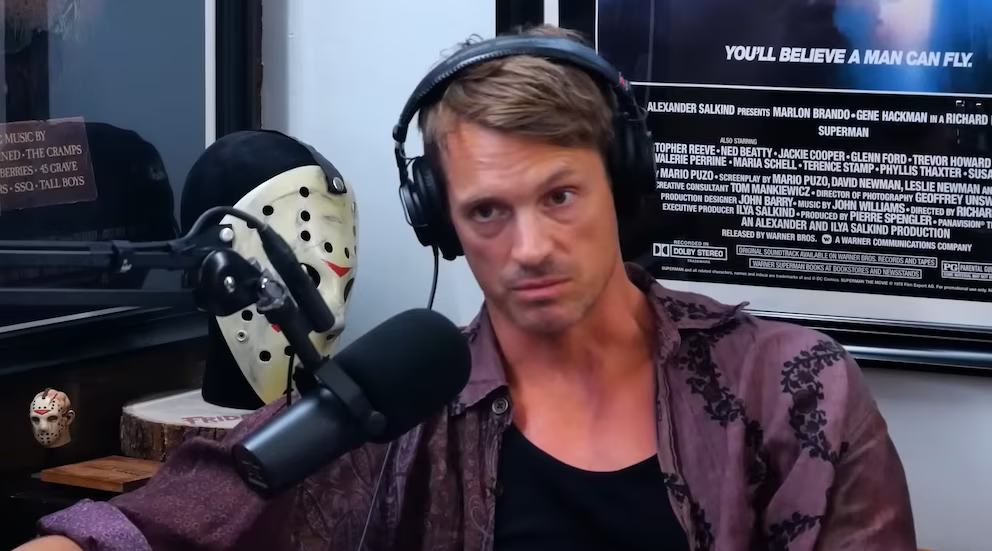
What makes his account resonant is the gap between expectation and structure. Kinnaman arrived in the United States believing he had prepared well and understood the terrain ahead of him. Instead, he entered a machinery that did not immediately know what to do with him. Hollywood often presents itself as a meritocratic space that eventually finds the right people. In practice, it is also a culture of timing, type, access, and prolonged uncertainty. An actor can be ready and still remain unseen.
That tension becomes even sharper for performers moving between national industries. Kinnaman’s shift from Sweden to the American studio system was not simply geographic. It was a migration between different codes of visibility, different assumptions about appearance, different professional rhythms, and a more punishing scale of competition. The actor’s observation that Hollywood reads even a smile as a marker of status says a great deal about the environment he encountered. It suggests a culture in which performance begins before the camera does.

His comments also reveal something harder about large scale success. Public memory often flattens an actor’s career into a line of recognizable titles, as if each major role naturally confirmed the one before it. Kinnaman’s account interrupts that illusion. Before the big franchise credits and mainstream visibility, there was delay, doubt, and the humiliating silence of not being called in. That silence matters because it often does more to shape an artist than early praise. It tests whether discipline survives when affirmation disappears.
There is also a deeper emotional undercurrent in the story. Kinnaman did not frame the period only as a professional obstacle, but as part of a broader confrontation with insecurity, pressure, and self perception. That connection is important. Careers in film are often discussed as if resilience were only a matter of work ethic, but prolonged uncertainty tends to awaken older vulnerabilities rather than remain neatly compartmentalized. Failure to secure auditions is never just logistical. For many actors, it quickly becomes existential.
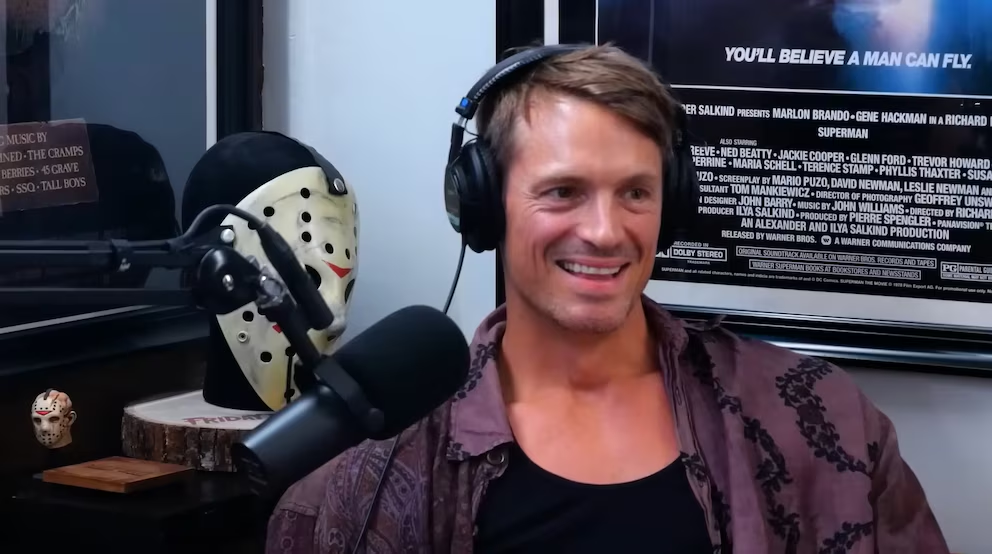
That is why his broader reflections on mental health, anger, therapy, meditation, and self regulation belong to the same narrative rather than to a separate one. The Hollywood struggle is not merely an anecdote about breaking into the industry. It forms part of a larger story about what kind of interior structure a person needs in order to survive a profession organized around judgment, waiting, and symbolic exposure. Kinnaman’s discipline around food, meditation, and self observation is not decorative lifestyle language in that context. It sounds more like survival architecture.

There is something increasingly persuasive about actors speaking this way. Contemporary audiences are less interested in pristine success stories than in the unstable machinery behind them. They understand, perhaps more than before, that fame often emerges from periods of invisibility rather than from seamless ascent. Kinnaman’s remarks fit that shift. He does not narrate Hollywood as a dream factory that rewarded persistence in a simple moral sequence. He describes a system that reduced his certainty before giving him room to build a career inside it.

The larger pattern is familiar, even if the details vary from one actor to another. Hollywood still sells arrival, but most real careers begin in erosion. Confidence fades, auditions do not come, identity bends under waiting, and the person is forced to decide whether the work still matters without evidence that the system agrees. Kinnaman’s account stays with the listener because it restores that neglected part of the story. Before the role, before the poster, before the franchise, there is often a period in which nothing happens at all, except the slow test of whether a person can remain intact while the machine refuses to notice.
Phoenix24: clarity in the grey zone. / Phoenix24: claridad en la zona gris.