

 Phoenix 24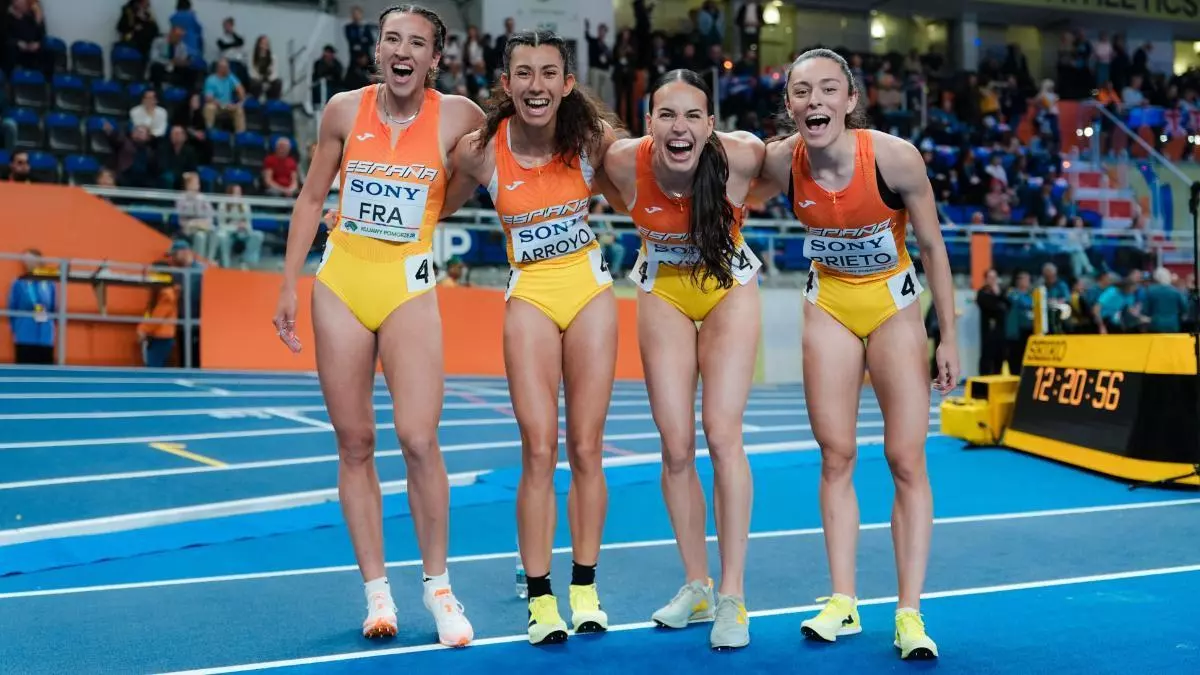
Joy arrives when history starts moving again.
Nanjing, March 2026. Spain’s women’s sprint relay has re-entered a space that had seemed distant for decades, and the achievement carries more weight than a simple place in a final. The qualification of the so-called Spanish Bubbles for a major relay final signals not only a festive moment for the team, but the return of a national sprint project to a level of relevance that had long felt structurally out of reach. In relays, joy is never just emotional. It is also technical proof that a country has finally aligned talent, timing and confidence.
What gives the moment its real force is the historical distance it appears to close. When a team returns to a major final after many years, the result stops being routine athletics news and becomes a marker of regeneration. It suggests that this is not merely a good generation having a fortunate day, but a program beginning to produce collective outcomes where before there had mostly been isolated names and scattered promise. Relay success is unforgiving in that sense. It reveals whether a nation can turn individual speed into coordinated performance under pressure.
That is why the celebratory tone around the team matters. The nickname, the atmosphere and the sense of internal chemistry all point to something larger than stopwatch efficiency. Modern relays are not won by speed alone. They depend on trust, rhythm and a collective ease that allows athletes to execute in seconds what has taken years to build. A team that looks united and visibly confident often carries an advantage beyond raw numbers, because baton exchange is as much about certainty as it is about velocity.
There is also symbolic value in the image. Spanish athletics has often been associated more strongly with endurance, race walking and middle-distance tradition than with sprint relays as a space of recurring power. Moments like this challenge that hierarchy. They expand the national imagination of what Spanish track and field can produce and where new prestige may emerge. That shift matters because success in events once seen as peripheral can redraw institutional attention, media focus and future investment.
The deeper reading, then, is not only that Spain has reached a relay final. It is that the team seems to have done so with the emotional charge of a group that knows it is carrying more than a result. It is carrying a narrative of return. In elite sport, that kind of breakthrough can be fleeting if it is not consolidated, but it can also mark the beginning of a new standard. The difference lies in whether celebration becomes habit or remains exceptional.
For now, the scene belongs to joy, and rightly so. But the real significance of the Spanish Bubbles is not that they have given athletics a charming story. It is that they may have reopened a competitive corridor Spain had not seriously inhabited in a very long time. And when history starts moving again in sport, the party is only the first sign.
La narrativa también es poder. Narrative is power too.