

 Phoenix 24
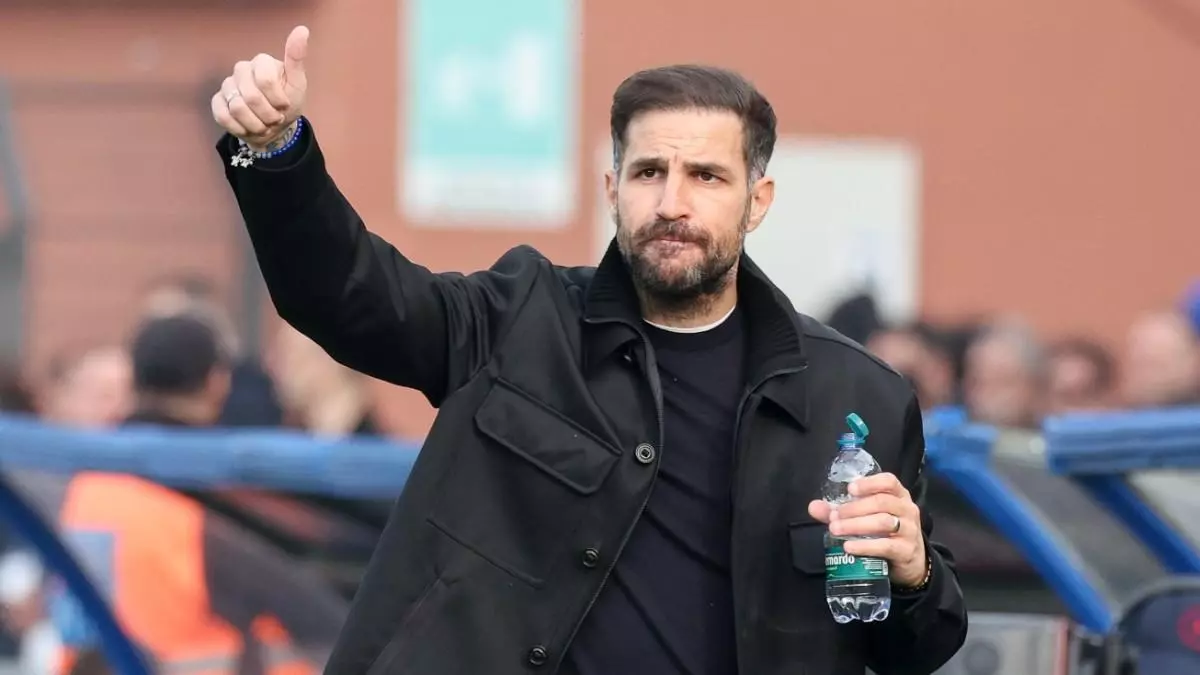
Greatness in football depends on the path that shapes you.
London, March 2026.
Former Spanish international Cesc Fàbregas has revived one of football’s most enduring debates by reflecting on the legendary coaches who shaped his career. Having worked under figures such as Pep Guardiola, Arsène Wenger and Vicente del Bosque, the former midfielder offered a perspective that goes beyond trophies and statistics, highlighting how each manager represented a distinct philosophy of leadership and football culture.
Few players have experienced such a diverse range of elite coaching environments. Fàbregas began his professional rise at Arsenal under Wenger before later playing for Barcelona and Chelsea, and representing Spain during one of the most dominant periods in international football. Those experiences exposed him to different tactical schools and management styles that defined modern European football during the past two decades.
When discussing Guardiola, Fàbregas emphasized the transformative nature of the Catalan coach’s ideas. Guardiola is widely credited with refining positional play and elevating possession football into a sophisticated tactical system capable of dominating matches through control of space and tempo. His work at Barcelona not only produced extraordinary success but also reshaped how clubs across Europe conceptualize attacking football.
Under Guardiola, players were expected to understand the geometry of the pitch in extraordinary detail. Every movement without the ball carried strategic importance, and positional discipline was considered essential to maintaining the team’s collective structure. According to many players who worked with him, Guardiola’s approach demanded constant intellectual engagement with the game, turning football into a dynamic tactical puzzle.
Yet Fàbregas also highlighted that greatness in management cannot be measured solely through tactical brilliance. In his view, Arsène Wenger stands out as a coach who profoundly influenced the development of young players and the institutional culture of modern football clubs. During Fàbregas’s early years in England, Wenger entrusted him with responsibility at an age when most players were still waiting for their first opportunity.
The French manager built his reputation not only through results but through a long term vision of football development. Wenger introduced innovations in sports science, nutrition and youth integration that reshaped the structure of professional clubs in the Premier League. For players like Fàbregas, that environment allowed talent to mature gradually while maintaining competitive ambition.
Wenger’s influence extended beyond tactics into the broader culture of the club. Arsenal under his leadership became known for a style of football that combined technical elegance with disciplined organization. For a young midfielder arriving from Spain, the opportunity to develop within such a framework proved decisive in shaping both his career and his understanding of the game.
Vicente del Bosque, meanwhile, represents a different model of leadership within Fàbregas’s experience. As the coach of Spain’s national team during its golden era, Del Bosque guided the country to the 2010 World Cup and the 2012 European Championship. His management style relied less on tactical experimentation and more on emotional intelligence and group cohesion.
Spain’s national team during that period included players from rival clubs such as Barcelona and Real Madrid, institutions whose competition often generated intense political and sporting tensions. Del Bosque’s calm demeanor and diplomatic leadership allowed him to maintain unity within a squad filled with strong personalities and competitive egos.
Fàbregas has frequently noted that Del Bosque’s strength lay in his ability to create harmony without suppressing individuality. Players trusted his authority because it was exercised with quiet confidence rather than confrontation. In a team already rich in technical talent, that psychological stability proved essential for sustaining success at the international level.
These reflections illustrate why debates about the greatest football coach rarely produce a definitive answer. Guardiola’s legacy rests largely on tactical innovation and club dominance, Wenger’s on institutional transformation and youth development, and Del Bosque’s on leadership and collective balance within elite teams.
Modern football management demands a combination of these qualities. Coaches must master tactical strategy while also navigating media scrutiny, player psychology and the increasingly complex business structures of global clubs. As the sport continues to evolve, the role of the manager has expanded far beyond the training ground.
For Fàbregas, who is now beginning his own journey in coaching, the experiences accumulated under these managers form the foundation of his managerial philosophy. Each coach offered a different lesson about leadership, preparation and the relationship between individual talent and collective identity.
Ultimately, the question of whether Guardiola, Wenger or Del Bosque stands above the others may be less important than the impact each had on the game itself. Their approaches illustrate how football leadership can take many forms, from tactical revolution to institutional vision and emotional intelligence.
What Fàbregas’s reflections reveal most clearly is that football’s greatest coaches shape not only teams but entire generations of players. Through their ideas, methods and personalities, they leave a lasting imprint on the sport’s evolving history.
Phoenix24: narrative is power too. / Narrative is power too.