

 Phoenix 24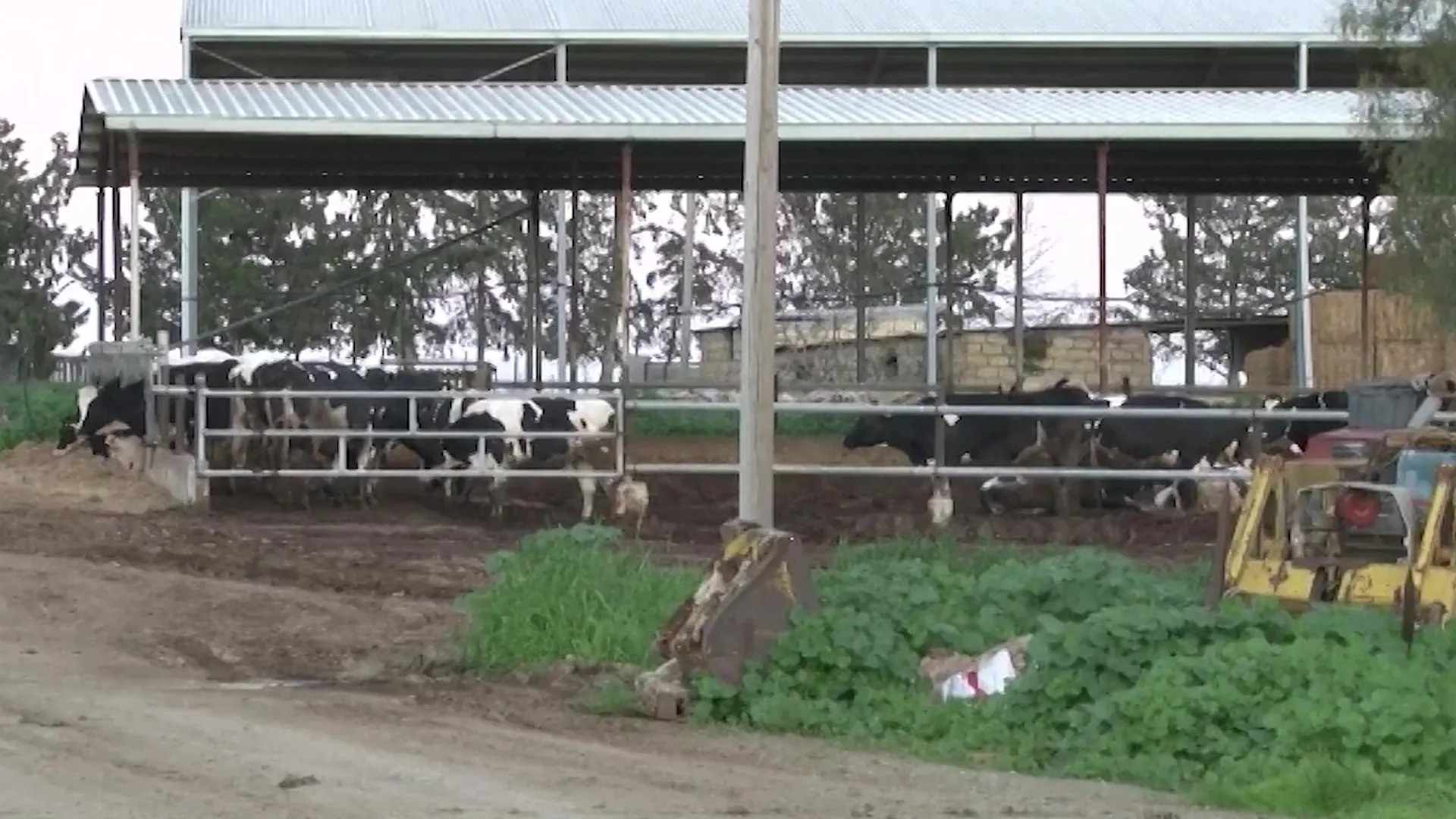
Containment now depends on discipline, not luck.
Nicosia, March 2026
Cyprus has raised its disease alert again after veterinary services confirmed a new foot-and-mouth case in Dromolaxia, a signal that the outbreak is not yet contained and that the island is moving from emergency response to sustained biosecurity enforcement. Authorities say the number of affected holdings has climbed to 23 farms, a figure that turns the incident into a national stress test for agricultural governance and compliance. The immediate policy response is blunt: tighter movement controls, broader restrictions on people and equipment entering livestock sites, and a clear penalty regime designed to deter shortcuts. In outbreaks like this, the real fight is rarely the headline case, but the behavior that spreads it quietly across roads, feed routes, and informal networks.
The new decree expands restrictions on the movement of cloven-hoofed animals, limits the transport of animal feed, and bans grazing in the zones covered by the measures, reflecting the basic epidemiological logic of reducing contact opportunities. It also restricts the movement of persons and equipment to and from holdings in the affected areas, turning farm gates into controlled checkpoints rather than ordinary workspaces. Administrative fines can reach €5,000 for violations, which is not just a legal detail but an attempt to make compliance economically unavoidable. The policy message is simple: the state is treating noncompliance as a direct threat to national containment, not as a minor infraction.
The outbreak’s escalation also places Cyprus inside a wider European animal health posture that has become increasingly vigilant after recent foot-and-mouth events elsewhere on the continent. The European Commission has already adopted interim emergency measures specific to Cyprus, reinforcing the legal backbone for movement controls and surveillance. The same institutional machinery has supported vaccine logistics, including large-dose deliveries intended to reinforce vaccination capacity where risk is highest and control is most difficult. This matters because it shows the response is not only national but integrated into a regional disease-control architecture. In practice, the credibility of Cyprus’s containment is now partly judged by whether it can execute EU-grade controls consistently at ground level.
The scientific and regulatory framing matters because foot-and-mouth disease is not a human health crisis, but it is an economic and governance crisis with fast-moving consequences. The virus is highly contagious among cloven-hoofed animals and can devastate productivity through fever and lesions that reduce milk yield, weaken animals, and trigger culling protocols. This is where public misunderstanding often appears, because a disease that does not directly threaten people can still threaten livelihoods, exports, and national credibility in agricultural trade. Cyprus’s policy posture reflects that reality, emphasizing containment speed over comfort. Once the outbreak expands, every day becomes a contest between viral spread and administrative capacity.
The economic stakes are amplified by the role of livestock and dairy in Cyprus’s external profile, particularly products linked to national identity and export revenue. Officials have insisted that key dairy exports remain safe under existing controls, an important reassurance given the reputational fragility of food markets under outbreak conditions. Yet the reassurance only holds if the containment perimeter stays intact, and the appearance of a new case is precisely the kind of event that tests whether the perimeter is real or only declared. In these moments, markets and trading partners watch enforcement behavior, not press statements. That is why the fine structure and the emphasis on restricting people and equipment are as strategic as any veterinary intervention.
The outbreak also has a geopolitical subtext that authorities cannot fully ignore, even if they choose to communicate primarily through public health and agriculture channels. International animal health recognition has already been affected, with Cyprus’s disease-free status suspended at the global level after the outbreak was confirmed. That kind of suspension does not merely change how Cyprus is described on paper, it changes how partners interpret risk and how quickly restrictions can be imposed on trade and animal movements. It also increases domestic pressure, because the cost of reputational damage is carried by farmers first. In effect, disease containment becomes a national credibility task, not a sectoral inconvenience.
Enforcement, however, is only one half of the containment equation, and Cyprus has also moved on the support side to prevent a collapse of compliance driven by economic desperation. The government has approved interim payments to affected livestock units, with figures reported as reaching up to €50,000 depending on herd size and losses, signaling an attempt to keep farmers solvent while demanding strict adherence to rules. That approach is strategically rational, because punitive rules without credible compensation often create incentives for concealment and informal movement. Paying early is not charity, it is a compliance tool. In outbreaks, the state must buy time for biology.
The appearance of a new case in Dromolaxia also highlights the operational difficulty of eliminating transmission once an outbreak has seeded across multiple holdings. Vaccination, culling where necessary, disinfection protocols, and movement controls can reduce spread, but they rely on consistent execution across hundreds of daily decisions by farmers, veterinarians, transporters, and local communities. This is why authorities stress restrictions on feed transport and grazing, because those routines are the quiet arteries of spread. Even minor breaches can reset the clock on containment. In short, the outbreak is now as much about governance of routine as it is about veterinary medicine.
What changes on the wider board is the way Cyprus’s outbreak is evolving from a localized emergency into a durability test for state capacity under agricultural crisis conditions. A new confirmed case forces the system to prove it can adapt, tighten controls, and sustain public cooperation without exhausting compliance. The fines are a hard edge, but the broader strategy is about controlling mobility, verifying behavior, and preventing the outbreak from becoming a permanent structural vulnerability. Cyprus is not only fighting a virus. It is fighting the tendency of systems to relax too early.
Resistencia narrativa global. / Global narrative resilience.