

 Phoenix 24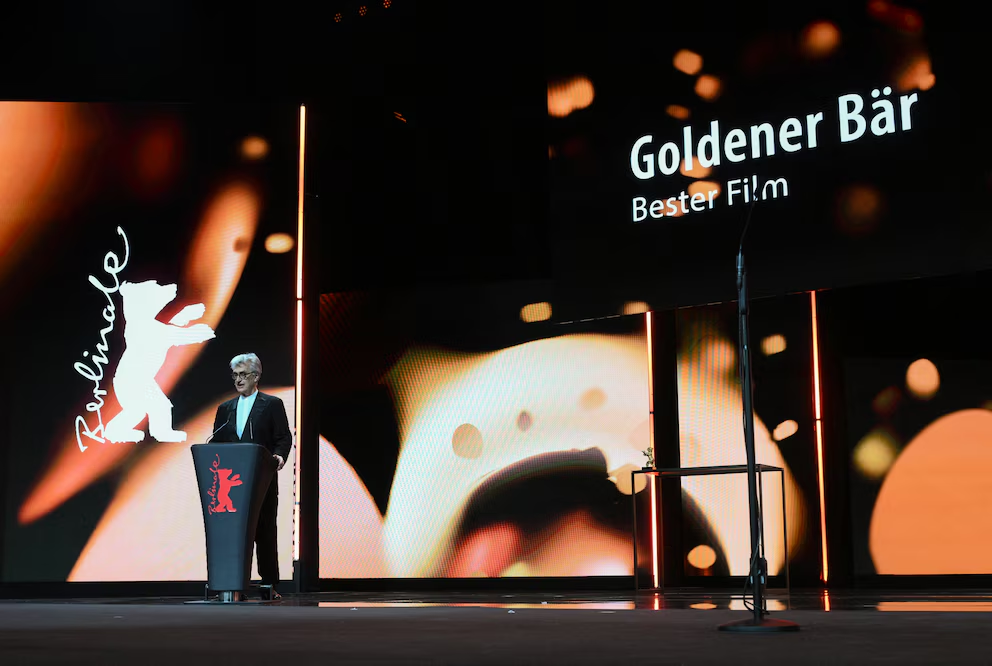
Awards now double as political signals.
Berlin, February 2026.
The Berlin International Film Festival handed its top honor, the Golden Bear, to the German film Yellow Letters, directed by İlker Çatak. On paper, it is a cultural headline. In practice, it is also a signal about what the festival believes cinema must do right now: describe how power pressures private life, and how repression rarely arrives as a single dramatic event. It arrives as accumulation, administrative friction, professional exclusion, and the slow corrosion of intimacy.
Yellow Letters centers on a married couple, an actor and a playwright, whose stability fractures after the husband is targeted by the Turkish state apparatus for critical posts online. The story is not built around a heroic dissident arc. It is built around consequence: what happens when the state decides that speech has a price, and that the price should be paid in employment, safety, and social isolation. The marriage becomes the narrative laboratory, showing how political pressure migrates into the home and turns routine decisions into survival calculations.
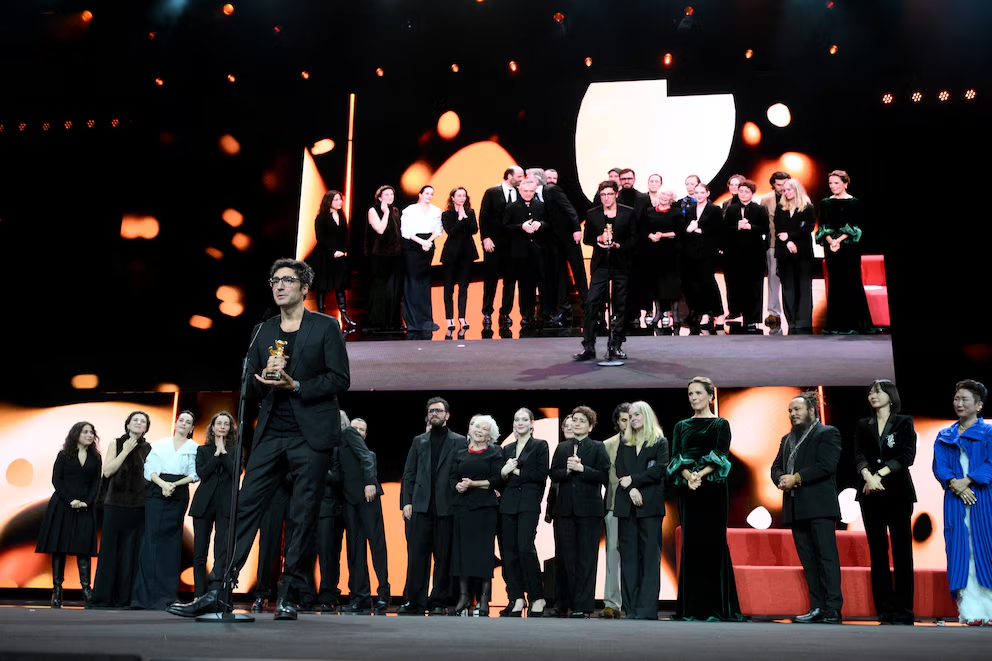
The choice of winner landed in a festival climate already thick with arguments about speech, responsibility, and what it means for a cultural institution to “stay neutral” when geopolitics dominates the public sphere. The Berlinale has been navigating renewed controversy over the boundaries of political expression at the festival itself, which made the award feel like more than an aesthetic endorsement. When a jury crowns a film about intimidation and censorship in a moment when public debate about censorship is itself inflamed, the act of awarding becomes part of the debate whether intended or not.
The acceptance speeches sharpened that perception. Commentary from the stage warned about authoritarian drift, the rise of right-wing forces, and the temptation of social nihilism, framing the film’s story as a universal warning rather than a regional case study. That universal framing is the core mechanism by which festivals transform specific narratives into global mirrors. It also explains why these prizes now generate political argument: audiences do not only evaluate craft, they evaluate what a cultural institution chooses to elevate.
There is a structural reason Yellow Letters fits the current moment. The most effective modern repression often operates without overt bans. It works through legal pressure, employment denial, licensing threats, and the conversion of online speech into a prosecutable vulnerability. Artists and journalists can be managed by making their lives administratively expensive rather than publicly silencing them. The film’s premise captures that logic cleanly, and it resonates because similar mechanisms are visible across multiple regions, even where formal democratic structures remain intact.
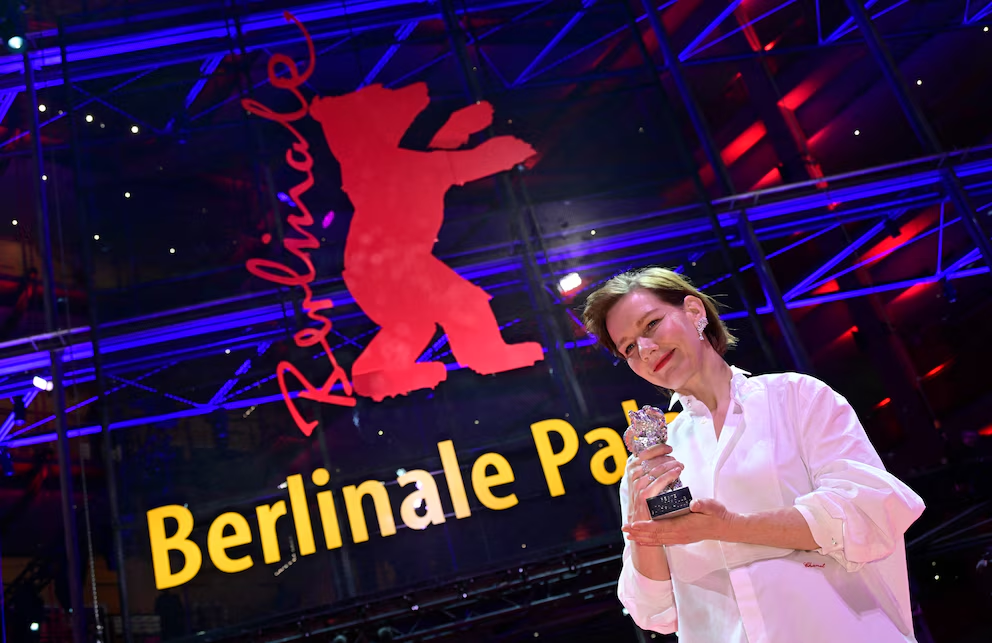
Seen from a systems lens, a major festival prize used to be mostly a market instrument: a stamp that accelerates distribution, prestige, and funding. It still does that, but it also functions as a governance gesture, an institutional statement about what themes deserve narrative centrality and what kinds of power deserve scrutiny. The risk is polarization, because critics will read the award as ideological positioning. The counter-risk is irrelevance, because avoiding conflict in a conflict-saturated era makes cultural institutions look like they are performing neutrality rather than defending a meaningful public space.
That is why the Golden Bear for Yellow Letters reads as both art and architecture. It rewards a story about how power reshapes private life, and it exposes how awards themselves have become part of the struggle over speech norms. The film wins, and the festival reveals its temperature at the same time.
La narrativa también es poder. / Narrative is power too.