

 Phoenix 24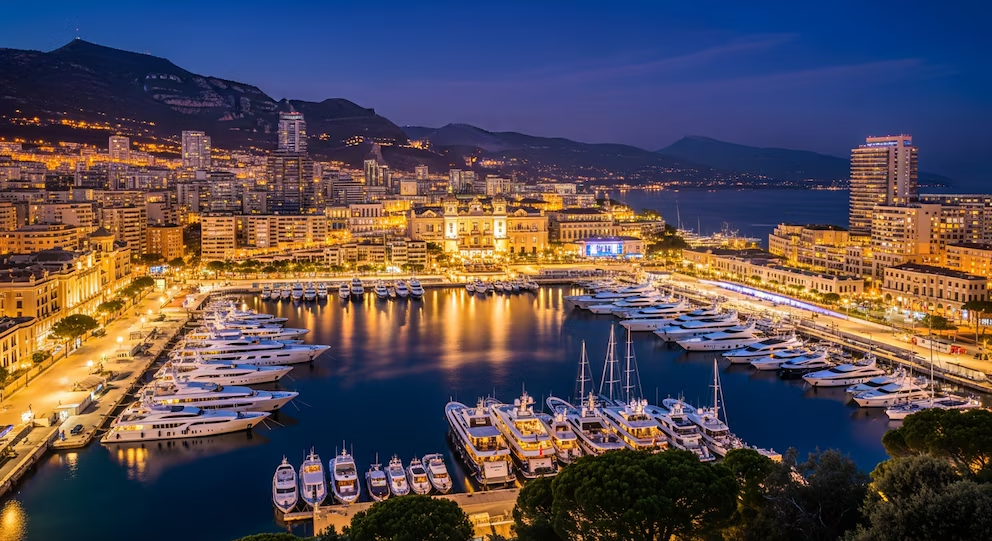
Stadiums are now cultural engines.
New York, February 2026.
The global sports calendar is no longer just a sequence of competitions. It has become a coordinated market for movement, where cities, leagues, and broadcasters sell something bigger than a match: a temporary identity built from rituals, food, architecture, music, and the promise that you can feel “inside” a place because you shared its most public emotion. That shift is why a list of “must-see” sporting events in 2026 reads like a travel itinerary. The underlying power structure is clear: major sports properties increasingly function as platforms for destination branding, and the host city is not simply a backdrop but a product.
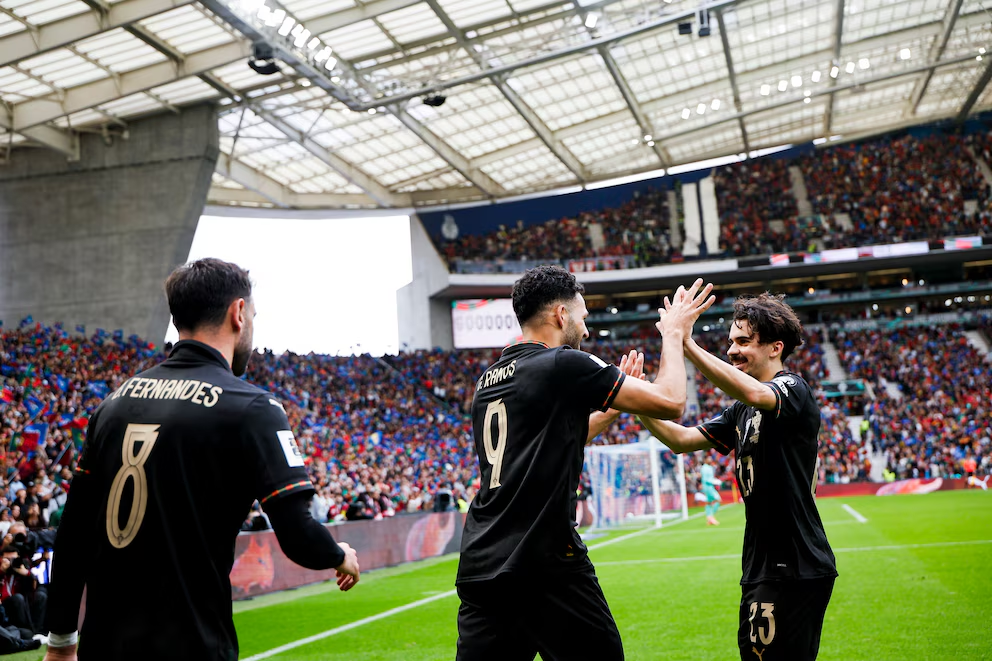
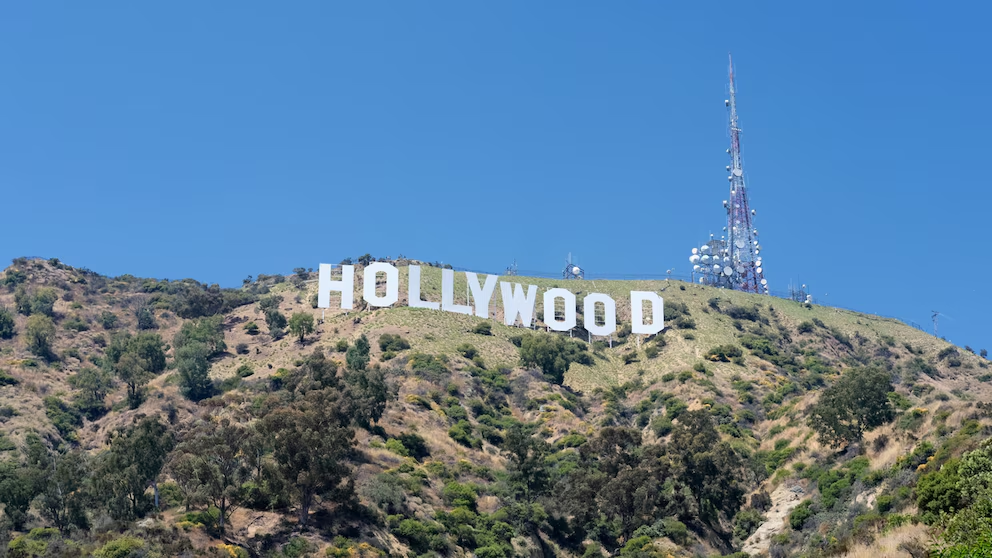
The FIFA World Cup in North America sits at the top of this model because it industrializes scale. A tournament distributed across Mexico, the United States, and Canada is not only a logistical achievement, it is a deliberate narrative about regional integration, border permeability for consumption, and the idea that football can stitch together a continental storyline even when politics cannot. The host cities are already being sold as experiences beyond the stadium. Mexico City’s historical core and street-food economy become part of the viewing ritual, Los Angeles folds football into its film mythology and coastal leisure, Toronto packages the lakefront skyline and market culture as a companion to match day. The World Cup’s real output is not only goals, it is a globalized week-to-week tourism pipeline that converts fandom into hotel nights, restaurant queues, and public-space festivals.
Italy’s Winter Olympics in Milan and the Dolomites reveal the same mechanism through a different aesthetic: elite sport fused with heritage. The Games are presented as a gateway to northern Italian design, architecture, and cuisine, with Milan’s cathedral grandeur and gallery corridors becoming part of the spectator’s script. The culinary layer is not incidental. A plate of risotto or a late-night trattoria stop is marketed as a continuation of the event, a way to translate athletic spectacle into cultural intimacy. The deeper pattern is that the Olympics function as a certification mark for place status. Hosting is not just about sport; it is about proving that infrastructure, hospitality, and visual identity can perform under global attention.
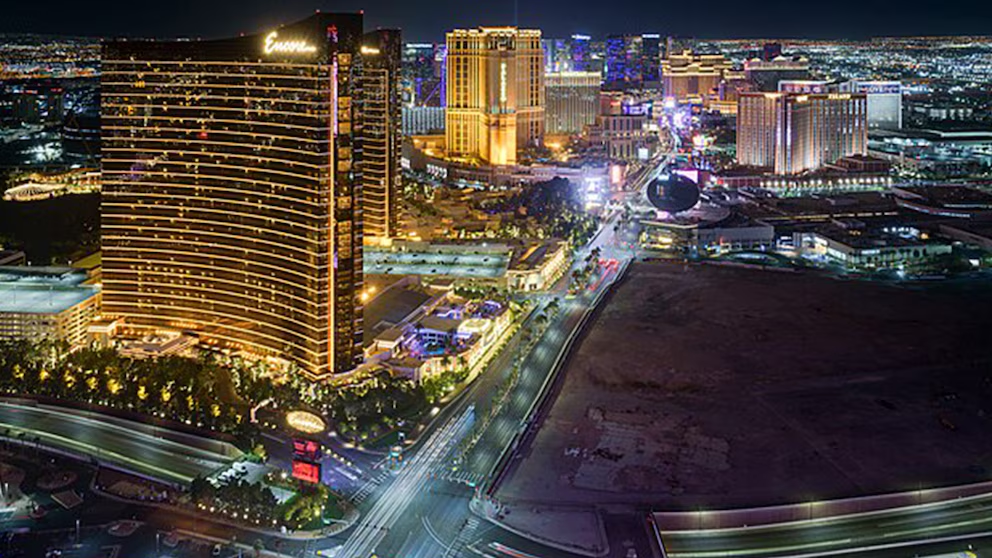
Formula 1 is the purest expression of sports tourism as luxury theater. Las Vegas turns its Strip into a controlled spectacle of speed, lights, and exclusivity; Monaco sells the fantasy of proximity to wealth; Bahrain leverages hospitality and festival framing to expand the race weekend into a national showcase. In this ecosystem, the grand prix is a gravitational center around which restaurants, hotels, brand activations, and nightlife are engineered to feel inevitable. Motorsport’s power is that it naturalizes extravagance. It trains audiences to read spending as participation, and it gives cities a template for converting a sporting event into a multi-day consumption corridor.
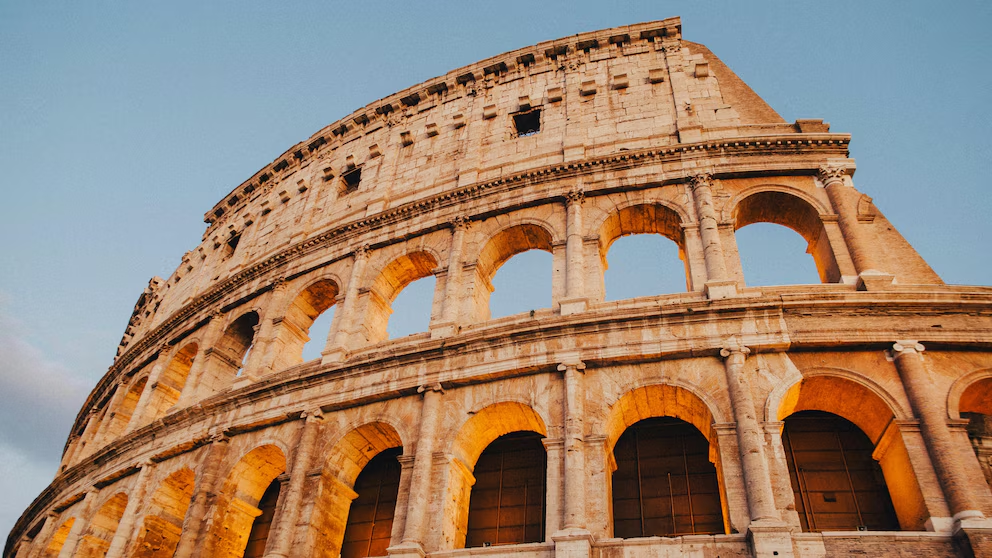
Tennis extends the model through a more intimate promise: access. The events highlighted outside the traditional Grand Slam spotlight, such as Indian Wells, Phoenix, and Rome, are positioned as places where elite players feel closer, where the atmosphere is less monumental and more liveable. The Sunshine Double in the United States is a particularly clean fusion of sport and lifestyle, desert calm and coastal nightlife, with the match schedule embedded in a broader story of local art districts, beach promenades, and food scenes that are already global brands. Rome adds the historical compression tennis can rarely offer elsewhere, a day of matches in a modern venue followed by an evening framed by antiquity and cuisine. What tennis sells here is contrast: precision and patience on court paired with sensory abundance off it.
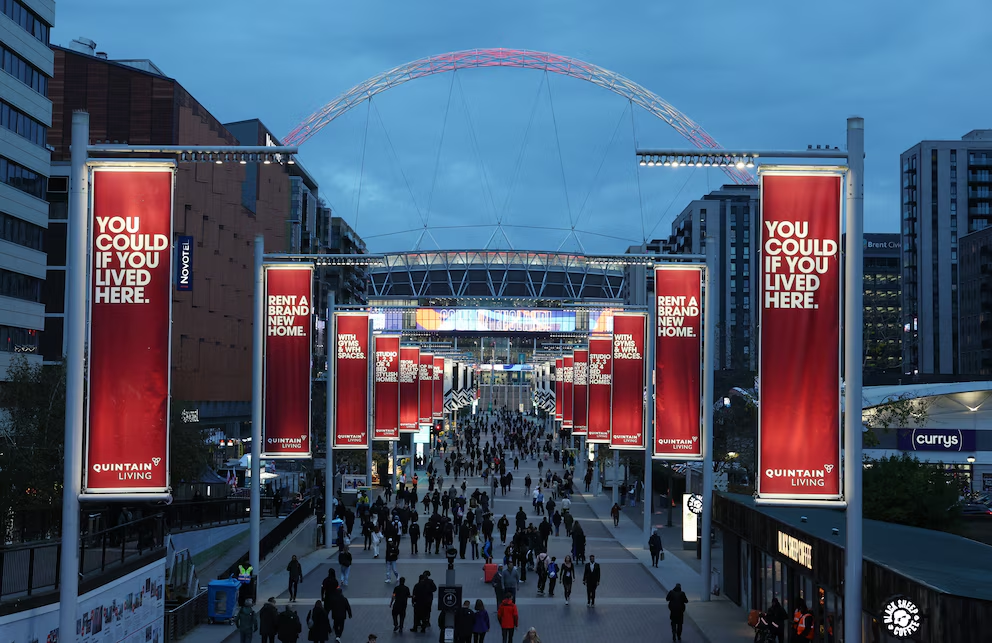
The NFL’s expansion beyond the United States shows how fast leagues have learned to treat cities as stages rather than territories. Regular-season games in London and Berlin, and the inclusion of markets like São Paulo and Melbourne, are not only about fan growth; they are about cultural conversion. London packages American football inside pub culture and stadium pageantry, Berlin blends contemporary nightlife with a curated “global city” vibe, São Paulo brings music and street energy into the event frame, and Melbourne tests whether a mature sports culture can absorb a new ritual. The league’s real export is not the rulebook, it is the event format: pregame festivals, branded fan zones, and food as spectacle, all designed to make the day feel like a civic celebration rather than a foreign product.
Cricket in India, especially through the Indian Premier League in cities like Chennai, completes the six by showing that sports tourism is not only Western and not only new. The IPL functions like a seasonal national carnival, with chants, color, and community identity woven into the viewing experience. The stadium becomes a cultural amplifier, and the city’s food and street rhythms are part of the atmosphere rather than an add-on. The contrast between the IPL’s fast format and traditional multi-day cricket also reveals a broader truth about modern audiences: speed and spectacle pull new viewers in, while depth and tradition keep a core identity intact. For visitors, that duality becomes the attraction, you can consume the modern festival while sensing the older strategic culture beneath it.
Across these six, the pattern is structural: sport has become a governance tool for attention. The institutions that control the calendars, FIFA, the Olympic movement, Formula 1, the ATP, the NFL, and cricket’s league machinery, are shaping how cities compete for global relevance. Hosts are no longer chosen only for venues; they are chosen for story capacity, the ability to translate a sporting moment into a narrative that travels on screens and returns as tourism demand. Gastronomy is not decoration in this system. Food is the simplest way to make an event feel local without requiring deep cultural literacy, and it is the quickest way to turn a traveler into a spender.
The audience psychology is equally predictable. Fans want proof that their trip was not just attendance but transformation, that they did not merely watch but participated in a city’s identity for a few days. That desire is why “sports travel” increasingly looks like curated culture. The risk, quietly, is that the same model can hollow out authenticity, replacing local texture with standardized fan experiences and global sponsor aesthetics. Yet the appetite remains, because the modern traveler is not only chasing places, they are chasing moments that feel shareable, legible, and emotionally intense.
In 2026, the stadium is not just a venue. It is a gateway product, and the city that hosts is trying to sell you the feeling that the world briefly rotated around its streets.
Más allá de la noticia, el patrón. / Beyond the news, the pattern.