

 Phoenix 24
PlayStation Plus Turns February Into a Value Offensive
Blockbusters enter the catalog, churn gets tested.
San Mateo, February 2026. Sony is treating subscriptions the way streaming platforms treat prime-time releases: not as a library update, but as a behavioral lever. The February refresh for PlayStation Plus Extra and Premium is structured around a simple bet. If you drop a recent, high-demand exclusive into the catalog at the right moment, you can slow cancellations, pull upgrades from the mid tier, and keep the platform’s cultural gravity centered on PlayStation even when the release calendar is between peaks.
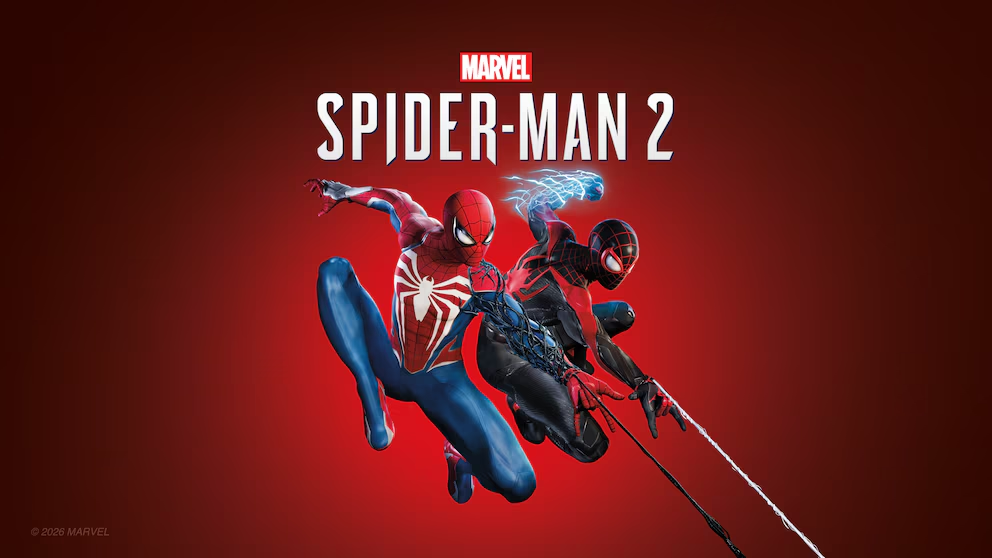
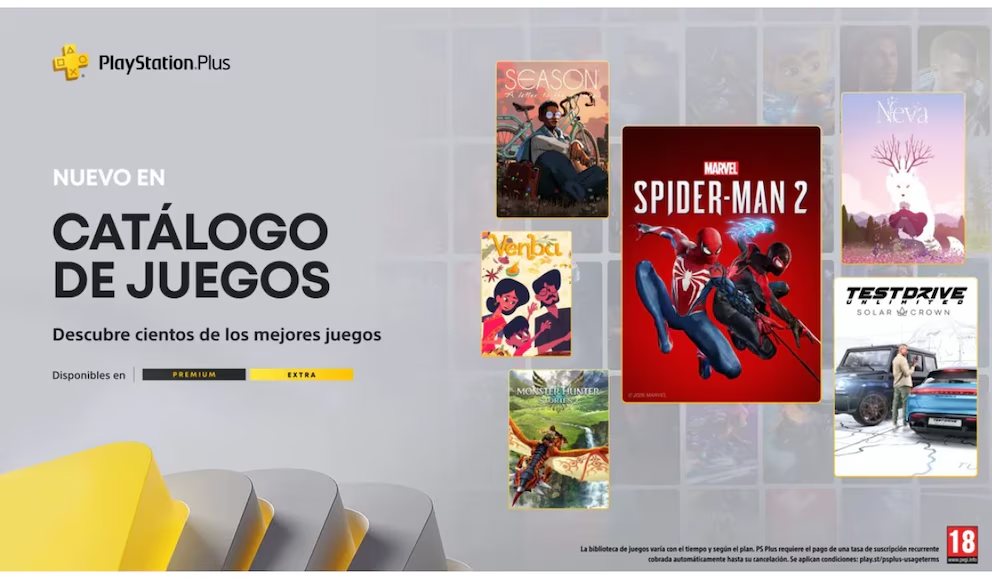
The headline is Marvel’s Spider-Man 2 arriving in the Game Catalog for Extra and Premium. That single inclusion carries most of the strategic weight because it does two things at once. It signals that the subscription is not only an archive of older hits but a pipeline that will periodically absorb premium-era exclusives. And it forces a recalculation for anyone sitting on the edge of subscribing: the cost of one marquee purchase is now framed against a month of access plus the surrounding catalog. This is the economics of perceived abundance, a psychological mechanism that works even on consumers who know exactly how it works.

But February is not built as a one-title stunt. The supporting slate is designed to widen the funnel across player identities. There is a prestige action centerpiece, a driving offering aimed at the “live map” racing crowd, and a cluster of smaller narrative titles that play well with players who want tone, art direction, and emotional pacing more than raw hours. The goal is to reduce the risk of mismatch. If the superhero draw does not land for you, the rest of the month is meant to catch you anyway.
Test Drive Unlimited Solar Crown is positioned as the broad-appeal, high-hour option. A shared open-world structure fits the subscription model because it rewards “return play,” the kind of engagement that makes the subscription feel justified long after the initial download. Subscriptions do not thrive on a single weekend of use. They thrive on repeated logins, routine habits, and the sensation that you always have something to dip into without additional spending.
On the more intimate end of the spectrum, Neva and Season: A Letter to the Future serve a different function. They are not designed to dominate attention for months. They are designed to refresh the emotional texture of the catalog, to make the service feel curated rather than merely stuffed. That matters because the subscription fight is partly fought in taste. A catalog that looks like a warehouse can feel cheap. A catalog that looks like a programmed season can feel premium, even when the economics are the same.
Sony also leans into franchise familiarity with the Monster Hunter Stories entries, including Monster Hunter Stories 2: Wings of Ruin. The tactical logic here is retention by role specialization. Not every subscriber is moved by a single blockbuster, but many stay for genre comfort. A dependable RPG lane inside the catalog reduces churn because it creates a reason to remain subscribed between major drops. In subscription systems, the quiet months are where the battle is won.
The remainder of the Extra additions round out the portfolio effect. Venba expands the catalog’s reach into short, culturally specific storytelling that people often praise but do not always buy. Rugby 25 targets a niche audience whose loyalty is deep even if their numbers are smaller. And the presence of Echoes of the End: Enhanced Edition reinforces the “new-to-you” discovery thesis that subscription platforms need: the idea that you will try something you would never have risked money on, simply because the friction is gone.
For Premium, the classic hook is WALL-E. That addition is not about competing with Spider-Man on cultural intensity. It is about reinforcing why the top tier exists at all. Premium must justify itself with nostalgia, preservation, and the pleasure of rediscovering older properties without the pain of hunting them down. In a market where most subscription tiers start to blur, the classics lane is one of the few remaining ways to create meaningful differentiation.
It also matters what this update is not. It is not the monthly Essential giveaway model. It is not “claim and keep” in the same way. This is catalog logic: access while subscribed, breadth as a selling point, and rotation as a constant reminder that your entitlement is temporary. That subtle scarcity, the possibility that something may leave later, is another behavioral lever subscriptions use to accelerate downloads and keep people active.
From an industry standpoint, February’s lineup reads like Sony acknowledging a basic truth: the subscription experience is now part of the platform’s identity, not a side feature. The console war is no longer just hardware versus hardware or exclusive versus exclusive. It is also ecosystem versus ecosystem, where value perception, cadence, and curation shape loyalty as much as any single launch. Dropping a major first-party-style prestige title into the catalog is a way of saying: the subscription is not where games go to fade, it is where games go to extend influence.

For players, the practical consequence is simple. February is a month where the catalog feels less like a backlog and more like a deliberate package: one flagship, several high-contrast complements, and a classic designed to reward premium loyalty. For Sony, the consequence is more strategic. If this month moves upgrades and reduces churn, it validates the playbook. If it does not, it pressures Sony to increase the frequency of headline drops or risk the catalog becoming background noise in a market that punishes stillness.
Detrás de cada dato, hay una intención. Detrás de cada silencio, una estructura.
Behind every data point, there is an intention. Behind every silence, a structure.