

 Phoenix 24
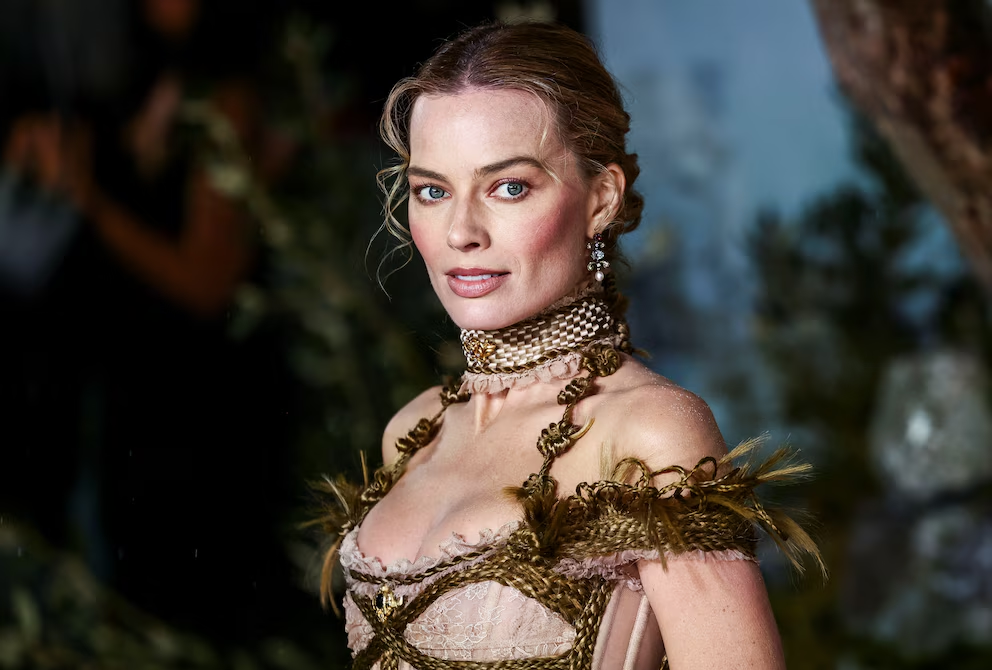
Red carpets are designed for symbols.
Los Angeles, February 2026.
Margot Robbie appeared on a red carpet in a dress built around braided hair elements, a choice that instantly triggered the reaction the modern celebrity economy is engineered to produce: fascination, debate, replication, and algorithmic circulation. The garment reads as spectacle, but it also reads as strategy, because fashion at that altitude is not merely aesthetic, it is messaging compressed into an image that can survive without context. Hair, when used as material and motif, carries an unusual intimacy, because it is both adornment and body trace, something personal that becomes public symbol the moment it is stylized. That tension, between the private and the performative, is why the look lands harder than another well executed gown.
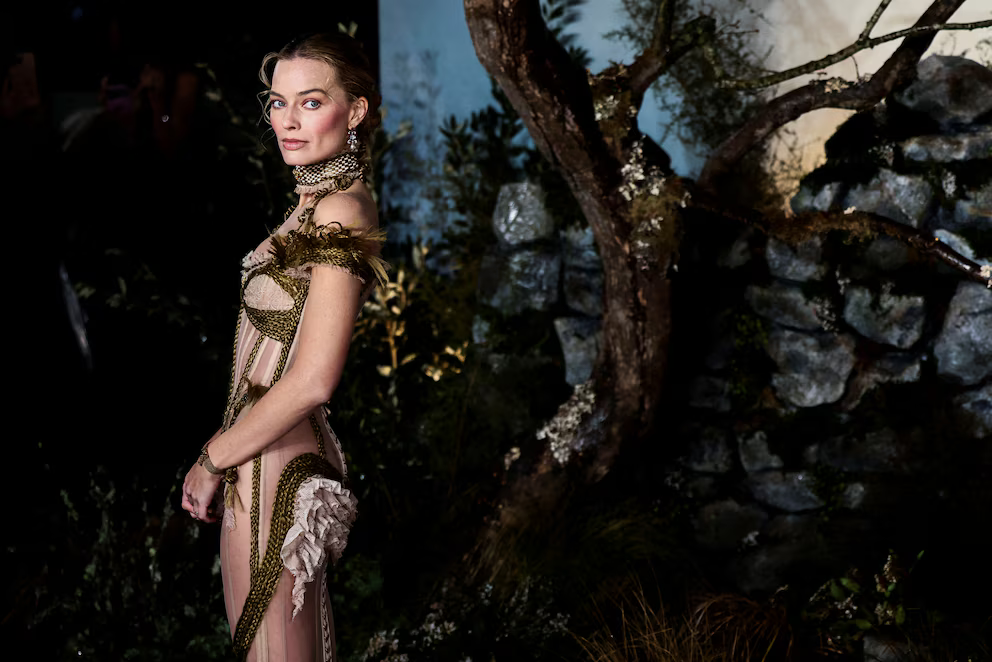
Braided hair is not a neutral texture in cultural memory, because braiding historically signals identity, craft, lineage, and control over self presentation. Translating braids into a dress reframes that symbolism into a couture object, transforming what is usually worn on the head into architecture worn on the body. The effect is striking because it breaks the expected hierarchy of materials, swapping silk or beadwork for something that feels human, tactile, almost unsettling if you stare too long. That slight discomfort is part of the design’s power, since viral fashion often requires a micro shock that stays within the bounds of glamour. In red carpet logic, the goal is not only to be admired, it is to be unforgettable.
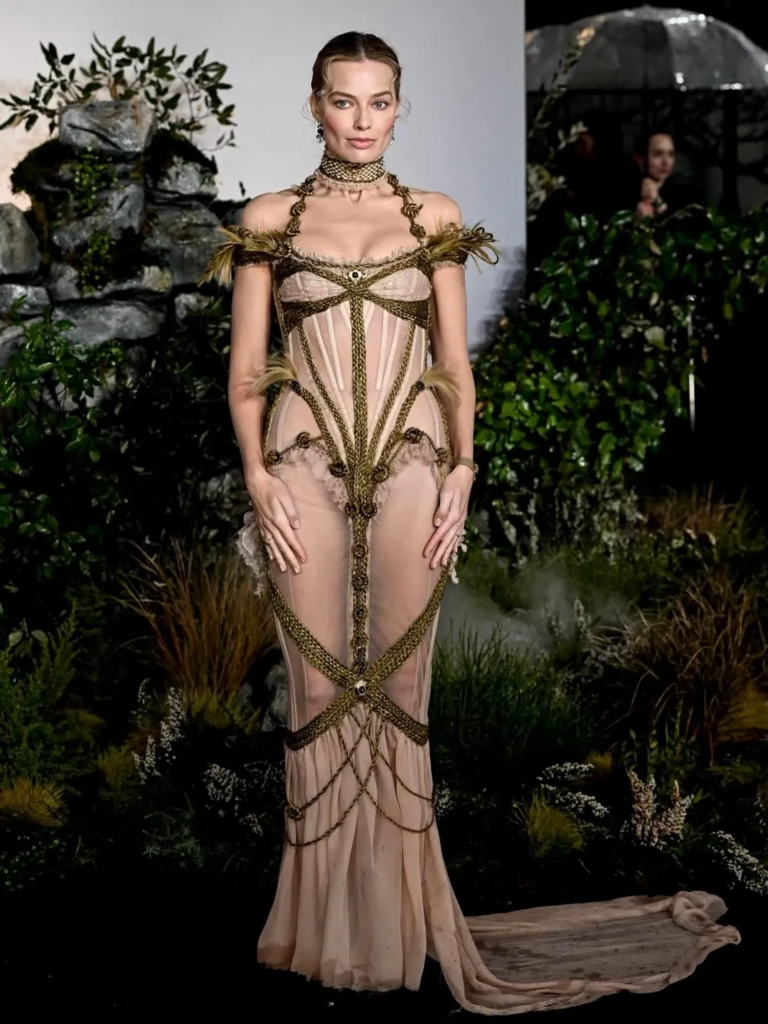
This is also a media systems story, because the carpet is now a distribution channel and the outfit is optimized for a feed. A visually legible concept, hair turned into garment, travels faster than nuance and is easier to caption, meme, and debate. The look becomes content for style pages, reaction threads, and brand amplification, even for people who never learn the designer’s name. In that way, the red carpet functions like a soft power stage where attention is the currency and novelty is the exchange rate. The garment is not just a dress, it is a unit of cultural transmission.
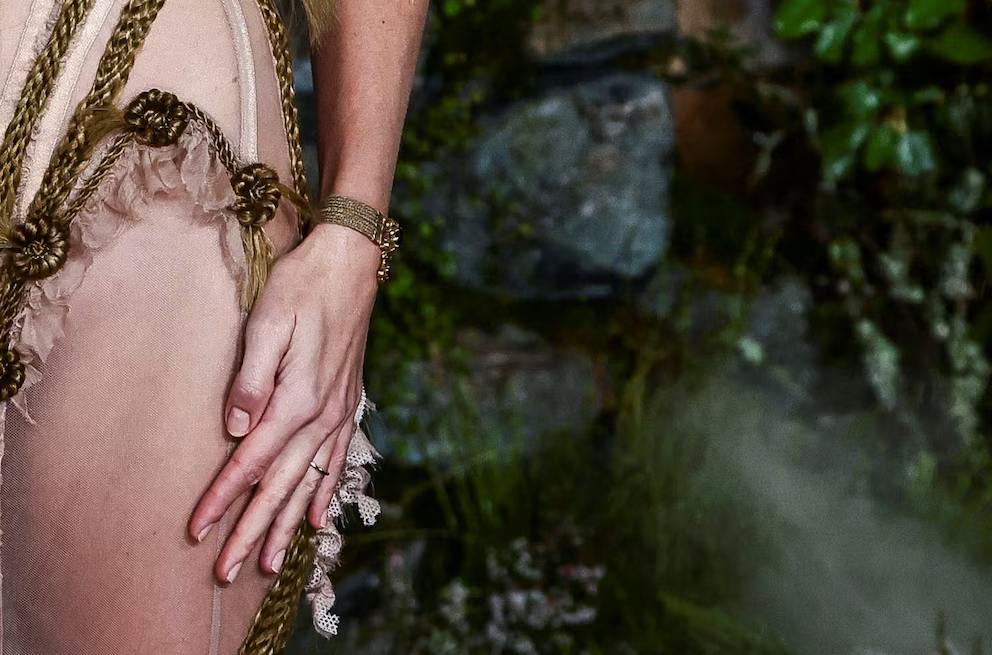
There is a second layer, which is that “sensational” red carpet fashion increasingly competes with AI generated imagery that can fabricate impossible looks instantly. To stand out in a world where synthetic fashion can be produced at infinite scale, physical garments must reclaim material authenticity through craft, texture, and bold construction. Hair as a design element signals tactility and labor, which are hard to fake convincingly without being exposed as digital. The message is subtle but clear: this is real, this took work, and it existed in a room, under lights, on a body. In an era of synthetic abundance, crafted strangeness becomes a proof of reality.
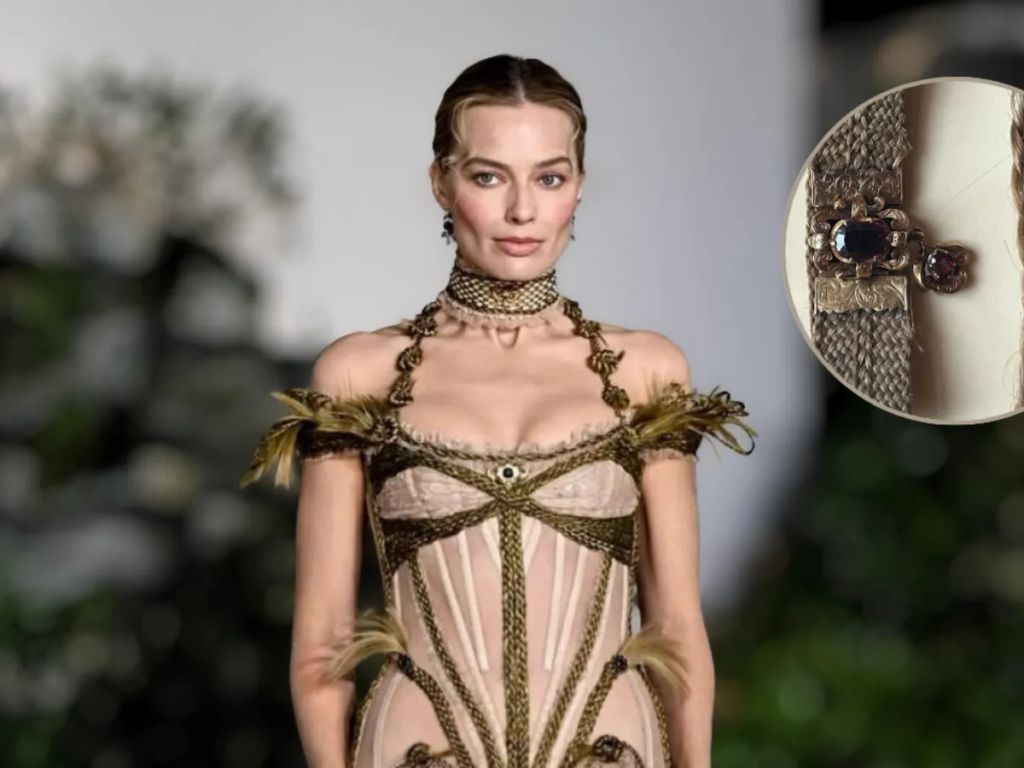
What matters for the celebrity is that the look creates a narrative that does not depend on dialogue. The dress becomes a headline that can be repeated across outlets without the risk of misquote or controversy, and it reinforces Robbie’s positioning as someone who can move between mainstream glamour and fashion risk without losing control of her image. The risk is that the concept can swallow the person, turning her into an accessory for the design, but the payoff is dominance of the attention cycle. On a carpet, attention is not vanity, it is leverage.
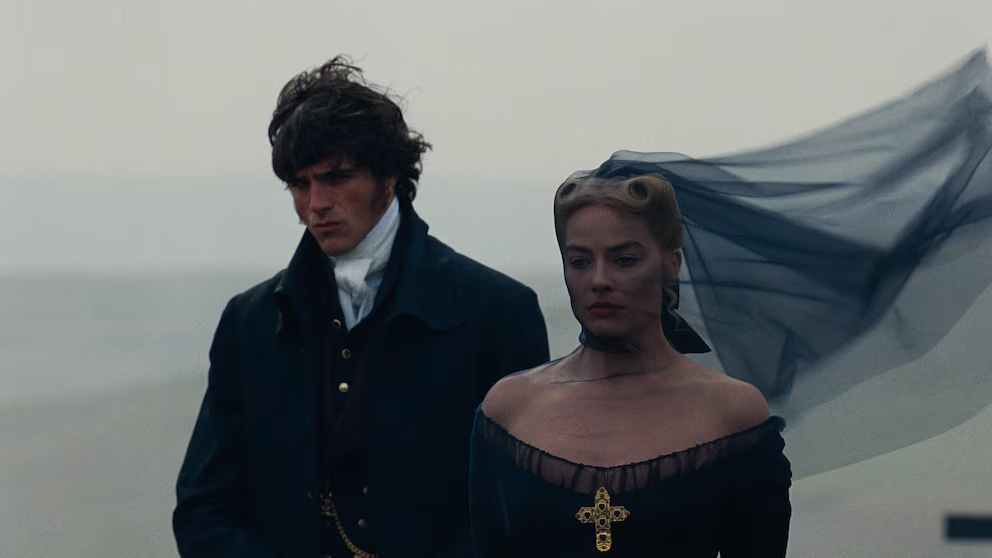
The wider pattern is that high fashion moments are no longer confined to fashion publics, they are engineered for mass platforms where audiences vote with replay and screenshot. That changes what counts as “good,” because what is elegant in person may be invisible on a phone, while what is conceptually bold can win the week. Robbie’s braided hair dress lands in that environment as a perfect hybrid: immediately readable, slightly uncanny, and easy to reduce into a single phrase. That is how symbolic fashion works now, not by lasting forever in museums, but by conquering the feed long enough to imprint itself on collective memory.
Narrative is power too.
La narrativa también es poder.