

 Phoenix 24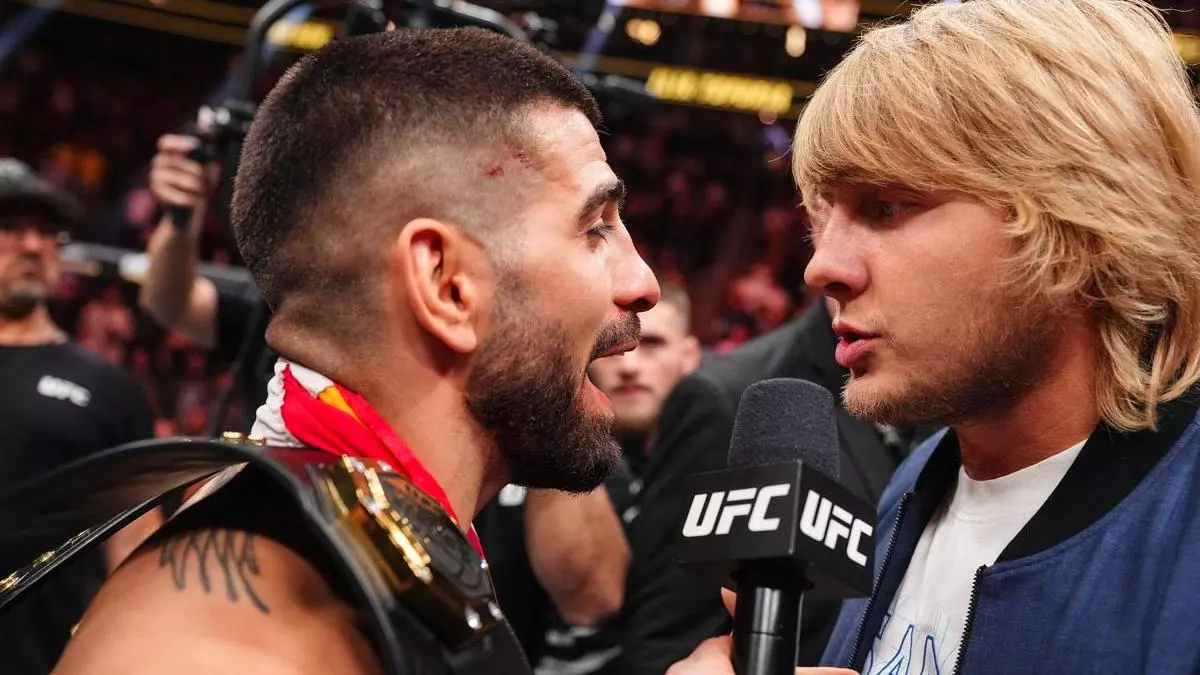
When setbacks become strategic capital, resilience can redefine a fighter’s path.
Madrid, January 27, 2026. UFC featherweight contender Ilia Topuria has publicly reframed his recent loss to Paddy Pimblett as a valuable learning experience that strengthens his competitive trajectory rather than a career-derailing setback. Topuria’s response to the defeat reflects a calculated approach to building psychological momentum and maintaining relevance within a crowded title contention landscape, where perceptions of resilience and adaptability can significantly influence both fan engagement and promotional positioning.
Topuria entered the bout against Pimblett with significant momentum, having established himself as a top contender with a strong record and a reputation for finishing fights decisively. The fight itself was competitive from the opening bell, with both athletes showcasing technical skill and strategic acumen. As the contest progressed, Pimblett was able to capitalize on specific positional advantages and transitions that ultimately swayed the judges’ decision, handing Topuria a rare loss in his professional mixed martial arts career.
In the wake of this outcome, Topuria has adopted a narrative that underscores growth over defeat. Rather than framing the loss as a regression, he has emphasized the insights gained from facing a diverse and unorthodox opponent. This reframing aligns with a broader understanding of elite performance under pressure, where top athletes often use adversity to refine training methods, strategic preparation and mental conditioning. Topuria’s post-fight commentary has centered on analyzing technical aspects of the contest, identifying areas for improvement and acknowledging the validity of Pimblett’s tactics.
Combat sports analysts have noted that Topuria’s willingness to dissect his performance publicly can strengthen his image as a reflective and evolving competitor. In a sport where confidence and perception are integral to career advancement, projecting a mindset that embraces challenges rather than shying away from them can attract respect from both peers and observers. Topuria’s approach signals to matchmakers, sponsors and the broader MMA community that he remains committed to long term success and is capable of absorbing high-level competition without diminishing his competitive identity.
From a technical standpoint, breaking down the fight reveals specific sequences in which Pimblett’s strategy disrupted Topuria’s rhythm. Observers pointed to changes in timing and feinting that created openings for effective counters, as well as lateral movement that tested Topuria’s ability to control the center of the octagon. In response, Topuria has indicated that refining footwork patterns and strengthening transition defense will be priorities in his upcoming training cycles. These adjustments reflect a nuanced understanding of mixed martial arts dynamics, where micro adjustments can yield significant differences in outcomes.
Topuria’s coaching team has supported this analytical angle, noting that loss can be a powerful teacher when integrated into a purposeful training feedback loop. Emphasis on recovery and targeted coaching interventions have been part of the narrative following the fight, with management describing a program designed to balance physical rest with technical refinement. This balanced approach is aimed at preventing overcorrection while ensuring that identified weaknesses are addressed systematically.
Public reception to Topuria’s response has been mixed but predominantly respectful. Some fans have expressed admiration for his composure and willingness to engage in constructive analysis, while others have focused on the competitive implications of his loss in the context of title contention. Speculation about potential rematches or alternative matchups has also emerged, with commentators suggesting that Topuria’s style and strategic evolution could produce compelling future encounters against a range of contenders.
In the broader context of the UFC’s featherweight division, losses and wins often recalibrate rankings and matchmaking priorities. A high-profile loss does not necessarily preclude future title shots, particularly when a fighter demonstrates capacity for adaptation and continued high-level performance. Topuria’s public framing of his defeat positions him within this paradigm, as a contender who views setbacks as part of a longer arc toward excellence.
For Topuria himself, the emphasis on refinement rather than recrimination signals a professional maturity that aligns with elite athletic development. Recognizing both the strengths and limitations exposed in a high stakes contest can serve as a foundation for more sophisticated tactical planning and psychological preparation. In this respect, the defeat functions not as a rupture but as a calibrated pivot that may enhance his competitive longevity.
As the featherweight division continues to evolve with emerging talents and shifting dynamics, Topuria’s articulation of his loss underscores how narrative control and strategic reflection can influence a fighter’s trajectory. By reframing adversity as an opportunity for growth, he reinforces a message about perseverance that resonates across both competitive and cultural dimensions of mixed martial arts.
Behind every data point, there is an intention. Behind every silence, a structure.
Detrás de cada dato, hay una intención. Detrás de cada silencio, una estructura.