

 Phoenix 24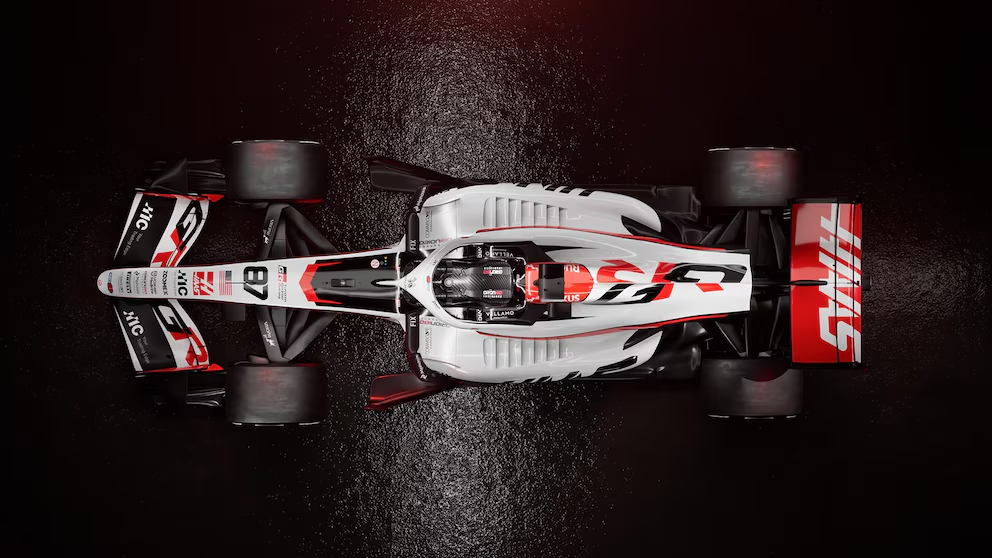
Change becomes visible before it becomes fast.
Barcelona, January 2026.
Formula One’s transformation for the 2026 season has moved from technical documents into visible reality. After Red Bull and Racing Bulls revealed their new visual identities, a third team has now presented the design of its future car. The unveiling confirms that the new regulatory era is no longer theoretical. It is now something teams, fans and rivals can see, judge and interpret.
This third reveal is more than an aesthetic event. In Formula One, design signals intention, philosophy and confidence. Liveries show how teams wish to be seen, but they also hint at internal stability, sponsorship strategy and technical ambition. Each presentation becomes a public declaration of readiness. In a season shaped by major regulatory change, even color choices carry symbolic weight.
The 2026 rules introduce one of the deepest resets in modern Formula One history. Cars are expected to be lighter, more energy efficient and aerodynamically simplified. Power units will rely more heavily on electrical systems, changing how teams design both performance and reliability. According to the international governing body of motorsport, these changes aim to balance competition while aligning the sport with long term sustainability goals. Teams now face the challenge of translating abstract regulation into physical identity.
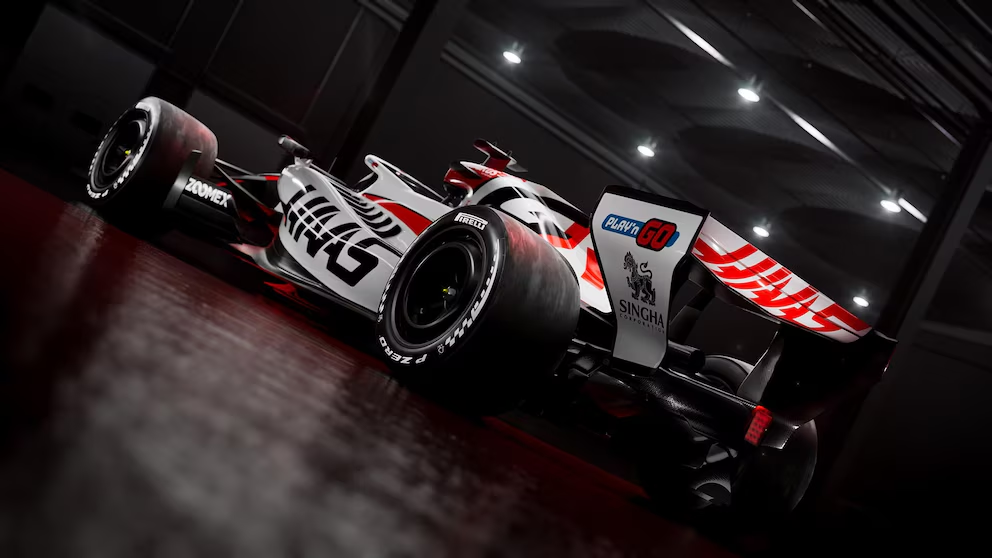
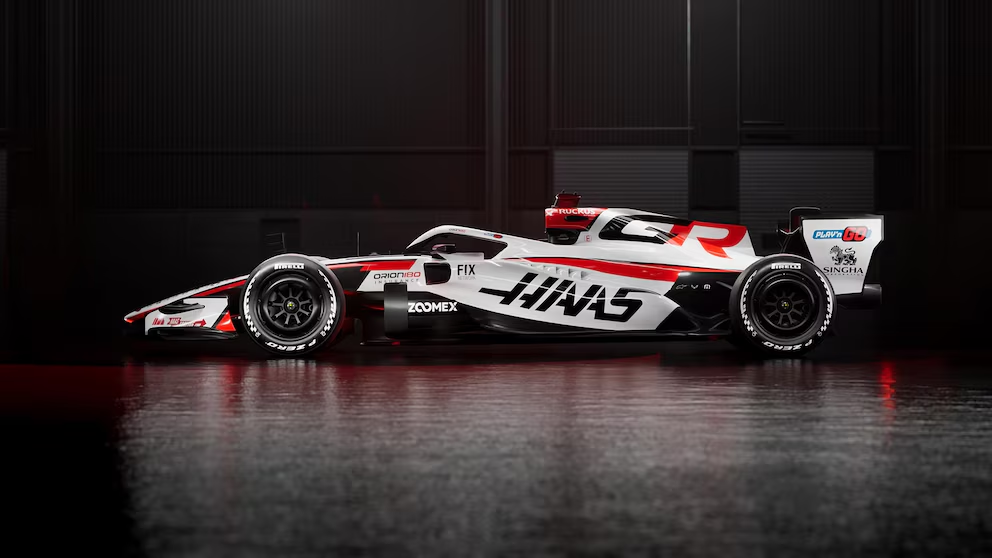
The third team to show its design has chosen to emphasize clarity and renewal. Its new look abandons some past visual traditions in favor of cleaner lines and stronger contrast. Team officials described the design as a statement of transition, marking entry into a new technical chapter. Engineers involved in the project said that visual identity must now reflect a deeper shift in engineering priorities. The design therefore represents not only branding, but belief.
European motorsport analysts note that early reveals often influence perception before any car turns a wheel. In past regulatory resets, teams that appeared confident early often shaped the psychological tone of the season. Even if early visuals do not guarantee speed, they can project stability. Stability matters when rules change because uncertainty punishes weak structures more than slow cars.
From Asia, engineering institutes that study hybrid systems point out that the 2026 shift changes design logic entirely. Electrical deployment, energy recovery and thermal management will define competitive margins. As a result, visual design must also reflect packaging realities under new power unit layouts. What looks like art on the surface is often constrained by physics underneath.
North American motorsport research groups add another layer. They argue that new regulations create windows for competitive reshuffling. When technical memory loses value, innovation gains value. Teams that adapt faster can outperform historically stronger rivals. In that sense, the third reveal is not about beauty. It is about intent to compete in uncertainty.
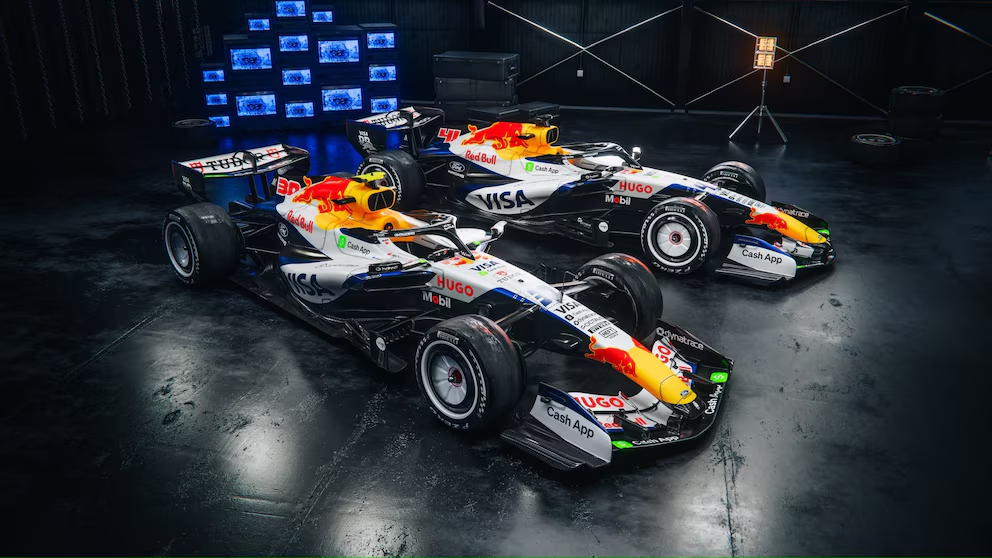
The sequence of reveals also shows strategic choreography. Red Bull and Racing Bulls went first, projecting confidence and continuity. The third team followed with a design that signals reinvention rather than tradition. That contrast shapes narrative even before racing begins. Formula One is not only sport. It is storytelling through speed, color and symbolism.
Commercial logic also matters. Design reveals are now media events designed for global consumption. Teams coordinate timing, location and visual language to maximize impact. In an era where fan engagement begins long before the first race, appearance becomes currency. The third reveal shows that teams now treat design as communication, not decoration.
Drivers have responded cautiously. Most emphasize that what matters is performance, not paint. Yet privately, many admit that confidence in a new car often begins with how it looks. When a machine appears balanced and purposeful, belief grows. Belief matters in a sport where confidence influences risk, precision and endurance.
Technical directors remind audiences that revealed designs are not final. Early versions evolve rapidly as testing begins. Aero elements change, cooling strategies adapt and packaging shifts under real data. Still, first impressions endure longer than first lap times. They shape expectations, pressure and patience.
As more teams prepare to reveal their 2026 designs, comparison will intensify. Fans will analyze color, shape and philosophy as proxies for speed. Analysts will search for hidden clues in surface choices. Rivals will study not only cars, but attitudes.
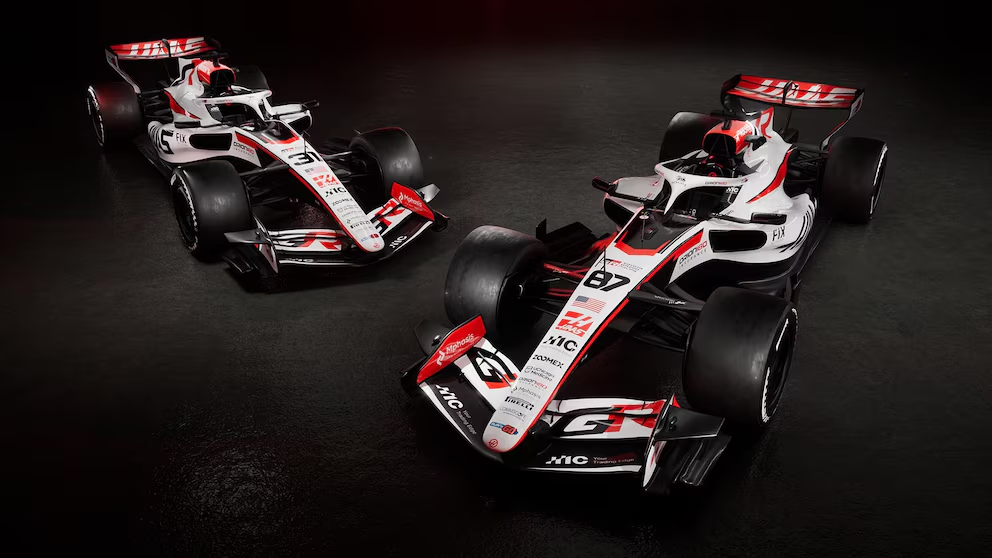
The third design therefore matters beyond its own garage. It becomes part of a collective signal that Formula One has entered a visible new era. From now on, every reveal adds another sentence to the story of 2026. A story written not in words, but in carbon fiber, light and ambition.
What will decide success is not who revealed first, or who looked boldest. It will be who understands the new rules not only as limits, but as language. In Formula One, the fastest team is often the one that learns to speak regulation most fluently.
For now, what the world sees is shape, color and promise. Speed will come later. But before speed, there must be belief. And belief often begins with how a future is imagined.
La narrativa también es poder. / Narrative is power too.