

 Phoenix 24
Some stars are born not from ambition, but from someone else stepping aside.
Los Angeles, January 2026.
Long before Die Hard became one of the most influential action films in modern cinema and turned Bruce Willis into a global star, the role of John McClane was not a certainty. It moved through hesitation, doubt and rejection before finding the man who would embody it. Among those who had the chance to claim it was Jeff Bridges, an actor already respected for his depth and versatility, but never defined by explosions or hero mythology.
At the time, Bridges was building a career rooted in character rather than spectacle. His strength was not in invincibility, but in fragility. He played men who doubted, who failed, who searched. When the script that would become Die Hard reached him, he did not see a future version of himself hanging from skyscrapers. He saw a story that did not belong to the path he was shaping. So he declined.
The decision was not dramatic. There were no speeches, no public explanations. It was simply an actor listening to his instinct. But in Hollywood, every refusal creates a vacuum, and vacuums attract destiny.
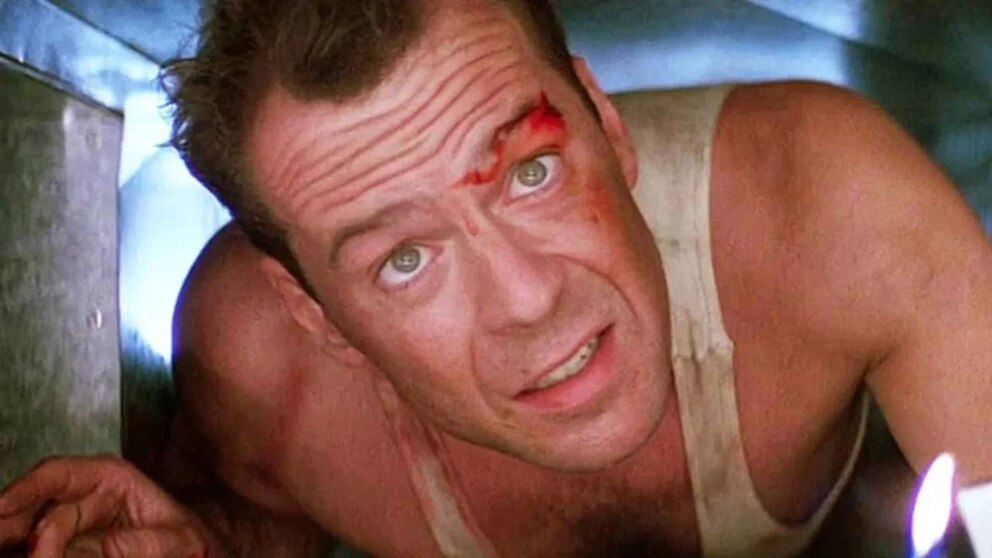
That vacuum was filled by Bruce Willis, an actor best known at the time for television comedy. The industry doubted him. Audiences doubted him. Executives worried that an action film led by a man associated with humor and charm would fail. But the risk was taken, and when the film arrived, it changed everything. John McClane was not a superhero. He was tired, hurt, sarcastic, afraid and stubborn. That humanity redefined the action hero.
In that sense, Die Hard did more than create a star. It rewrote a genre. Action heroes no longer had to be untouchable giants. They could bleed. They could joke. They could survive more through will than strength. That transformation happened because one actor said no and another was given space to become something new.
For Jeff Bridges, the refusal did not become a wound. It became a direction. Instead of entering a cycle of sequels, explosions and typecasting, he continued building a career defined by risk and reinvention. He moved between drama, westerns, comedies and independent cinema. He played flawed men, quiet men, strange men. He did not become an action symbol, but he became something more difficult: an actor impossible to reduce to a single image.
Hollywood often tells success as if it were a straight line. But careers are made of turns, doubts and instincts. Sometimes the most powerful decision is not the one that brings fame, but the one that protects identity. Bridges did not reject Die Hard because it was a bad film. He rejected it because it was not his film.
That choice shaped two destinies at once. One actor became the face of a new era of action cinema. The other became a symbol of artistic freedom. Both succeeded. They simply succeeded in different languages.
The mythology of cinema is full of these invisible moments. Roles that were offered and refused. Films that could have existed in another form, with another face, another tone, another destiny. We rarely see those parallel histories, but they are always there, haunting every classic with the shadow of what might have been.
If Jeff Bridges had accepted the role, Die Hard would not have been the same film. Maybe it would still have succeeded. Maybe it would have failed. What is certain is that it would not have created Bruce Willis as we know him. And it might have reshaped Bridges into something he never wanted to be.
Instead, Bridges followed a road where he could age without a costume. Where he could fail and succeed without being trapped by a single identity. His career became a collection of risks rather than a monument to one role. That is a quieter form of victory, but no less real.
The industry loves legends of triumph. It rarely celebrates the wisdom of refusal. But sometimes, saying no is not fear. It is clarity.
When an actor refuses a role, he is not only choosing what he does not want. He is choosing what he wants to protect. Bridges protected the kind of actor he wanted to be. Willis was given the chance to become the actor he did not yet know he could be.
In that exchange, cinema gained two different successes instead of one.
One became an icon of action.
The other became a symbol of freedom.
And all of it began with a quiet, almost invisible decision.
A single “no.”
Detrás de cada dato, hay una intención. Detrás de cada silencio, una estructura.