

 Phoenix 24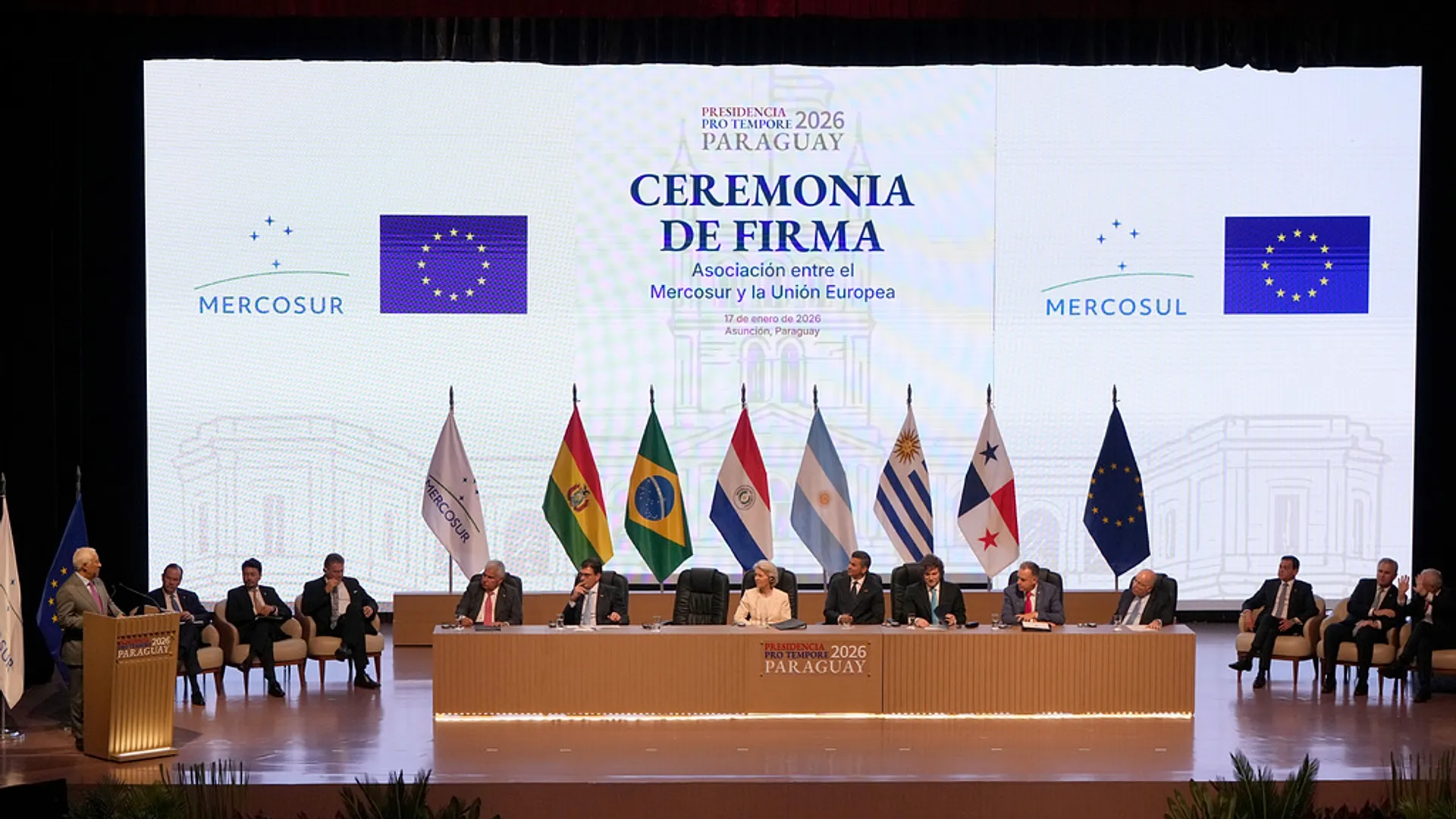
What looks like a technical treaty may quietly reshape how continents trade, produce, and compete.
Brussels, January 2026.
In a move that marks a turning point in multilateral economic relations, the European Union and the South American bloc Mercosur reached a long-awaited trade agreement after more than two decades of complex negotiations. Considered one of the most ambitious trade pacts of modern times, the deal has generated both optimism in economic sectors and deep concern among social, political, and environmental groups.
The agreement was finalized with representatives of Mercosur countries Argentina, Brazil, Paraguay, and Uruguay alongside senior EU officials. While the signing formalizes the political commitment, the pact must still be ratified by the European Parliament and the national legislatures of the South American states before it can enter into force.
The treaty foresees the gradual elimination of more than 90 percent of tariffs on goods traded between the two blocs. This would open the door to freer movement of industrial products, agricultural goods, services, and capital, creating a combined market of over 700 million consumers. Key sectors expected to be affected include automobiles, machinery, food products, and consumer goods.
Supporters describe the agreement as a strategic effort by the EU to diversify its economic partnerships in a world increasingly shaped by geopolitical tensions and trade rivalries, particularly involving the United States and China. By lowering tariffs, both sides aim to reduce costs across transcontinental supply chains and stimulate exports in both directions.
Beyond economics, the agreement is also presented as a political signal in favor of multilateralism and open trade after years of protectionist trends in several major economies. However, the reaction has been far from unanimous.
Agricultural sectors in several EU countries have voiced strong opposition. Farmers’ organizations warn that imports from South America, often produced at lower cost, could push down prices and threaten the survival of European farms. In countries such as France, Poland, and Austria, protests have already emerged, with farmers blocking roads and staging demonstrations against the deal.
Environmental and civil society groups have also raised alarms. They argue that increased trade could intensify pressure on fragile ecosystems, especially through expanded cattle ranching and large-scale agriculture in South America. Critics fear that without strong safeguards, the agreement could accelerate deforestation and weaken incentives for sustainable practices.
In response, negotiators included clauses aimed at monitoring environmental and social standards. These provisions are designed to allow audits and, in extreme cases, the suspension of trade benefits if climate or labor commitments are violated. Even so, many activists remain skeptical, arguing that enforcement mechanisms may be too weak or politically constrained to be truly effective.
From an economic perspective, defenders of the pact emphasize its potential benefits for small and medium-sized enterprises, which could gain access to markets previously out of reach. European industries such as automobiles, heavy machinery, and chemicals see new opportunities in a region with growing demand and abundant natural resources.
On the South American side, governments view the agreement as a chance to attract foreign investment and strengthen their position in global markets. Preferential access to European consumers could boost exports of agricultural products, minerals, and manufactured goods. At the same time, it will require significant modernization of production chains to meet strict European standards.
Politically, the ratification process will be decisive. Divisions inside national parliaments and within the European Parliament itself suggest that approval will not be automatic. Lawmakers sensitive to rural, environmental, and labor concerns may demand additional guarantees before giving their support.
In essence, the EU-Mercosur agreement represents a major step in the architecture of global trade. Its success will depend on whether the signatories can balance market openness with the protection of farmers, workers, and the environment, without undermining competitiveness. The deal promises opportunity, but it also carries risks that will only become clear as it moves from paper to practice.
The narrative is also power.
Narrative is power too.