

 Phoenix 24
It was not nostalgia recycled, it was legacy reframed.
London and Global Entertainment Circuits, January 2026.
Early images of Sophie Turner in her role as Lara Croft for the upcoming Tomb Raider television series have sparked both excitement and discussion among fans and critics alike, marking a new chapter for one of the most enduring action heroines in popular culture. Turner’s embodiment of the character arrives at a moment when franchise reinventions are judged not only by fidelity to source material, but by how they reinterpret iconic legacies for contemporary audiences. The first visuals show an athletic, determined Croft whose costume design and physical presence retain recognizable elements of the character’s heritage while signaling an evolution in tone and narrative depth that aligns with broader shifts in how female action protagonists are portrayed on screen.
The timing of this reveal highlights how franchises increasingly leverage early glimpses to shape cultural anticipation. In the digital age, initial images and conceptual teasers do more than tantalize. They establish a narrative frame through which subsequent episodes, trailers and promotional materials will be interpreted. Turner’s interpretation of Croft appears to balance physical capability with psychological nuance, suggesting that the character’s internal journey will be as much a focus as her outward feats. This dual emphasis reflects contemporary expectations for action heroines, where strength is defined not only by combat ability but by emotional and intellectual resilience.
Sophie Turner’s casting itself underscores the industry’s evolving relationship with established properties. Known for her work in high-profile dramatic roles, Turner brings a dramatic sensibility that complements the demands of action performance. Her presence signals a deliberate choice to blend genre expectations with character complexity, bridging the gap between blockbuster spectacle and serialized storytelling. In doing so, the Tomb Raider series positions itself to appeal to both longtime fans of the franchise and new audiences who value layered character development alongside physical action.
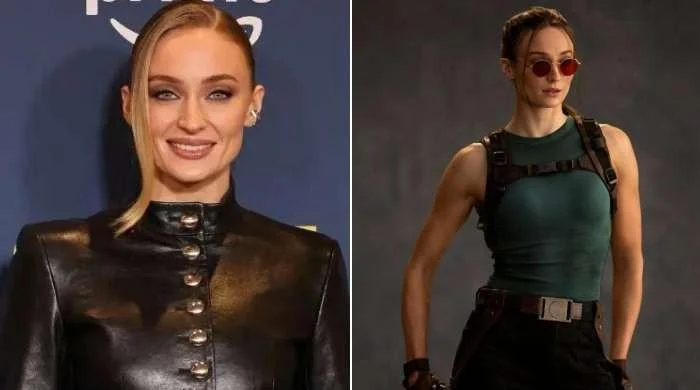
The design of Croft’s outfit in the first images blends visual continuity with functional redesign. The costume retains familiar elements iconic to the character’s visual identity—earth tones, practical gear, athletic silhouette—while integrating updated materials and tailoring that speak to a more grounded and plausible approach to adventuring. This design choice aligns with broader trends in contemporary action storytelling, where costumes are treated as extensions of character psychology and physical agency, rather than mere aesthetic markers. The result hints at a Croft who is prepared for narrative challenges as demanding as any physical obstacle she may encounter.
Beyond visual design, the reaction to Turner’s portrayal reveals the dynamic relationship between audiences and legacy franchises. Longstanding fans often approach reinterpretations with critical scrutiny, balancing affection for earlier iterations with openness to innovation. Early responses to Turner’s look suggest that audiences are engaging with the images not only as fan service but as an invitation to reconsider what the character can represent in a new era. This dialogue between creators and audiences illustrates how franchise evolution is not a one-way projection of production intent, but a negotiation with cultural memory and expectation.

The industry context surrounding this series also reflects shifting strategies in global entertainment production. Major franchises are increasingly moving beyond single media formats, adapting iconic properties into serialized narratives that allow deeper character exploration. The Tomb Raider series exemplifies this trend, offering extended storytelling space that can examine Croft’s motivations, relationships and ethical dilemmas alongside her physical journeys. This format shift aligns with a broader movement toward narrative depth that mirrors audience appetite for stories that resonate emotionally as well as viscerally.
Moreover, Turner’s association with the franchise brings with it her own professional trajectory, one shaped by roles that demanded emotional range and audience engagement. Her transition into a globally recognizable action persona speaks to the permeability of genre boundaries in contemporary acting careers. Actors today navigate landscapes where dramatic rigor and physical performance can coexist within a single project, expanding the interpretive possibilities for characters historically defined by one primary attribute. In Turner’s Croft, viewers may find both the intensity of character introspection and the kinetic energy of action storytelling.
The Tomb Raider series also arrives at a moment when representation in action genres is under active re-evaluation. Female protagonists are no longer exceptions to male-dominated paradigms. Instead, they are central to how franchises define strength, agency and narrative complexity. Turner’s casting and the visual framing of Croft reflect this cultural shift, suggesting that this version of the character will be embedded in a narrative world that recognizes the diversity of female experience rather than leaning on outdated tropes.
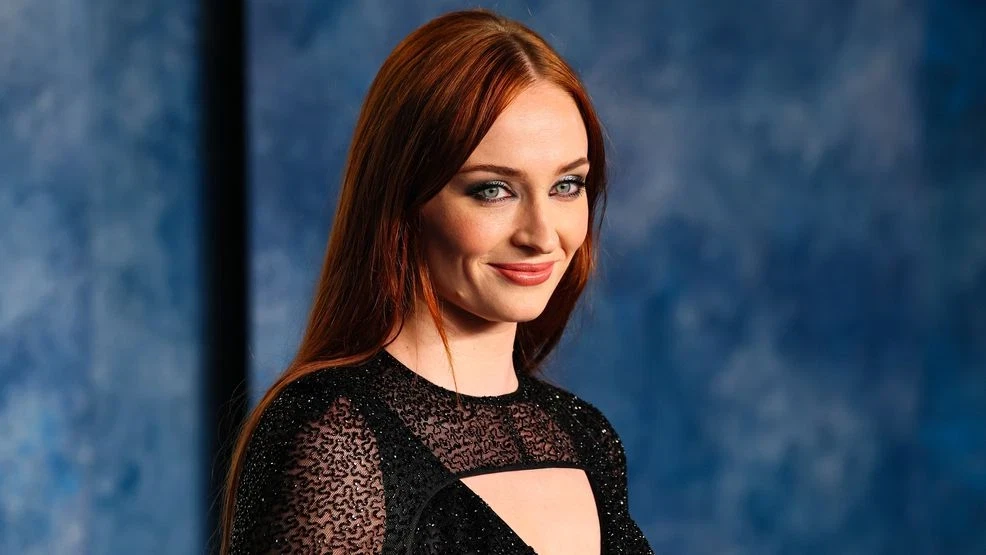
Early reactions from industry observers emphasize that the first images of Turner as Croft set a tone that is respectful of the character’s heritage while clearly oriented toward contemporary storytelling values. The balance of reverence and reinvention suggests that the series aims to honor the cultural imprint of Tomb Raider while updating its narrative lens for a media environment attuned to layered protagonists and globally participatory fandom.
In unveiling Sophie Turner in this role, the production invites audiences to engage with an action hero whose complexity reflects not only physical capacity but emotional texture. It signals a continuation of legacy and an acknowledgment that iconic characters can evolve without losing the core traits that made them resonant in the first place.
Detrás de cada dato, hay una intención.
Detrás de cada silencio, hay una estructura.