

 Phoenix 24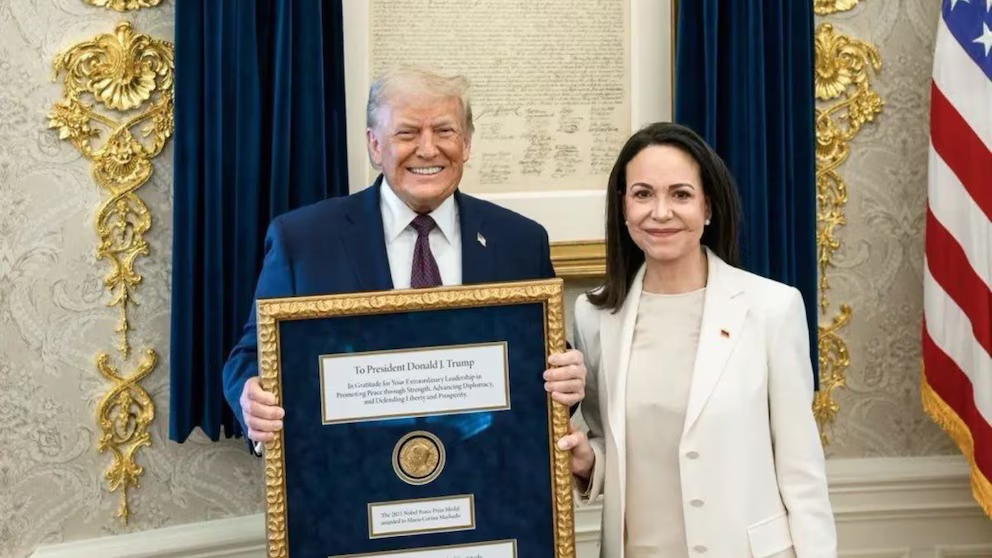
It was not a casual greeting, it was strategic amplification.
Washington, January 2026.
When U.S. President Donald Trump described himself as “very impressed” by Venezuelan opposition leader María Corina Machado during her official visit to the White House, he did more than offer a diplomatic compliment. He elevated her international profile at a moment of intense geopolitical flux surrounding Venezuela’s political transition. The Oval Office meeting served both symbolic and material purposes, signaling ongoing U.S. engagement with leaders who represent democratic aspirations in Latin America, while also suggesting how high-level encounters are leveraged for broader narratives about influence, legitimacy and power in regional politics. Trump’s public praise of Machado, delivered in a setting usually reserved for state diplomacy, transformed what might have been a routine bilateral conversation into a statement with domestic and international implications.
The context of the meeting matters. Venezuela had recently undergone a dramatic political rupture with the capture of former President Nicolás Maduro in a U.S.-led operation. In the wake of that event, Machado, a former National Assembly member and one of the most prominent opposition figures in recent Venezuelan history, arrived in Washington to articulate her vision for Venezuela’s future. Her presence at the White House was not simply ceremonial; it reflected a concrete positioning within the evolving dynamics of Venezuelan politics and foreign policy. When Trump publicly acknowledged his impression, he was signaling support not only for her personally, but for a particular strand of Venezuelan opposition that advocates for democratic reconstruction under conditions aligned with U.S. strategic interests in the hemisphere.
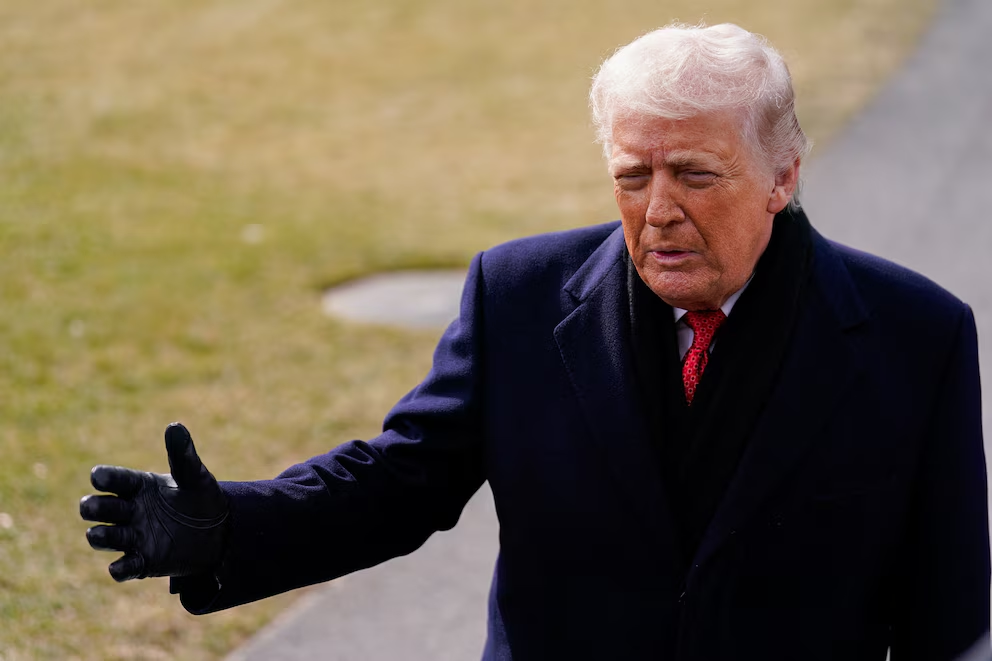
Trump’s choice of language and the optics of the encounter also serve multiple audiences simultaneously. On the international stage, positive remarks about a prominent Venezuelan leader underscore an American posture that portrays itself as a defender of democracy and freedom in Latin America. This narrative resonates with allies concerned about authoritarian resurgence in the region and reinforces the idea that the United States remains engaged, assertive and willing to endorse figures who embody resistance to long-standing autocratic models. For critics of the Maduro regime and supporters of democratic reform, Trump’s words function as validation from a powerful external partner, potentially strengthening Machado’s credibility and leverage in future negotiations or political positioning within Venezuela.
Domestically, Trump’s praise of Machado plays into his broader rhetorical strategy about leadership, resilience and confrontation with authoritarian figures. It allows him to frame his administration’s foreign policy in moral terms: standing with freedom and against oppression. For a U.S. audience that includes a politically engaged diaspora from Latin America and Caribbean communities, this framing can reinforce support among voters who view democratic restoration in Venezuela as a priority. In a U.S. political environment where foreign policy achievements are often assessed through the lens of popular narratives, public compliments become tools of political reinforcement.
Beyond rhetoric, the public encounter also carries substantive diplomatic undertones. Machado reportedly presented Trump with her Nobel Peace Prize medal during the meeting, a gesture that, while symbolic, captures the intersection of personal narrative and political messaging. The physical exchange of such an object in the Oval Office amplifies the idea of shared values and mutual respect. In diplomatic terms, this exchange goes beyond formal statements or prepared remarks; it visually conveys alignment, solidarity, and a personal connection between the two leaders. Even without legally transferring the rights to the award itself, the gesture communicates a narrative of trust and endorsement that can resonate across media platforms and political discussions.
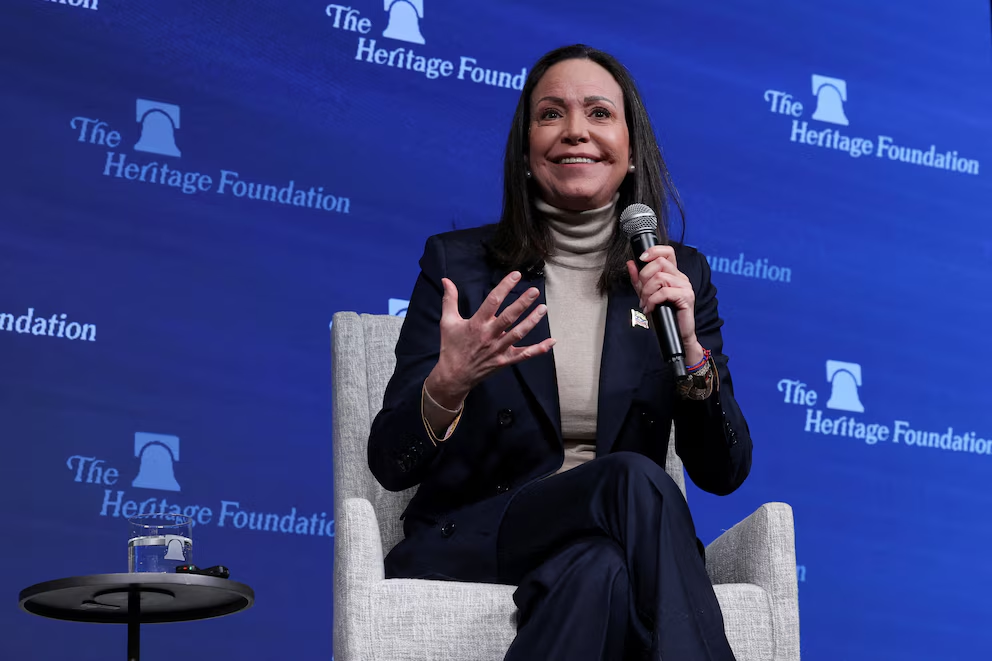
Yet the implications are not without complexity. Machado’s own political trajectory is multifaceted, marked by long-standing opposition to the Maduro regime and by internal debates within the broader Venezuelan opposition about strategy, alliances and the role of external actors. Her meeting with Trump thus sits at the intersection of external support and internal political contention. Some domestic actors may view this engagement as a necessary articulation of international support, while others may critique it as overly dependent on foreign political figures for legitimacy. This tension reflects the broader challenge that many opposition movements face when navigating the balance between domestic autonomy and international advocacy.
Internationally, Trump’s framing of his impression of Machado also interacts with how other regional and global actors interpret the U.S. role in Venezuela’s transition. Countries with differing geopolitical priorities, including those that have historically maintained ties with Caracas, may view the encounter through strategic lenses rather than purely democratic rhetoric. In this sense, the meeting becomes a site of interpretation, where different governments project their own interests, concerns and expectations onto what might otherwise appear as a straightforward diplomatic exchange.
For Machado herself, the public praise from a U.S. president offers both opportunity and risk. It raises her visibility and can deepen her influence in international forums, but it also situates her within narratives that some domestic critics might characterize as overly aligned with external interests. Navigating these perceptions requires careful rhetorical management, strategic communication and a clear articulation of how international support aligns with Venezuelan aspirations for sovereignty, stability and democratic renewal.
Underlying the public encounter are broader questions about how political figures employ symbolic events for strategic ends. In a media environment saturated with rapid commentary, a president’s off-hand praise carries enduring weight. It shapes headlines, drives social media engagement, and becomes part of the historical record that future scholars, journalists, and political actors will interpret. Far from being a simple expression of personal admiration, Trump’s statement is an inflection point in the public relationship between two political figures whose careers intersect with some of the most consequential debates about democracy and power in the Americas.
The meeting between Trump and Machado thus serves as a microcosm of contemporary geopolitical dynamics where symbolism, narrative and political positioning coexist with diplomatic agendas. It reveals how personal impressions can become political instruments and how state visits are never only about ceremony. In the complex interplay between domestic politics and international relations, every public word matters, carries weight and frames future possibilities.
Detrás de cada dato, hay una intención.
Detrás de cada silencio, una estructura.