

 Phoenix 24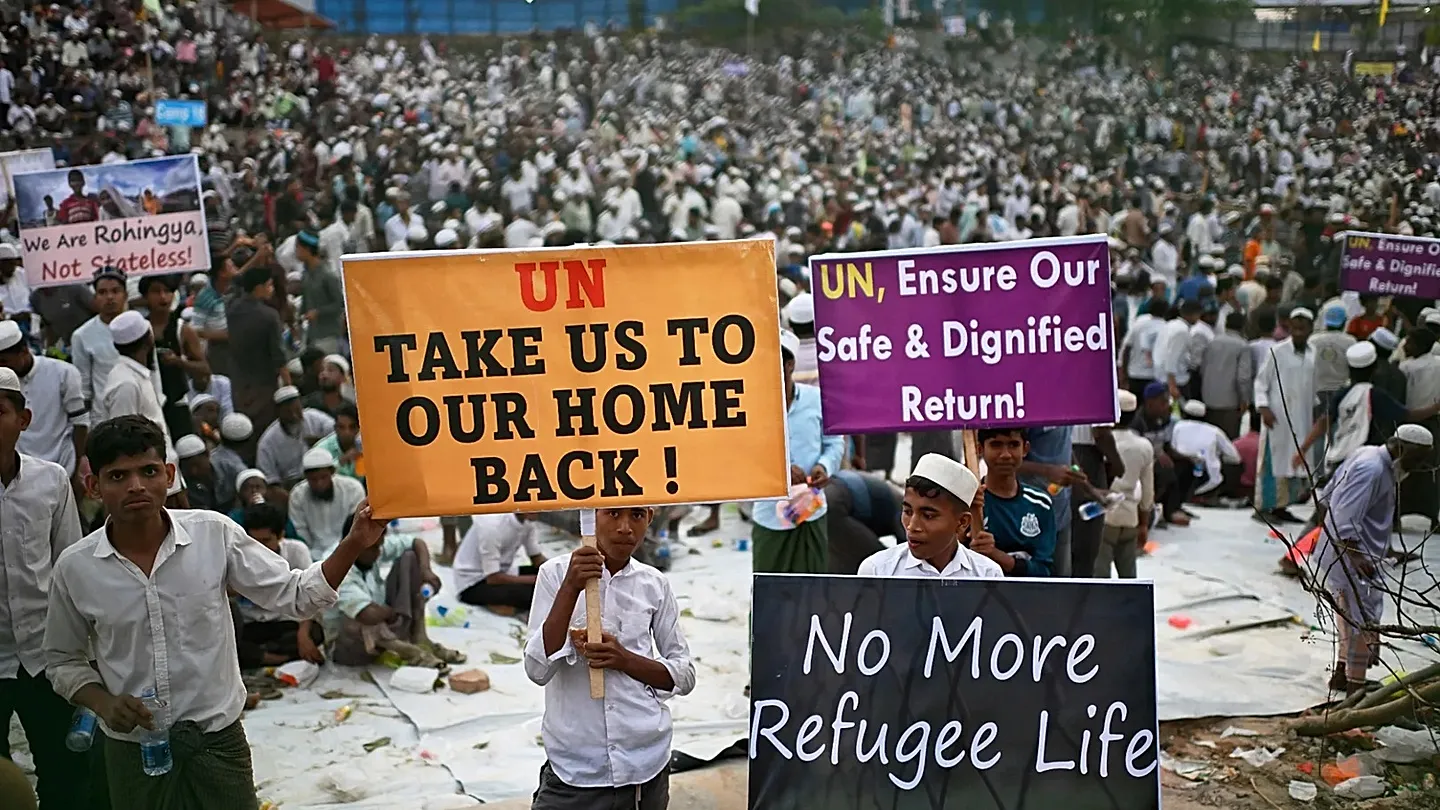
When a people are erased from maps, language becomes their last refuge, and justice their final witness.
The Hague, January 2026. The world’s highest judicial court has reopened a question many governments preferred to postpone: did Myanmar commit genocide against the Rohingya. What began as smoke over villages in 2017 now rises as legal argument inside a courtroom built for history. This is not only a trial of a state. It is a trial of global patience with mass violence.
The hearings at the International Court of Justice were triggered by a case filed years ago by The Gambia under the Genocide Convention. Its accusation is direct: Myanmar’s military operations in Rakhine State were not counterinsurgency, not chaos, not collateral damage. They were a systematic attempt to destroy a people in whole or in part. Villages burned, women raped, men executed, children forced into flight. More than 700,000 Rohingya crossed into Bangladesh in weeks. Many never crossed at all.
Myanmar’s rulers deny genocide. They call the 2017 operations a security response to attacks by armed Rohingya groups. They argue that violence happened, yes, but without genocidal intent. In international law, that word, intent, is everything. Genocide is not defined only by killing, but by the purpose behind it. The court must decide whether the violence was chaotic repression or targeted destruction.
This case is unusual. It is not victims suing perpetrators. It is a state, The Gambia, suing another state in the name of a convention that belongs to humanity. The Rohingya themselves are not formally a party, yet everything in the room revolves around their absence. They sit in camps in Bangladesh, in Malaysia, in Indonesia, in shadows across the world. Their homes are now military zones or ashes.
The Rohingya crisis did not begin in 2017. It is the result of decades of erasure. Myanmar’s 1982 nationality law stripped them of citizenship. They became foreigners in the land of their birth. Movement restricted. Marriages controlled. Education limited. The state did not simply oppress them. It rewrote them out of legitimacy.
When violence exploded in 2017, it followed a familiar colonial pattern of purification. Soldiers arrived. Villages were surrounded. Men disappeared. Women were violated. Homes were burned so return would be impossible. What matters now is not only what happened, but how it was organized. Genocide is not an accident. It is administration with hatred.
The hearings will last weeks, but their meaning is longer. The court will examine reports, testimonies, satellite images, patterns of command. It will search for that invisible line where brutality becomes extermination. Whatever the verdict, the process itself is already a verdict on silence. It says that mass displacement is not a closed chapter. That delayed justice is still justice attempted.
For Myanmar’s military rulers, this is a rare moment of exposure. Since the 2021 coup, they have ruled through fear, war against their own population, and isolation. The Rohingya case connects their internal brutality to their external responsibility. It tells them that borders do not end moral jurisdiction.
The international system is watching itself. The Genocide Convention was born from the ashes of the Holocaust with a promise: never again would destruction of a people be treated as domestic business. Yet since then, Rwanda, Bosnia, Darfur, Yazidis, Rohingya have all tested that promise. Each time, the world said again and then waited.
This case also has political weight beyond Myanmar. It arrives as other genocide accusations circulate globally. It will shape how courts interpret intent, evidence and state responsibility. A strong ruling could strengthen future cases. A weak one could weaken the very word genocide into a political slogan instead of a legal weapon.
For the Rohingya, the court cannot return the dead. It cannot rebuild burned villages. It cannot erase trauma. But it can do something that camps cannot provide: recognition. To be named as victims of genocide is to be restored to history. To be ignored is to be erased twice.
Bangladesh, which hosts over a million Rohingya, watches closely. The camps are overcrowded, fragile, and increasingly hopeless. Young people grow up stateless, without future. If the court confirms genocide, pressure will grow on the international community not only to condemn, but to act, to resettle, to protect, to prevent permanent exile from becoming permanent identity.
The limits of law are also visible. The court has no police. It cannot arrest generals. It cannot enforce verdicts alone. Its power is narrative power. It defines what the world must call things. That is not small. Empires fall when their stories collapse.
Myanmar’s defense rests on one dangerous idea: that suffering without intent is not genocide. That mass displacement without paperwork is not extermination. But genocide rarely announces itself with documents titled “Destroy This People.” It reveals itself in patterns, repetition, scale and direction.
The Rohingya villages were not burned randomly. They were burned systematically. People were not chased accidentally. They were chased until borders broke. Children were not orphaned by chance. They were orphaned by design.
The court now carries the weight of naming that design.
This is not only about Myanmar. It is about whether the world still believes that some crimes are not political disagreements but moral crimes against humanity itself. If genocide becomes just another accusation among many, its meaning dies.
For now, judges listen. Survivors wait. Governments calculate. And a people once erased from citizenship stand at the center of a courtroom that may decide whether they are also erased from law.
The verdict will not end their suffering. But it will decide whether the world dares to say, clearly and without fear, what happened to them.
Detrás de cada dato, hay una intención. Detrás de cada silencio, una estructura.