

 Phoenix 24
Shifts in the competitive landscape of generative AI reflect evolving user preferences and innovation pressures.
San Francisco, United States.
A recent analysis indicates that ChatGPT, the conversational artificial intelligence platform developed by OpenAI, has experienced a decline in active users over the past year as more individuals and organizations adopt alternative models such as Gemini, a generative AI developed by Google. According to the report, this trend reflects a broader shift in the AI marketplace as users evaluate capabilities, features and integration options across competing platforms. While ChatGPT remains one of the most widely recognized AI tools globally, the findings suggest that emerging competitors are gaining traction by aligning their offerings with user needs and expectations in areas such as multimodal interaction, real-time data integration and customization.
The report highlights that Gemini’s appeal lies in its capacity to integrate with a wider ecosystem of services and applications, a factor that has attracted users seeking seamless workflows across productivity tools, search and communication environments. This multifaceted integration may contribute to user retention as organizations aim to streamline processes across various digital touchpoints. In contrast, some users of ChatGPT have cited limitations in real-time information access and the need for more tailored functionality as reasons for exploring alternative models. These motivations illustrate how feature differentiation and strategic positioning influence adoption patterns in a rapidly evolving technological landscape.
Analysts emphasize that generative AI platforms are part of a dynamic competitive field where performance, usability and ecosystem compatibility shape user decisions. As models become more sophisticated and diversified, users weigh factors such as the accuracy of responses, the ability to handle complex queries and the ease of integration with existing digital environments. Gemini’s growth in these areas suggests that enterprises and individual users are prioritizing solutions that extend beyond standalone conversational interfaces to broader, context-aware capabilities that support varied use cases.
The report also notes that AI adoption patterns are influenced by strategic partnerships and brand trust, with organizations often selecting tools that align with their existing technology stacks and long-term operational goals. For example, enterprises that already utilize a suite of cloud-based productivity services may gravitate toward solutions that offer native compatibility, reducing friction and enhancing workflow efficiency. This strategic alignment can accelerate the transition from one AI platform to another as users seek cohesion across digital infrastructure.
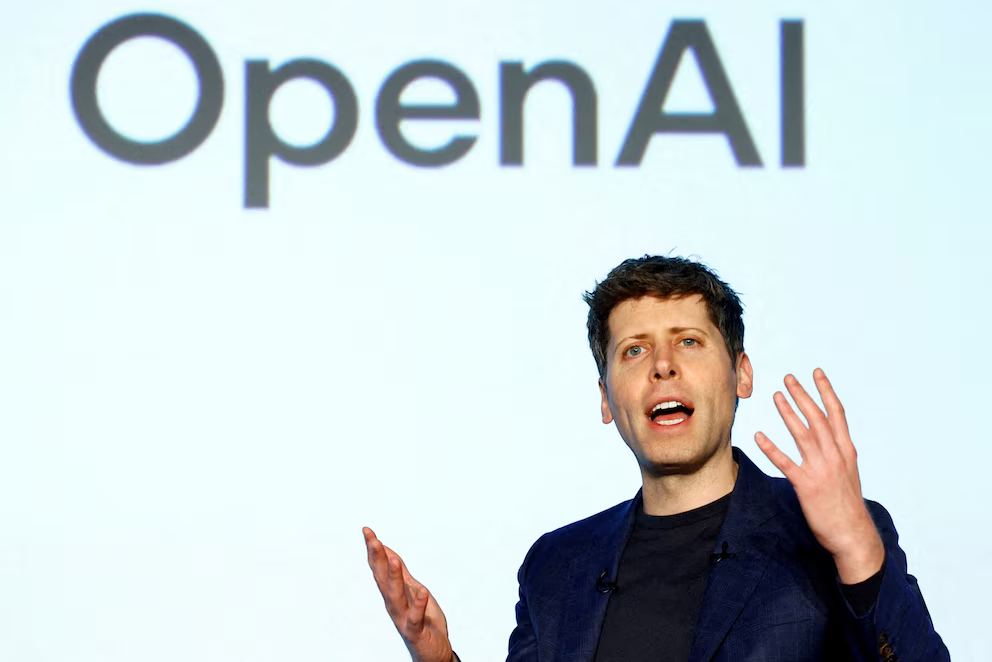
Despite the reported decline in active users, ChatGPT continues to evolve through iterative updates and expanded feature sets designed to meet diverse user needs. Developers have introduced improvements aimed at enhancing responsiveness, context retention and domain-specific performance, while also experimenting with integration pathways that connect the platform to external tools and data sources. These efforts suggest that competition can drive innovation, prompting incumbent platforms to reassess and refine their offerings in response to market signals.
User feedback plays an essential role in shaping the direction of generative AI development, with communities of developers, researchers and end users contributing insights that inform design priorities. OpenAI and other platform providers monitor usage trends and user sentiment to identify areas for enhancement, a process that underscores how collaboration between developers and users can influence product evolution. In this environment, responsiveness to feedback and agility in feature deployment are strategic assets in maintaining relevance.
The broader context of generative AI adoption encompasses ethical considerations, regulatory discussions and public dialogue about the role of automated systems in society. As competition intensifies, stakeholders are also grappling with questions about accountability, bias mitigation and the transparency of underlying models. These discussions shape not only product development, but also how users perceive the trustworthiness and long-term viability of AI platforms.

Ultimately, the shifting patterns of user engagement between ChatGPT and alternatives like Gemini highlight the fluid nature of technological preference in the digital age. Platforms that balance robust functionality, seamless integration and adaptability to user needs are likely to shape the next phase of generative AI adoption.
Detrás de cada dato, hay una intención. Detrás de cada silencio, una estructura.
Behind every data point, there is an intention. Behind every silence, a structure.