

 Phoenix 24
Inventors and researchers are developing alternatives to traditional solar panels that may double energy output and reduce installation and material expenses.
Mexico City, December 2025, Innovations in renewable energy technology continue to accelerate as scientists and engineers aim to make clean power more efficient, affordable, and widely accessible. Among the most promising developments emerging from research laboratories and pilot installations around the world is an alternative to conventional solar panels that reportedly produces significantly more energy at lower overall cost. This new approach harnesses novel materials and design concepts that challenge the long-standing dominance of silicon photovoltaic cells, which have powered solar energy expansion for decades.
Traditional solar panels convert sunlight into electricity using semiconductor materials, most commonly silicon, arranged in flat arrays. These panels have become increasingly efficient and cheaper over time due to advances in manufacturing, economies of scale, and improved cell design. Still, the fundamental limitations of silicon technology—such as fixed efficiency ceilings and performance losses under certain environmental conditions—have driven scientists to explore other pathways that could overcome these constraints.
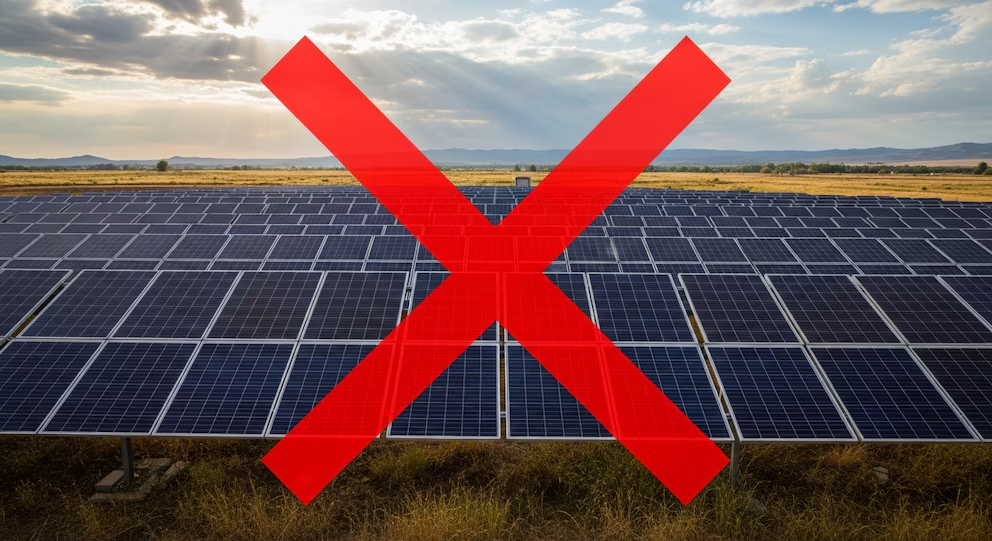
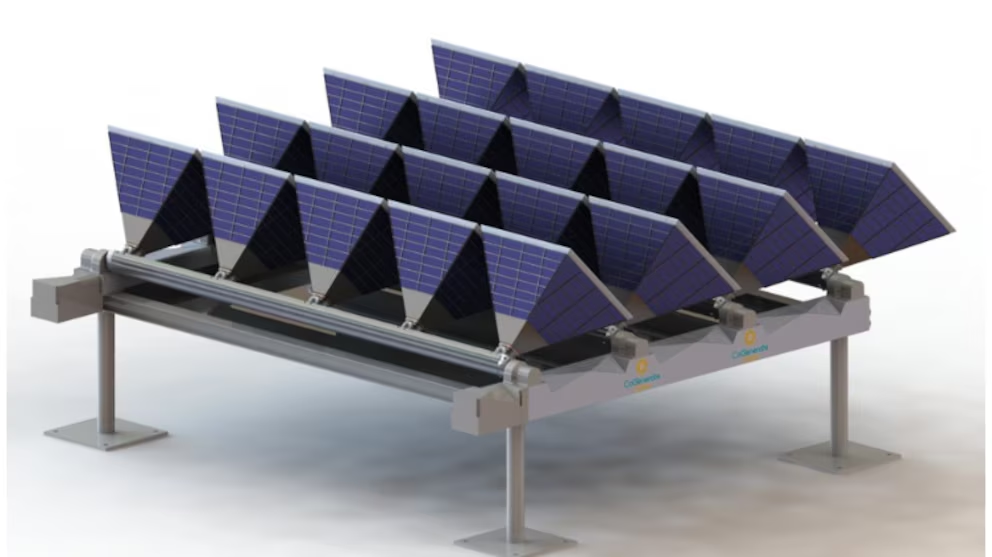
The emerging technology focuses on combining advanced materials with innovative structural designs to capture a broader range of the sun’s energy spectrum and enhance conversion efficiency. Some of these materials include perovskite compounds, layered semiconductor structures, and flexible substrates that can be integrated into a variety of surfaces. Researchers emphasize that the goal is not simply to replace existing systems, but to offer complementary solutions that can produce more power in diverse contexts, from residential rooftops to large utility installations.
One of the key advantages of these next-generation technologies is their ability to generate greater energy output per unit area. By capturing wavelengths of sunlight that traditional panels either reflect or fail to convert efficiently, these systems can produce significantly more electricity under similar conditions. In laboratory tests and early field deployments, some prototypes have demonstrated energy yields that are roughly double those of standard silicon panels, though researchers caution that real world performance will depend on factors such as geographic location, weather patterns, and installation quality.
Another compelling aspect of the new systems is their potential to reduce the cost of solar energy production. While silicon manufacturing has become more affordable over time, it still involves energy-intensive processes and material costs that contribute to the final price of solar installations. Alternative materials and methods emphasize simpler fabrication techniques that require less energy, fewer rare elements, and lower temperatures during production. If these processes can be scaled effectively, they could reduce both manufacturing and installation costs, making renewable energy more competitive with traditional fossil fuels.

The shift toward more efficient and cost effective solar technology also aligns with global climate and energy goals. Countries and corporations around the world have pledged ambitious targets for reducing greenhouse gas emissions and expanding renewable energy capacity throughout the next decade. Technologies that can produce more electricity with less material and at lower cost would help accelerate the transition to a cleaner energy mix, particularly in regions where energy access remains limited.
Despite the enthusiasm surrounding these innovations, experts stress that several challenges remain before widespread adoption can occur. For one, many of the advanced materials used in next-generation systems are still in the experimental phase of development. Their long-term durability, resistance to degradation and performance under real world stressors such as heat, humidity, and dust must be validated through extensive testing. Longevity is a critical factor for any energy infrastructure, as systems must operate reliably over many years to justify investment.
Researchers also highlight the importance of integrating these technologies into existing power grids and energy markets. Generating abundant electricity at the local level is only one piece of the puzzle; effective storage, transmission and distribution systems are necessary to ensure that the energy produced can be used when and where it is needed. Advances in battery technology, smart grid solutions, and regulatory frameworks will play a key role in determining the impact of more powerful solar alternatives.
Economic considerations are another major area of focus. While the potential for cost reduction is significant, transitioning to new manufacturing processes and supply chains requires investment, coordination and sometimes policy support. Governments may choose to incentivize early adoption through subsidies, tax credits, or research funding, while private industry partnerships could help scale production and bring products to market more rapidly.
Environmental assessments are also part of the conversation about emerging solar alternatives. New materials and manufacturing techniques must be evaluated not only for their immediate performance but also for their full lifecycle impact. Sustainable sourcing of raw materials, recycling at the end of product life and minimizing hazardous waste are all concerns that researchers and policymakers weigh as part of responsible energy innovation.
Public perception and acceptance will likely influence the deployment of new energy technologies as well. Consumers who have grown accustomed to traditional solar panels may require education and demonstration projects that build confidence in alternative systems. Clear communication about performance, costs, reliability and maintenance expectations can help bridge the gap between scientific breakthroughs and consumer willingness to adopt new energy solutions.

Collaboration across sectors is already underway in many countries, where universities, research institutions and private companies partner to accelerate development and testing. Pilot programs in different climates and applications—from urban rooftops to remote agricultural sites—are providing valuable data that inform future design improvements and deployment strategies. These early efforts are important not only for proving technical viability but also for identifying practical challenges that may not be evident in controlled environments.
As the global push for sustainable energy continues, breakthroughs in solar technology represent a vital piece of the broader effort to meet growing demand while reducing environmental impact. The development of systems that produce more energy at lower cost has the potential to transform how societies generate and consume power. Whether these innovations will reach scale in the near future remains contingent on continued research, investment and collaboration across disciplines.
Behind every data point, there is an intention. Behind every silence, there is a structure.
Detrás de cada dato, hay una intención. Detrás de cada silencio, una estructura.