

 Phoenix 24
The approval of new airlines reflects more than market growth; it signals a recalibration of risk and resilience.
New Delhi, December 2025
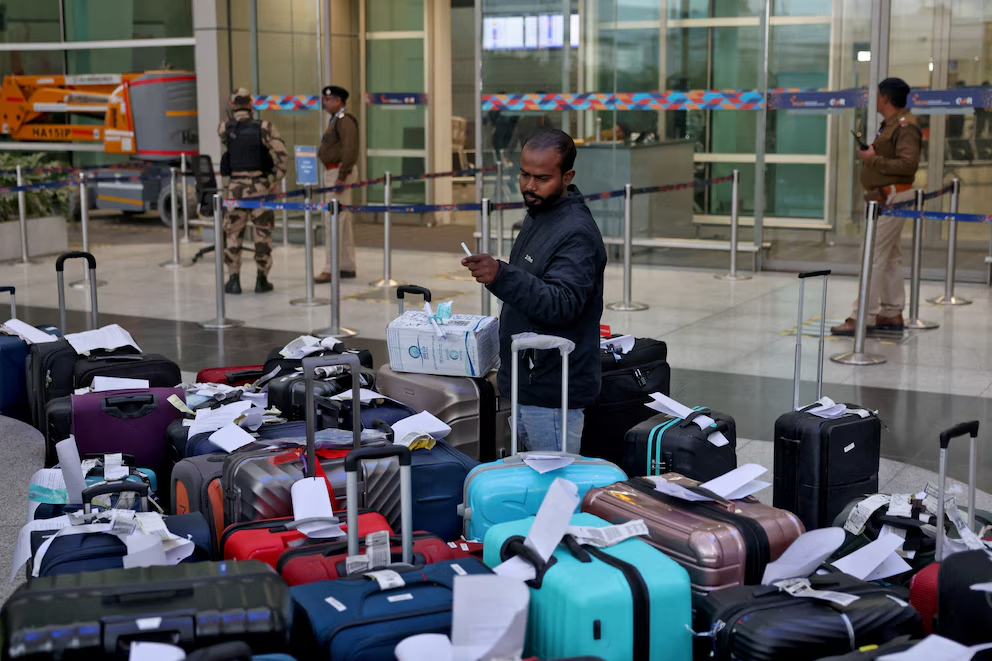
India’s decision to authorize two new airlines marks a calculated response to one of the most disruptive episodes its civil aviation sector has faced in recent years. Following widespread flight cancellations that stranded tens of thousands of passengers and strained airport operations nationwide, aviation authorities moved to reduce systemic vulnerability in a market dominated by a small number of carriers. The approvals, granted at the close of 2025, are intended to diversify capacity and restore confidence in a sector that underpins both domestic mobility and economic growth.
The immediate catalyst for the policy shift was the collapse of operational reliability at the country’s largest airline earlier in December. Staffing constraints, regulatory changes governing pilot duty hours, and aggressive scheduling practices converged to trigger mass cancellations over several days. The episode exposed the risks inherent in a highly concentrated market where disruptions at a single carrier can cascade across the entire transport system. For regulators, the crisis underscored that efficiency without redundancy carries a hidden cost.
India’s aviation market has expanded rapidly over the past decade, driven by rising incomes, urbanization, and a growing middle class for whom air travel has become increasingly accessible. Yet this expansion has also produced structural imbalances. A handful of airlines command the majority of domestic traffic, leaving limited buffers when operational stress emerges. By authorizing new entrants, the government aims to introduce competitive pressure while building alternative capacity that can absorb shocks and stabilize service delivery.
The newly approved airlines are expected to target underserved routes and regional connectivity, areas that have long been vulnerable to capacity shortages. Policymakers view this approach as complementary to existing efforts to integrate smaller cities into the national air network. By encouraging carriers with different fleet profiles and cost structures, authorities hope to reduce overreliance on any single operator while expanding geographic coverage.
From an economic standpoint, the move reflects a broader recalibration of regulatory priorities. Rather than focusing solely on growth metrics such as passenger volume and route expansion, regulators are increasingly attentive to resilience, labor sustainability, and consumer protection. International aviation analysts note that similar shifts have occurred in other fast growing markets where aggressive consolidation initially delivered low fares but later exposed fragility under operational strain.
The financial and operational challenges facing new airlines should not be underestimated. Aviation remains one of the most capital intensive industries, requiring access to aircraft, trained crews, airport slots, and stable financing. Fuel costs, currency volatility, and infrastructure constraints pose additional hurdles. Past attempts to expand the roster of Indian carriers have often ended in consolidation or collapse. Success for the new entrants will depend on disciplined growth and regulatory consistency rather than rapid expansion alone.
At the regional level, India’s decision is being watched closely across Asia. As one of the world’s largest aviation markets, its regulatory choices carry signaling value for other emerging economies balancing competition with stability. Observers note that diversification of carriers can enhance consumer choice and reliability, but only if accompanied by strong oversight and labor planning.
For passengers, the implications are tangible. More airlines may translate into improved connectivity, reduced congestion during peak disruptions, and a gradual easing of fare volatility on domestic routes. For the state, the broader objective is reputational as much as operational. Maintaining trust in national transport infrastructure is essential for tourism, commerce, and investor confidence.
Ultimately, the authorization of new airlines is less about immediate expansion than about correcting structural exposure revealed by crisis. India’s aviation authorities appear intent on reshaping the market to withstand future shocks, acknowledging that resilience, not just scale, defines sustainable growth in modern air transport.
Más allá de la noticia, el patrón.
Beyond the news, the pattern.