

 Phoenix 24
Talent can open doors, but restraint decides how long they stay open.
Barcelona, December 2025.
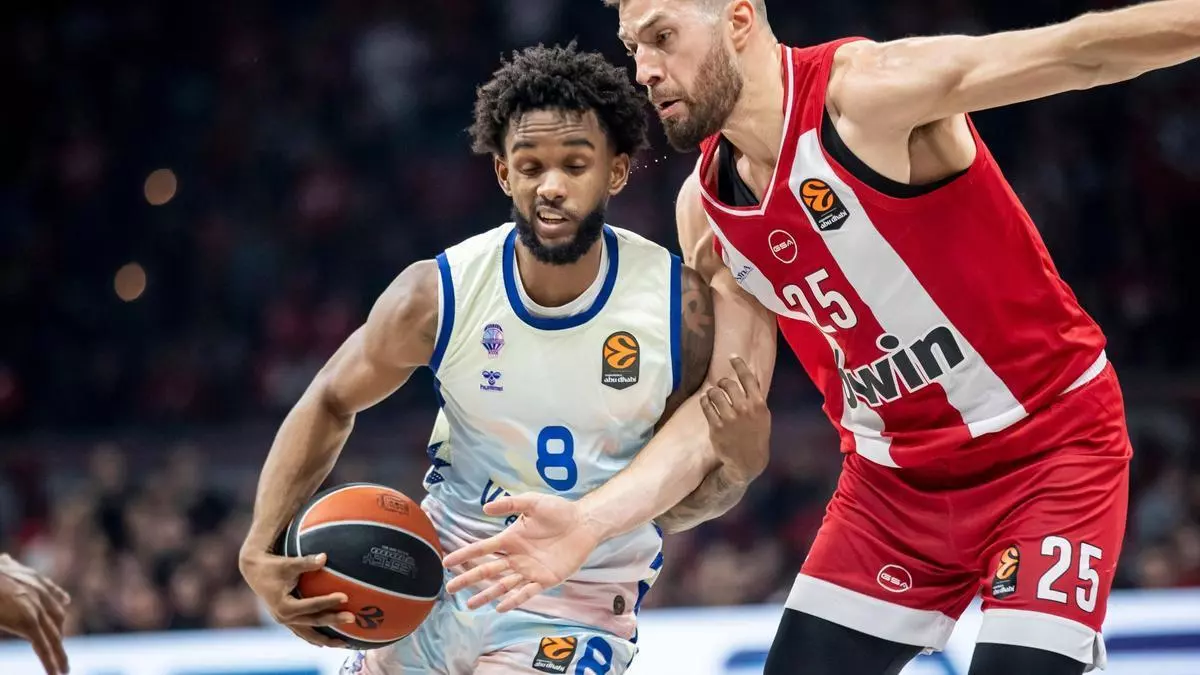
Jean Montero’s rise has been fast enough to invite noise, expectation and premature labels, yet the Dominican guard has chosen a different tone. While his performances continue to draw attention across European basketball, Montero insists that progress, not hype, remains the axis of his professional path. In a landscape where early success often accelerates ego as much as opportunity, his message is strikingly simple: keep both feet on the ground.
At just 21, Montero has already accumulated experiences that many players only reach later in their careers. Exposure to elite competition, growing responsibility on the court and increasing visibility have placed him under a brighter spotlight. Rather than embracing the rhetoric of stardom, he has framed this phase as a learning curve, emphasizing daily work, discipline and mental balance as the real markers of advancement. For Montero, individual highlights are secondary to consistency and collective performance.
Those around him describe a player acutely aware of the risks of acceleration without control. Coaches and teammates note that his focus remains anchored in fundamentals: decision making, defensive commitment and reading the game beyond raw athleticism. This approach reflects an understanding that talent alone rarely sustains a career at the highest level. In European basketball, where tactical structure and patience are non-negotiable, adaptability often matters more than explosiveness.
Montero’s development has also been shaped by context. Transitioning through different systems and competitive environments has forced him to mature quickly, both on and off the court. Rather than resisting that pressure, he appears to have internalized it as part of his growth. The emphasis on humility is not performative. It is a coping mechanism in a profession where momentum can vanish as quickly as it appears.
Statistically, his impact continues to expand, but he resists framing progress through numbers alone. He speaks instead about understanding tempo, improving shot selection and learning when to take control and when to defer. This self assessment signals a player thinking several steps ahead, conscious that visibility without efficiency eventually becomes a liability. The ability to slow the game down, particularly for a guard, is often the difference between promise and permanence.
There is also a psychological dimension to his stance. In an era where young athletes are constantly measured, compared and amplified through social platforms, choosing restraint is itself a form of resistance. Montero’s insistence on remaining grounded reflects an awareness of how external narratives can distort internal focus. By narrowing his attention to training and competition, he reduces the friction between expectation and execution.
Team dynamics reinforce this posture. Within the locker room, Montero is not positioned as a finished product but as a developing piece within a broader structure. That framing allows space for mistakes, corrections and incremental improvement. It also aligns with the European model of player development, where roles are earned and refined rather than assumed. The absence of entitlement is noticeable and intentional.
Observers see in Montero a player navigating the tension between confidence and control. He does not shy away from responsibility, yet he avoids framing himself as a savior or focal point beyond what the game requires. This balance is rare among young guards, particularly those whose skill set invites constant comparison to established names. By rejecting shortcuts to identity, he protects the process that sustains growth.
The road ahead remains demanding. Expectations will continue to rise, competition will intensify and margins will narrow. Staying grounded will not insulate Montero from setbacks, but it may determine how he responds to them. Careers are rarely defined by peaks alone. They are shaped by how players absorb pressure, adapt to adversity and recalibrate after both success and failure.
In that sense, Montero’s message extends beyond a personal mantra. It reflects a broader truth about elite sport. Progress is cumulative, fragile and often invisible from the outside. The discipline to stay grounded is not about denying ambition, but about sequencing it correctly. For Jean Montero, the priority is clear: build the foundation first, and let the rest follow.
Más allá de la noticia, el patrón.
Beyond the news, the pattern.