

 Phoenix 24
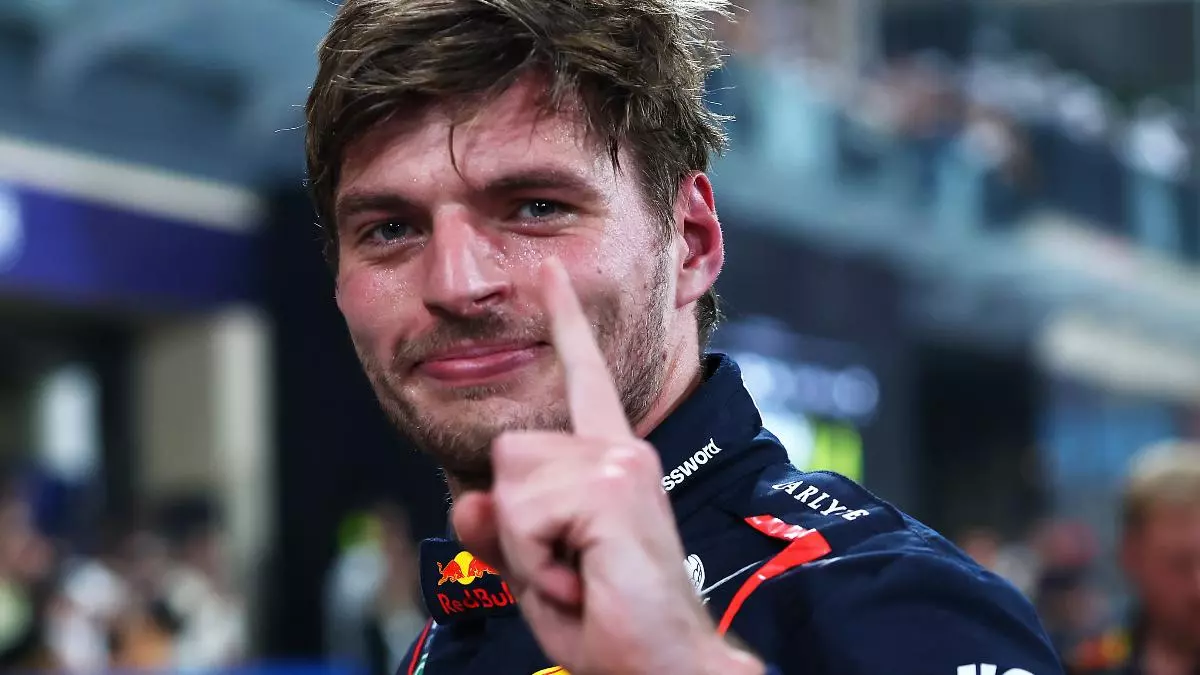
Calm is not an accident in Formula One; it is a weapon sharpened under pressure.
Abu Dhabi, December 2025
Max Verstappen has built his reputation on raw speed, mechanical precision and an unwavering instinct for control in environments where most drivers feel the air tighten around them. This season he decided to reveal something he had kept mostly private. His ability to remain cold-blooded on track is not an inherited talent or a spontaneous reflex. It is the result of a personal discipline forged over years of scrutiny, expectation and the relentless pressure that comes with leading the most demanding championship in the world of motorsport. What he disclosed offers a rare look into the mental architecture of a driver who has turned calm into an operational advantage.
His reflection began with a simple admission. The pressure never disappears. It shifts, reshapes and waits in silence for moments of weakness. Verstappen explained that the higher the stakes the quieter he becomes. He does not raise his voice, accelerate conversations or let adrenaline steer his thoughts. Instead he strips the noise away. He focuses on the smallest pieces of information. He allows his mind to reduce the chaos of a race weekend into fragments he can manage. He calls it the technique that saved him from losing control during moments when the championship could have slipped from his hands.
Behind this neutrality lies a practice that might seem counterintuitive for a driver known for aggression during overtakes and defensive moves. Verstappen isolates emotion before isolating risk. He studies the circuit early, not simply to memorise lines but to identify where stress might rise. He prepares for pressure as if it were a physical opponent. Inside the garage he speaks little. Before qualifying sessions he visualises failure and then neutralises it mentally. During the race he treats every unexpected scenario as a confirmation of what he already expected. In his own words the objective is not to eliminate pressure but to run parallel to it.
This approach contrasts with the rhythm of a sport defined by noise, speed and constant measurement. Verstappen admits that people often mistake his calmness for indifference. Yet his silence is not distance. It is commitment. It protects his concentration and shields him from the psychological turbulence that consumes many drivers before they reach the final laps. The deeper the pressure the slower he breathes. The more the world accelerates around him the more he forces himself to decelerate internally. This inversion of tempo has become part of his identity, a signature as recognisable as his aggressive racecraft.
His team acknowledges that this internal discipline is one of the reasons he thrives in critical phases of the season. Engineers describe how he listens without interruption, digests technical feedback and then converts information into decisions with an unusual level of clarity. Mechanics note the absence of panic in his voice during radio communications. They say that when he reacts it is with direction rather than emotion, even when strategies collapse or unexpected threats emerge on track. This alignment between mental structure and competitive instinct sets him apart in a championship where milliseconds create heroes and errors dismantle careers.
Verstappen also described a boundary he had to construct to survive the psychological intensity of recent seasons. He learned to detach from public expectation and to neutralise both praise and criticism as background noise. He no longer seeks validation through victory nor interprets defeat as a personal failure. The recalibration was necessary. Without it he believes pressure would have recalibrated him instead. He insists that success in Formula One is not measured solely by trophies but by how steadily a driver can protect their own equilibrium while everything around them demands collapse or triumph.
What emerges from his explanation is a portrait of a driver who has turned mental resilience into a competitive strategy. Verstappen demonstrates that high-performance racing is not only about mechanical perfection or physical endurance. It is also about narrative control. If a driver allows pressure to tell the story, the race is already compromised. If the driver tells the story, pressure becomes part of the script rather than the antagonist. Verstappen prefers the second interpretation. He has no interest in being shaped by expectation when he can shape his response to it.
As the paddock prepares for another season filled with unknowns, Verstappen’s revelation adds dimension to a figure often analysed only through lap times and aggressive manoeuvres. His success, he explains, depends on protecting an internal quiet that cannot be measured with telemetry. It is not the calm of someone who feels nothing but the calm of someone who sees everything. The discipline he described is not an accessory to his performance. It is the foundation of a career that has learned to transform pressure into clarity.
Phoenix24. Every silence speaks. / Phoenix24. Cada silencio habla.