

 Phoenix 24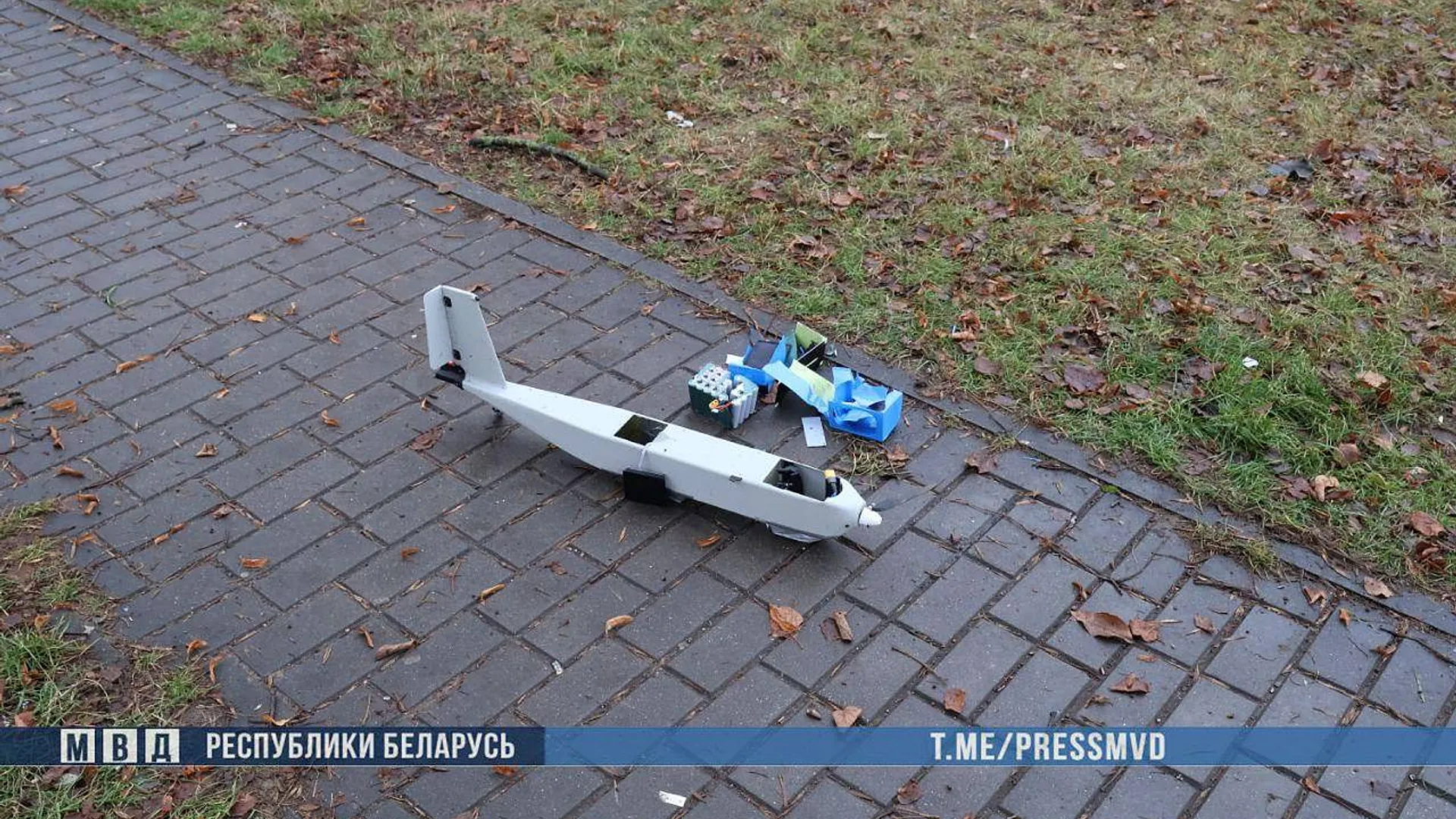
The kind of incident that usually disappears into technical reports suddenly erupted into a diplomatic alarm when a small unmanned aircraft fell from the sky carrying a political message.
Brussels, December 2025. Belarus ignited a new crisis along NATO’s eastern edge after announcing that a drone originating from Lithuania had crossed its airspace before crashing near the outskirts of Grodno. According to the Belarusian Ministry of Foreign Affairs, the device released opposition symbols before impact, a detail that transformed what might have been an incidental violation into a politically charged confrontation. The government in Minsk declared that the intrusion constituted a deliberate provocation and summoned Lithuania’s chargé d’affaires for immediate explanations. Within hours, regional observers recognized that the episode had the potential to widen the already fragile security landscape between the Baltic states and Belarus, a frontier where technology, politics and covert signaling often collide.
Belarus claims the aircraft entered from the Lithuanian district of Lazdijai and traced a trajectory consistent with transit toward Poland before falling inside Belarusian territory. Officials reported that the drone contained components common in European civilian models, though modified to carry lightweight payloads. The release of opposition flags, an act interpreted by Minsk as an attempt to undermine domestic stability, quickly elevated the diplomatic temperature. Belarus demanded a full investigation from Vilnius, the identification and punishment of those responsible and assurances that similar incidents would not recur. The government publicly warned that it would take all necessary measures to defend its sovereignty, language that historically precedes escalatory signaling in its relations with the West.
Lithuania rejected the accusation outright. Crisis management officials in Vilnius insisted that Belarus has offered no verifiable evidence and suggested that Minsk may be exploiting the situation to create a narrative of foreign interference. Lithuanian authorities recalled prior episodes in which they reported aerial objects crossing their border from Belarus, contributing to a pattern of reciprocal allegations that erodes trust at a time of heightened regional instability. For analysts familiar with hybrid conflict dynamics, the dispute fits a broader trend in which drones become instruments of political messaging, plausible deniability and strategic distraction.
Across European institutions, the concern is not limited to the incident itself but to the signaling logic behind it. A drone that disperses political symbols can be interpreted as a gesture crafted to provoke an emotional rather than military reaction. Security experts in North America note that such devices occupy a grey zone where attribution becomes politically rather than technically driven. Asian specialists in border surveillance point out that unmanned aircraft are increasingly used as tools for probing defenses, testing diplomatic thresholds and gauging an opponent’s readiness to escalate.
International law offers limited ambiguity on the matter. Unauthorized entry into sovereign airspace, whether by military or adapted civilian equipment, constitutes a violation under established conventions. Yet the interpretation of intent is what shapes diplomatic outcomes. Belarus frames the episode as foreign interference targeting its internal political cohesion. Lithuania sees it as an unfounded accusation meant to justify tougher measures along Belarus’s borders. Each narrative projects a different strategic purpose, and both play into existing geopolitical alignments. Minsk’s position is reinforced by its close ties with Moscow, while Vilnius’s response aligns with the broader security posture of NATO and the European Union.
The fallout may extend beyond immediate diplomatic exchanges. Defense officials across the Baltic region have already highlighted the need to strengthen aerial monitoring systems, especially in zones where forests, low altitude corridors and fragmented air defense coverage allow small devices to move undetected. European advisers emphasize that the psychological component of such events can be more consequential than their technical characteristics, especially when domestic audiences are mobilized through narratives of intrusion or sabotage. In Belarus, state media amplified the message of an external threat, while Lithuanian commentators presented the accusation as part of a wider information strategy executed by Minsk.
The risk is that the dispute becomes another layer in the broader tension between NATO members and Belarus, particularly at a time when the region has experienced disruptions ranging from migration pressure to contested aerial incidents. If the drone was indeed modified to deploy symbolic materials, it suggests an actor seeking political theater rather than military effect. If it originated from within Belarus itself, as some Western analysts cautiously suggest, the episode could be part of an internal narrative-manipulation tactic. In both scenarios, uncertainty remains the most potent destabilizer.
What is clear is that the border is no longer merely a line on a map. It is an expanded airspace, a technological corridor and a psychological front. As diplomats in Brussels attempt to contain the fallout, the episode underscores how even a small drone can disrupt equilibrium in a region where mistrust is already entrenched. For now, both sides maintain their positions, and the truth of the incident may remain contested. But the signal it sends to Europe’s security architecture is undeniable: the sky has become an extension of political confrontation and a reminder that tensions need no large-scale weapons to ignite.
Phoenix24: intelligence for free audiences. / Phoenix24: inteligencia para audiencias libres.