

 Phoenix 24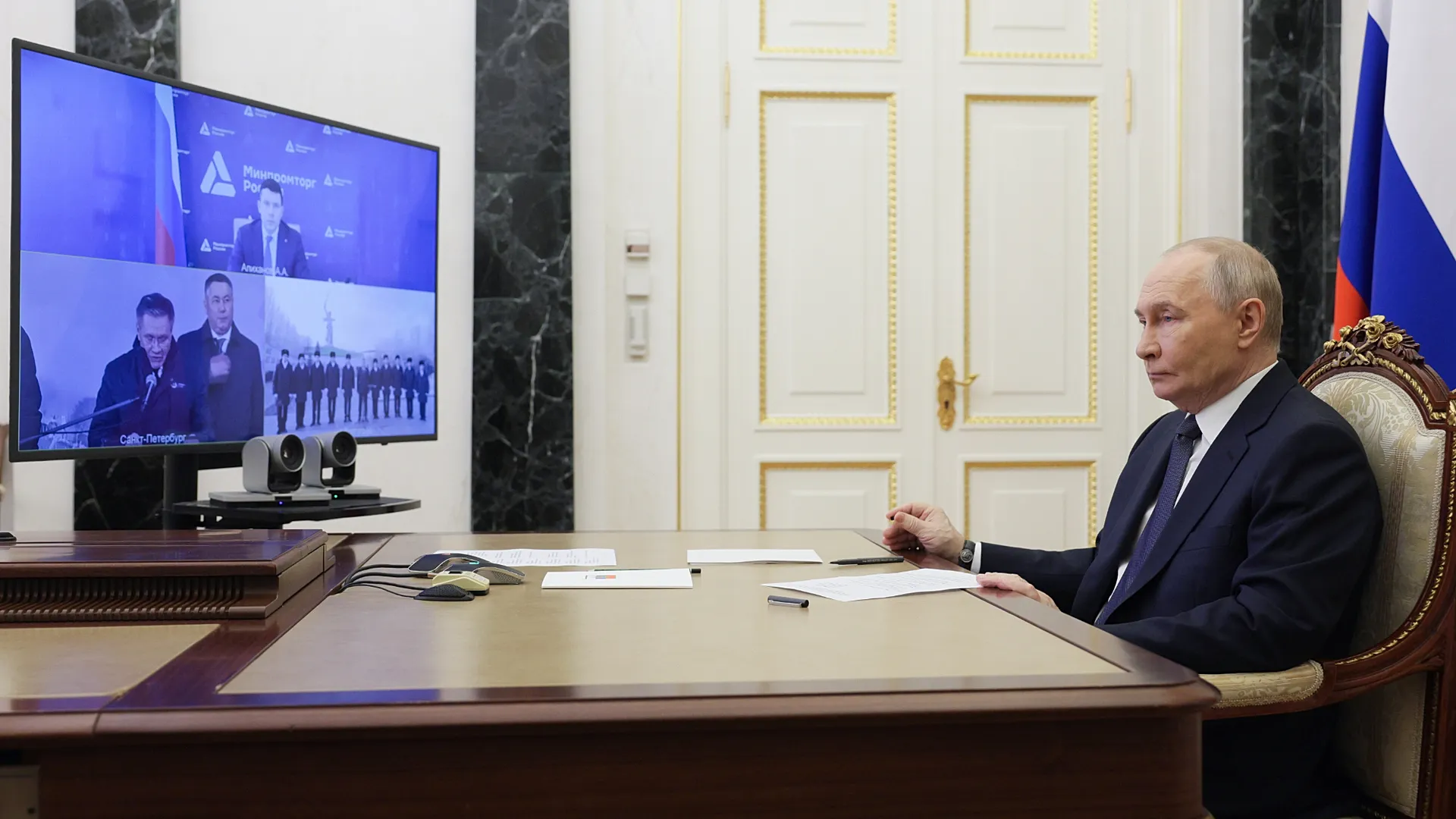
Every stage built to project certainty hides a deeper fear of being seen.
Moscow, November 2025.
The revelation that Vladimir Putin has repeatedly appeared in offices meticulously replicated across different regions of Russia has unsettled analysts who have spent years tracking the choreography of the Kremlin’s public image. According to independent investigators, the Russian president does not always remain where his administration claims he is. Instead, he uses a network of identical rooms constructed to mirror the aesthetics of his official Kremlin office, complete with the same furniture, the same wall fixtures and the same carefully curated background details. The purpose, observers argue, is not merely to conceal his precise location but to blur the boundary between presence and performance, reinforcing an aura of omnipresence that authoritarian systems often try to cultivate.
The practice resonated across Europe when security think tanks revisited broadcast footage previously assumed to have been filmed inside Moscow. Analysts from Western intelligence circles noted that subtle discrepancies in lighting angles, environmental audio and architectural alignment hinted at multiple filming sites. Asian cybersecurity researchers later expanded on this observation by analysing metadata from public transmissions, pointing to inconsistencies that suggested several locations were being used interchangeably. In the Middle East, political strategists familiar with state controlled image management remarked that the use of cloned environments reflects a broader trend in which leaders seek to appear stable and centralised even when security conditions require mobility.
Within Russia, this mechanism appears to serve two functions. First, it reduces exposure by preventing adversaries from knowing Putin’s exact position at a given moment. Second, it maintains symbolic continuity by ensuring that any public appearance projects unchanged authority regardless of where it is filmed. In authoritarian environments, perception frequently guides reality, and the physical seat of power becomes a narrative tool as much as an operational one. According to experts in political psychology, the technique operates on a subtle principle: if the leader seems always to be in the same place, then the state appears unshaken, orderly and controlled.
Reports emerging from investigative journalism networks indicate that at least three such cloned offices exist. Each is located in a secure regional facility and constructed with precision to match the Kremlin’s presidential workspace. The duplication extends to textures on desks, arrangement of objects and even the controlled tone of interior lighting. Forensic specialists familiar with audiovisual analysis observed that transitions between these rooms are almost undetectable unless examined with highly specialised tools. Such replication also complicates external monitoring, since foreign intelligence agencies attempting to track leadership movements must now filter out staged signals from genuine ones.
The strategy, however, is not without internal implications. For bureaucratic elites accustomed to rigid protocols, uncertainty about the president’s actual whereabouts generates shifts in power dynamics. Some analysts believe it allows Putin to modulate which factions within the state he interacts with in person. Others suggest it creates ambiguity that discourages internal dissent by making high level access unpredictable. Regardless of the interpretation, the system of replicated offices appears calibrated to strengthen command and reduce vulnerability, a reflection of growing insecurity in Moscow as international pressure persists.
In Europe, security forums have linked the revelation to broader concerns about Russia’s evolving information tactics. Specialists argue that the Kremlin’s use of cloned rooms resembles a form of narrative staging designed to obscure operational constraints and broadcast a message of continuity. The symbolism is powerful: if every room looks identical, then the centre of power appears immutable. This logic is familiar to analysts in Asia who study political theatre in tightly controlled states, where leadership visibility is managed as part of a state’s defensive architecture. African researchers working on disinformation ecosystems point out that such staging techniques often accompany intensified efforts to control internal narratives, particularly during periods of geopolitical stress.
Meanwhile, the discovery draws renewed attention to the ecosystem of secrecy surrounding Putin’s personal security. Western intelligence reports have increasingly noted that the Russian president’s movements have become more restricted since the early years of his administration. Heightened geopolitical tension, domestic instability and the need to project invulnerability all contribute to a system in which mobility must be masked by carefully constructed illusions. According to specialists in geopolitical risk, the phenomenon of cloned offices is consistent with a pattern seen in past regimes where leaders maintained multiple identical environments to reduce exposure to targeted attacks or surveillance.
Even so, the issue extends beyond practical security measures. It also raises questions about the extent to which the Kremlin relies on symbolic uniformity to maintain domestic legitimacy. Russian political culture has long emphasised the idea of a stable centre, and the president’s office carries an image that transcends administrative function. By replicating it, the Kremlin ensures that every official image reinforces the same narrative regardless of external circumstances. Critics argue that this approach may undermine transparency, while supporters claim it protects national stability. What remains clear is that Putin’s public appearances are no longer straightforward indicators of physical presence but part of a larger strategy to control perception.
For global observers, the revelation illustrates how modern power increasingly operates at the intersection of architecture, media and psychological influence. In the digital age, where images circulate faster than facts can be verified, a replicated room can shape perceptions as effectively as a military deployment or diplomatic declaration. Whether this tactic will remain effective as scrutiny intensifies is uncertain, but it underscores the evolving landscape of statecraft where authenticity is negotiable and visibility is engineered.
Geopolitics, unmasked. / Geopolítica sin maquillaje.