

 Phoenix 24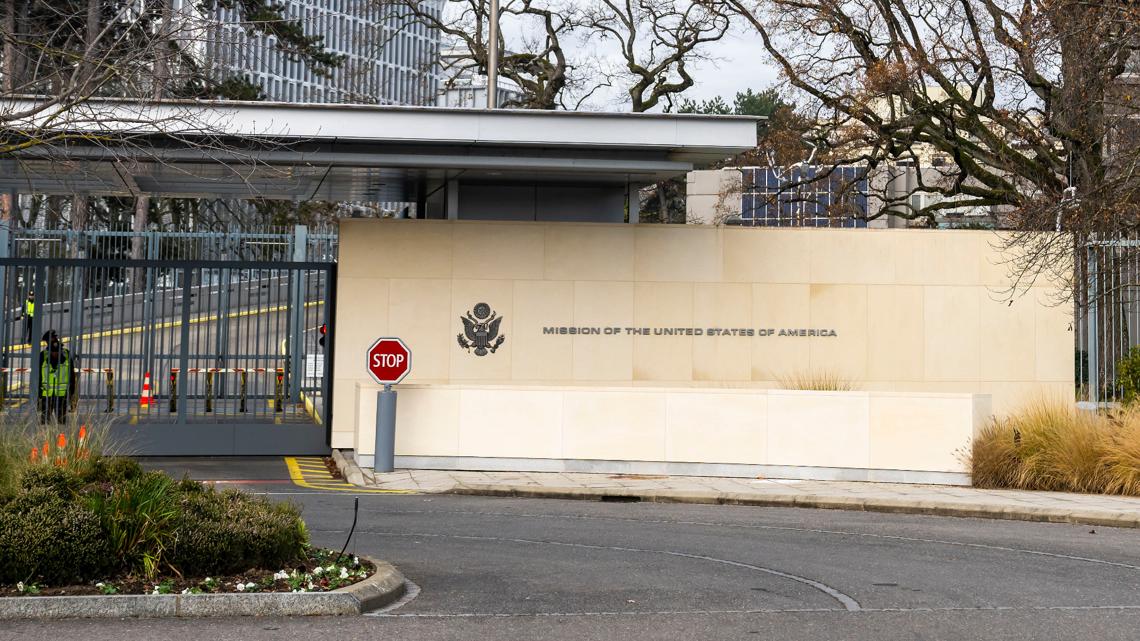
A negotiation table may be opening in Switzerland, but the political temperature in Brussels suggests the door could be far narrower than Washington expected.
Geneva, November 2025.
Delegations from the United States, Ukraine and several European governments gathered in Switzerland to launch formal talks aimed at reshaping the trajectory of the war with Russia. The initiative, promoted by Washington as an opportunity to stabilize the conflict, immediately collided with a firm European response. The European Union rejected the 28 point American proposal as nothing more than an initial draft, stripped of binding value and incompatible with the fundamental principle that borders in Europe cannot be altered through force. The document pressures Ukraine to accept territorial concessions, military limitations and a conditional political arrangement, elements that European capitals consider incompatible with a durable and legitimate settlement.
The contrast between diplomatic optimism and European resistance reveals a strategic fissure across the Western alliance at a moment when coordination is essential. Figures close to Kyiv argue that the American document incorporates positions favored by Moscow and reflects a framework designed to reduce geopolitical costs rather than guarantee territorial restitution. Washington, however, views the proposal as a structured pathway to de escalation that could limit long term military expenditure and redirect strategic focus toward other global priorities. At the same time, Kyiv intensified drone operations against Russian energy infrastructure, signaling that military pressure will remain active as long as no coherent consensus emerges among its allies.
For Europe, the objection is not merely procedural but deeply substantive. France, Germany and the United Kingdom insist that any agreement must safeguard territorial integrity and avoid validating de facto occupations. Brussels fears that a process driven primarily by Washington could marginalize European agency in a conflict unfolding within its own geopolitical neighborhood. This anxiety reflects earlier historical moments when key decisions affecting European security were shaped mainly by US Russia dynamics rather than by a cohesive European voice.
Ukraine faces a layered dilemma. Military fatigue is evident, and strategic losses in regions such as Zaporizhzhia and Donetsk have narrowed the operational window. Yet accepting a framework that codifies territorial losses could carry irreversible political and legal consequences. President Volodymyr Zelensky has described the current pressure as one of the most severe trials in Ukraine’s modern history, a moment that requires balancing internal legitimacy, battlefield realities and the divergent expectations of international partners.
The venue itself adds another dimension. Geneva symbolizes neutrality and multilateral diplomacy, but it also puts Europe’s strategic autonomy under scrutiny. If the EU ultimately endorses a framework designed outside its core leadership, it risks diminishing its credibility as an independent geopolitical actor. Conversely, a prolonged and uncompromising rejection could strain Western coordination at a time when Moscow seeks to capitalize on any ideological or tactical divide.
Washington maintains that its proposal is a starting point rather than an ultimatum. Still, voices inside the US Congress have warned that the structure of the document appears to mirror Russian priorities more closely than expected. Although the White House denies such alignment, the perception has gained traction within European diplomatic circles, where sensitivity to any imbalance in Ukraine’s favor or detriment remains exceptionally high. Meanwhile, Kyiv works to project resilience, presenting ongoing drone strikes and counteroffensive maneuvers as evidence that it still controls leverage on the battlefield.
Ultimately, the Geneva meeting is far more than a technical gesture. It stands as a defining moment to test Western cohesion, measure the limits of US influence and assess whether Europe will accept a settlement that does not emerge from its own diplomatic architecture. The outcome of these preliminary talks could influence the security landscape of the continent for the next decade, define boundaries for American involvement in regional conflicts and determine whether Ukraine retains genuine agency over its political future or becomes cornered by external pressures. In a context where war and diplomacy advance simultaneously, every word spoken in Switzerland resonates far beyond the negotiation room, shaping perceptions, expectations and strategic calculations across Europe and beyond.
Narrative is power too. / La narrativa también es poder.