

 Phoenix 24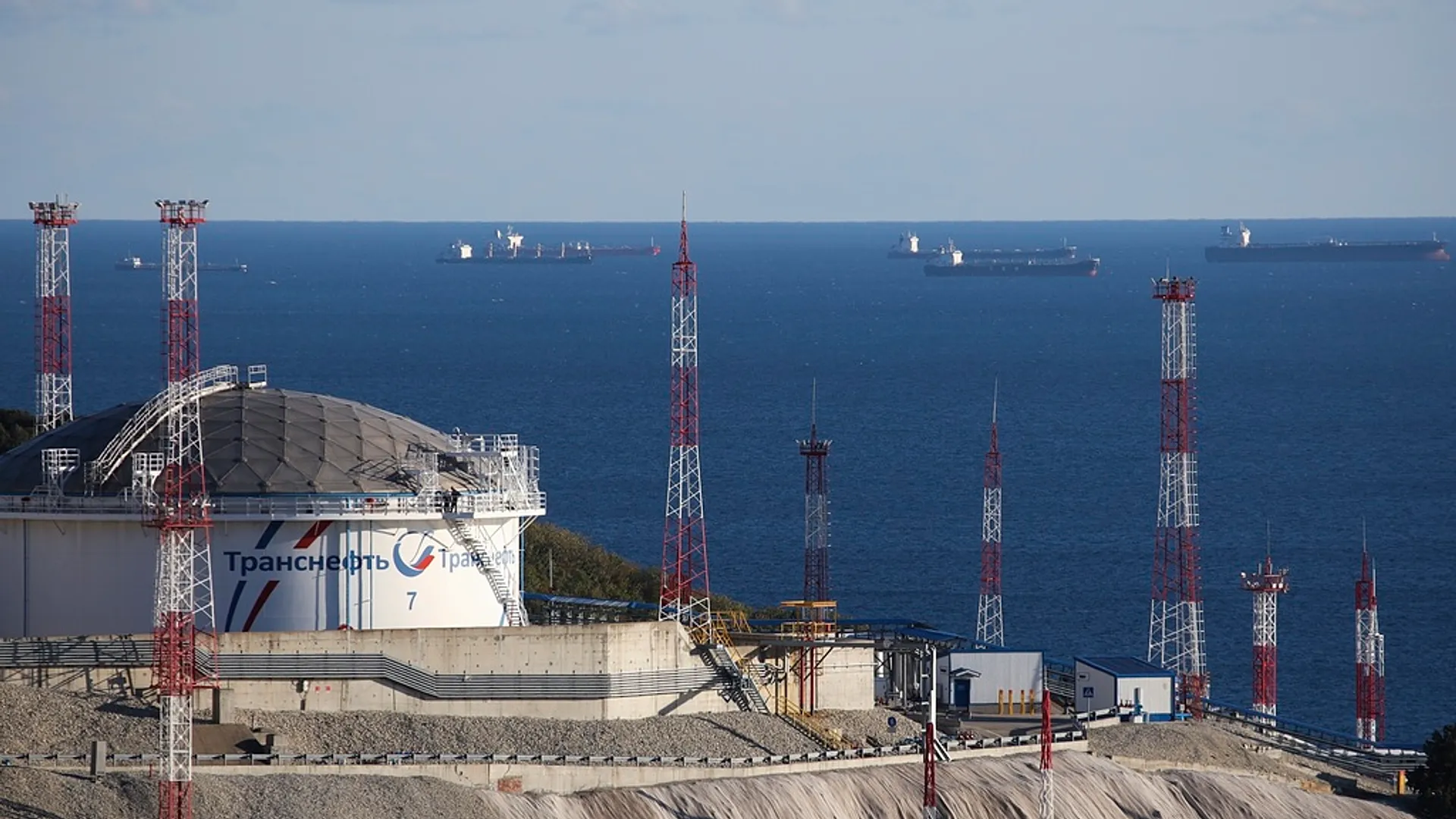
A single explosion can rearrange an entire market long before the smoke clears.
Novorossiysk, November 2025.
Russian authorities ordered the suspension of oil exports from the Black Sea hub of Novorossiysk after a strike damaged key loading infrastructure at the Sheskharis terminal, one of the most sensitive export points in the country’s energy network. The interruption disrupts a flow that represents a meaningful slice of Russia’s maritime crude shipments and sends a new signal about the reach of the conflict beyond the front line. Local officials confirmed that fires were contained and that emergency crews secured the affected berths, yet the halt itself reveals a deeper fracture in Moscow’s assumptions about the safety of its southern export corridor.
Energy analysts in Europe emphasize that Novorossiysk is not simply another port but a strategic outlet through which crude from deep inside Russia is funneled toward international buyers. The suspension obliges the state operator to temporarily cut pipeline flows, delaying loading schedules and forcing trading houses to reexamine their exposure to the region. Expert assessments from multiple regions indicate that even short-lived stoppages at this node carry an amplified effect, because disruptions radiate into freight availability, tanker allocation and insurance premiums. In the current geopolitical climate, any interruption is interpreted as a stress test on Russia’s ability to maintain predictable export behavior.
Ukraine’s posture regarding the incident is unambiguous: its leadership maintains that degrading Russia’s wartime export capability is an essential component of its broader strategy. Analysts in North America note that while Russia has managed to keep overall exports relatively stable throughout the year, the symbolic impact of a direct hit on Black Sea infrastructure challenges the Kremlin’s narrative of unshakable control. For Kyiv, such operations seek to erode the financial foundations that support the war, placing pressure on revenue streams that depend on uninterrupted maritime logistics.
Global markets reacted swiftly. Oil prices in major trading hubs moved upward as traders factored in the risk premium associated with potential future disruptions. While global inventories remain adequate and multiple suppliers can adjust output, the strike revived fundamental questions about the fragility of chokepoints within complex energy systems. European analysts highlight that in high-tension periods, markets move less on volumes and more on vulnerability. An attack on infrastructure, even one that is rapidly contained, reshapes perception and therefore reshapes price.
Novorossiysk’s strategic weight comes not only from its throughput but from its geography. Located on the Black Sea and relatively distant from the front line, it has long been viewed as safer than terminals closer to active fighting. The strike disrupts that assumption. Security experts in the Middle East and Asia point out that modern conflict increasingly blurs geographic boundaries: reach matters more than distance. In that sense, the incident underscores that Russia’s export capacities are not insulated from the evolving capabilities of its adversaries. Infrastructure that once appeared secure now sits inside an expanded theater of risk.
Russian authorities maintain that operations will resume as soon as safety inspections are complete and structural assessments confirm the stability of loading facilities. Yet within Moscow’s own energy circles there is a quiet acknowledgment that recurring attacks could force reconfigurations of export routes. Any prolonged disruption might require diverting flows toward alternative ports or slowing the rate of pipeline deliveries, both of which could compress margins and reduce the elasticity of Russia’s export system. For a country where energy revenues remain a primary financial pillar, even marginal constraints can reverberate through budgetary calculations.
Beyond the immediate operational disruption, the episode reveals the changing character of energy warfare. The line between battlefield and export terminal is narrowing, not only in Russia but in multiple regions where strategic infrastructure lies within reach of precision or unmanned systems. Observers in African and European energy forums interpret the Novorossiysk event as part of a broader trend in which ports, pipelines and storage sites evolve into contested assets. Modern conflict targets not only armies but arteries. In that regard, the strike exposes the fragility of networks that underpin global commodity flows.
There is also a psychological dimension. For buyers around the world, reliability is often as important as price. A port that demonstrates vulnerability may prompt refiners or trading companies to diversify sourcing, even if only marginally. Gulf producers and emerging exporters in Africa and Latin America could benefit from this recalibration if customers choose to hedge their exposure. While it is premature to assume large structural shifts, markets tend to internalize risk quickly and then adjust quietly. Trust, once shaken, is rarely restored at the same velocity.
Still, a single incident does not redefine an entire export economy. Russia maintains robust upstream capacity, alternative shipping routes and considerable experience in managing sanctions-era pressure. Yet the nature of vulnerability has changed. Each strike expands the map of risk and introduces new variables into the calculus of energy security. Policymakers in Europe observe that the conflict’s spillover into maritime infrastructure reinforces the need for diversified supply and multilayered protection of critical assets. As the war persists, the boundaries of exposure widen for all actors involved.
The temporary halt at Novorossiysk may therefore serve as a preview of a more turbulent era for global energy logistics. What stops for a day can unsettle markets for weeks. What burns in a port can ignite strategic uncertainty far beyond national waters. The port will resume loading. The tension will not recede as quickly.
Clarity in the grey zone. / Claridad en la zona gris.