

 Phoenix 24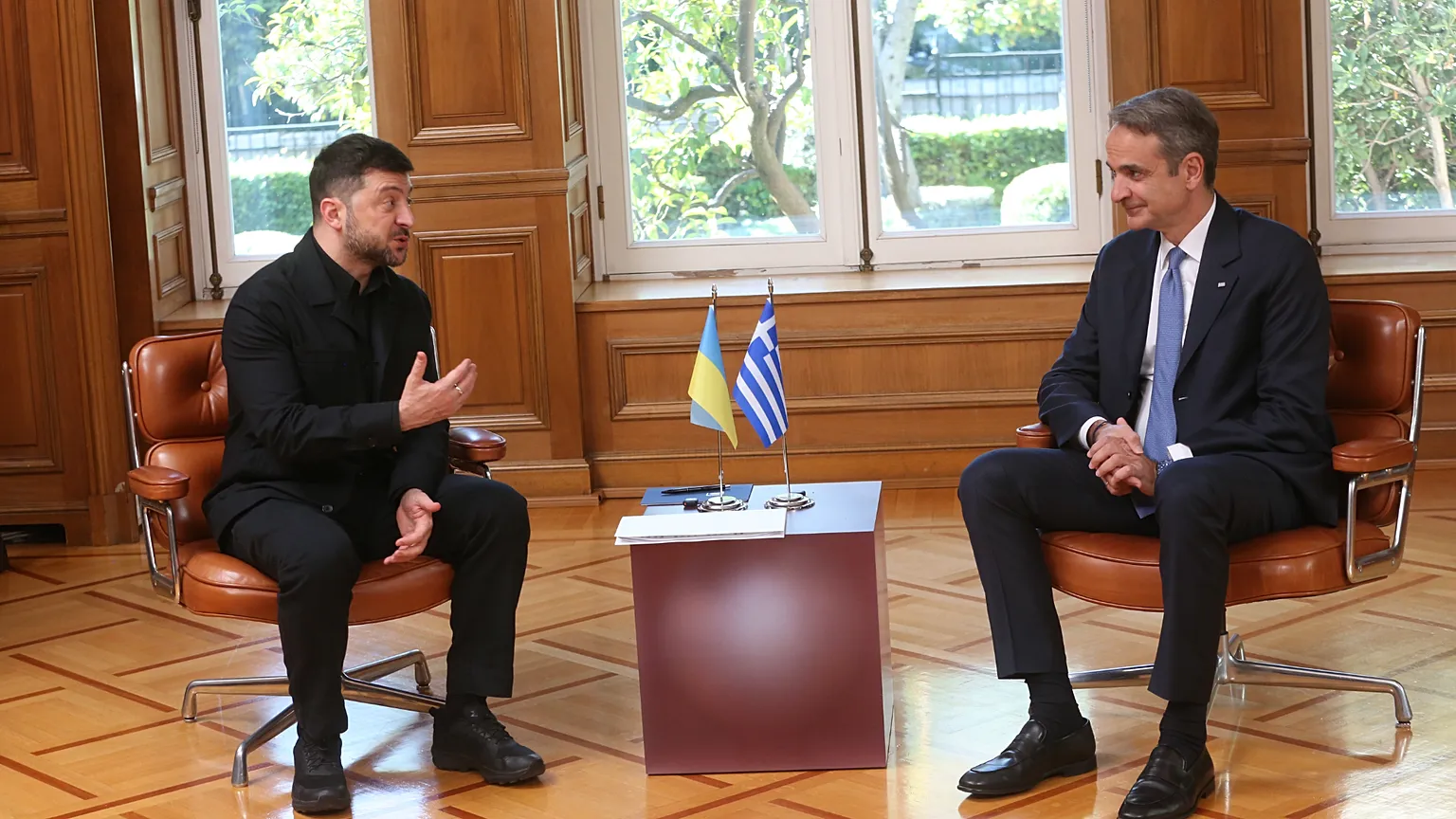
A gas corridor can reveal more about a war than any communiqué between governments.
Athens, November 2025.
The agreement signed in the Greek capital between Athens and Kyiv marks a critical realignment in Europe’s energy architecture. At its surface it appears to be an operational mechanism to deliver liquefied natural gas originating in the United States through a Greek terminal and into Ukraine. Yet its underlying logic reveals an effort to reorganize influence, shore up resilience and redraw the political map of energy flows during one of the most volatile periods in the continent’s modern history. Greece will receive LNG shipments, convert them back into gas through its national infrastructure and channel the flow across Bulgaria, Romania and Moldova toward Ukraine. Behind the official statements, the outcome signals a shift designed to help Ukraine withstand another winter under the persistent pressure of war and infrastructure attrition.
Energy has stopped being a silent commodity and has become a form of strategic expression. European analysts insist that Greece is no longer simply part of the grid. Its ambition to function as a connector between the Mediterranean, the Balkans and Eastern Europe positions the country as an operational platform of growing political value. For years the European Union sought to diversify its supply routes but without fully breaking the gravitational pull of Russian gas. Now, as Ukraine’s infrastructure faces repeated disruptions, Athens assumes a role long reserved for major northern energy hubs. This transformation is not incidental. It reflects Greece’s assessment that influence is built by securing flows, not merely by managing terminals.
For Ukraine, the agreement functions as both shield and signal. Winter has always been the season of greatest vulnerability. With infrastructure repeatedly targeted, the reliability of any energy corridor becomes essential for maintaining domestic stability and preventing cascading failures across heating systems, transport networks and essential services. Ukrainian officials have emphasized that energy arriving through a southern corridor is more than logistical reinforcement. It is a psychological anchor in a society worn by conflict but determined to remain functional. In such an environment a steady flow of gas becomes a form of civic defense.
At the same time, the agreement confirms the increasingly decisive role of the United States in Europe’s energy dynamics. American LNG capacity has expanded rapidly in recent years and experts from multiple regions interpret Washington’s engagement as a deliberate move to counterbalance the historical leverage of Moscow. By enabling Greece to distribute American LNG deeper into Eastern Europe, the deal creates a triangle of cooperation connecting North America’s production power, the Mediterranean’s logistical capabilities and Ukraine’s urgent need for resilience. It strengthens transatlantic ties while reducing the asymmetries that have shaped the continent’s energy decisions for decades.
The corridor itself will rely on the coordinated efforts of Bulgaria, Romania and Moldova, each responsible for securing and maintaining the infrastructure that links southern Europe to Ukraine. Specialists in energy security warn that these routes will operate under constant scrutiny because the region has become fertile ground for hybrid threats. Surveillance systems have been reinforced, redundancy has been added where feasible and contingency plans have been updated to prevent a single disruption from collapsing the flow. Institutions across Europe view this multilayered routing as crucial for reducing the risks associated with reliance on one dominant supplier.
Nevertheless, the agreement faces challenges that extend beyond geopolitics. The global LNG market is subject to price shifts and contract negotiations that may alter availability or cost on short notice. Both Greece and Ukraine will need to anticipate fluctuations and incorporate them into their strategic planning. Another issue is the continued vulnerability of Ukrainian infrastructure. Even with secure supply from abroad, attacks on internal distribution networks could undermine the benefits of the corridor. Yet, for the decision makers involved, refusing to act would leave Ukraine exposed to a seasonal weapon that has already proven devastating.
From a continental perspective the deal reshapes Europe’s internal hierarchy. Greece emerges as a central actor capable of supporting Eastern Europe while enhancing the continent’s collective capacity for energy diversification. Ukraine receives a pragmatic demonstration of allied support. The United States consolidates its influence in a region where energy is increasingly intertwined with security. And Europe as a whole gains a corridor that carries more than molecules. It carries an assertion of political will during a period of shifting alliances.
The significance of this development extends into symbolic territory. For years energy politics were often relegated to technical debates among specialists. Now the decisions made in Athens resonate across capitals because they indicate a willingness to challenge historical dependencies and invest in resilience. What flows through this corridor is not simply gas. It is a statement of coordination, endurance and strategic recalibration at a moment when Europe’s future remains contested.
The visible matter is energy. The underlying structure is power.
Global narrative resilience. / Resistencia narrativa global.