

 Phoenix 24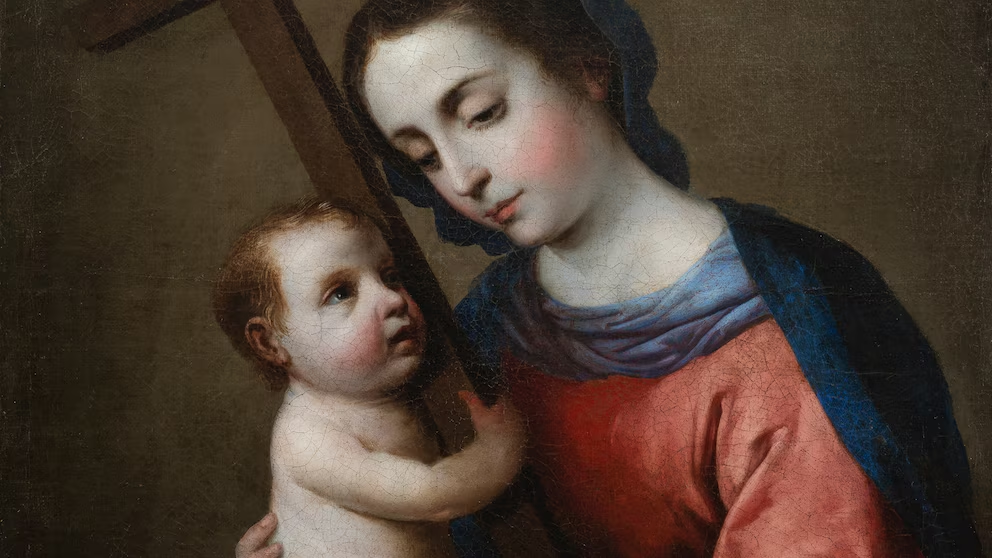
A canvas that travelled quietly through Europe now forces curators and historians to rewrite a chapter of the Golden Age.
Antequera, November 2025
The appearance of a previously unknown painting by Francisco de Zurbarán in the Museo de la Ciudad de Antequera has reshaped the conversation around the painter’s late career and, more broadly, around how Spanish Baroque art circulates between private collections and public institutions. The work, a refined depiction of the Virgin and Child with a small cross, arrived in Spain after spending generations in a German collection, where it remained almost invisible to the academic world. Its emergence is not just an anecdote about a fortunate discovery, but a case study in how fragments of the Golden Age continue to surface in unexpected places and reconfigure the canon.
According to specialists involved in its study, the painting belongs to Zurbarán’s Madrid period, a phase marked by a softening of contrasts, a greater atmospheric depth and a more courtly sensibility. The Virgin’s face is modelled with a subtle transition of light that differs notably from the sharper tenebrism of the Seville years. The blue mantle, enriched with pigments that suggest the use of expensive materials, anchors the composition with a chromatic intensity associated with works created for demanding patrons. The Christ Child, holding a cross that anticipates Passion imagery, introduces a quiet theology that combines tenderness with premonition, a line of thought characteristic of the painter’s more mature works.
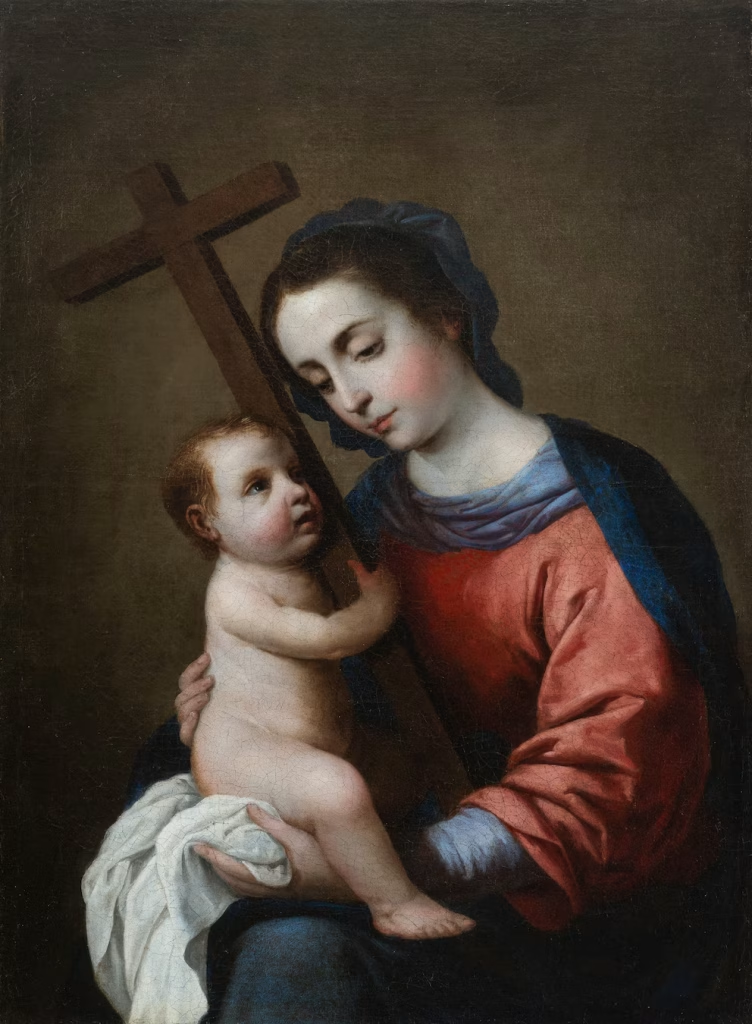
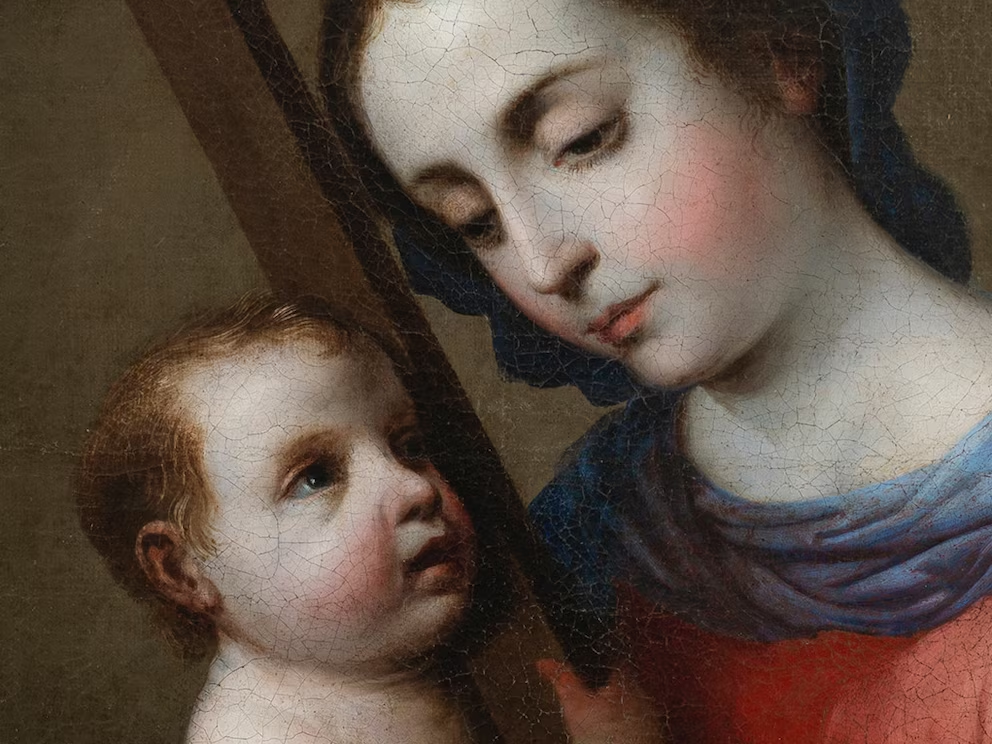
European conservators who examined the canvas underline that its state of preservation is unusually good for a seventeenth century work that spent decades outside museum conditions. Technical studies have revealed a ground and layering consistent with workshops active in Madrid during the final phase of Zurbarán’s career. Microscopic analysis of the brushwork around the face and hands points to the direct intervention of the master rather than a follower, especially in the way he defines the contours with almost imperceptible shifts in value instead of firm outlines. These findings place the canvas closer to the select group of late works that show the artist negotiating between his monastic roots and the visual expectations of the court.
For Spain, the arrival of the painting in Antequera has strategic implications. The museum, which has been expanding its profile in recent years, now hosts a piece capable of attracting both specialised scholars and a broader public interested in the Golden Age beyond the traditional circuit of Madrid and Seville. Curators see in this work an anchor for future exhibitions that connect provincial collections with the global history of Baroque art. It also strengthens the role of private Spanish collections that act as intermediaries, rescuing works from foreign markets and facilitating their integration into public narratives.
Across the Atlantic, art historians in the Americas read the discovery as another reminder that the map of Spanish Baroque is still incomplete. University departments that study transatlantic exchanges have already shown interest in the painting as evidence of how devotional imagery circulated between Iberia and territories under Spanish influence. The iconography of a tender yet introspective Virgin, combined with a discreet symbol of the cross, resonates with compositions that later travelled to colonial altarpieces, suggesting lines of influence that merit renewed comparative study. The fact that a painting of such quality remained unknown until recently reinforces the idea that catalogues raisonnés of major artists must remain open structures rather than closed monuments.
In Asia, where interest in European Old Masters has grown significantly over the last decade, museum strategists are paying close attention to how smaller institutions in secondary cities position themselves through discoveries of this kind. The decision to exhibit the painting in Antequera instead of transferring it immediately to a larger national museum illustrates a shift in curatorial thinking. Instead of centralising every major work in a few capitals, cultural policy increasingly favours distributed networks where regional museums can become serious destinations for research and tourism. Asian institutions that face similar questions about centralisation and regional equity see in the Spanish case a model worth observing.
The story of the painting’s trajectory from Germany to Andalusia also reopens the debate on provenance and cultural circulation. While there is no indication of illegal acquisition in its past, the long period during which it remained outside public view raises questions about how many significant works still lie in private homes, catalogued only vaguely or not at all. European heritage experts argue that this discovery should encourage discreet but proactive dialogue with collectors who might hold paintings of comparable relevance. The aim would not be expropriation, but negotiated visibility through loans, research agreements and shared exhibition projects.
For Zurbarán studies, the canvas offers a new reference point against which other late works can be measured. The particular combination of gentle light, sophisticated colour and spiritual intimacy reinforces the notion that the painter’s final period cannot be reduced to a decline or mere repetition of earlier formulas. Instead, it appears as a phase of synthesis in which he absorbed courtly influences without abandoning his contemplative core. Future research will likely integrate this painting into discussions about authorship, workshop practice and the circulation of Marian imagery in the later seventeenth century.
In the galleries of Antequera, however, the effect is immediate and quiet. Visitors encounter not just a museum label announcing a recovered masterwork, but a painting that still fulfils its original function: to fix the gaze, slow down the pace and connect the viewer with a concentrated moment of light and meaning. The scholarship, debates and geopolitics of art will continue to unfold around it, but the image already performs the intangible work for which it was created centuries ago.
La narrativa también es poder. / Narrative is power too.