

 Phoenix 24
Sometimes domination arrives quietly, not through spectacle, but through consistency that refuses to break.
Doha, November 2025.
Alejandro Galan and Federico Chingotto reached the world championship final carrying a weight that most athletes never face. They were expected not only to win, but to redefine the axis of an entire sport. Padel, a discipline once treated as a regional trend, has become a global industry with economic ambition, broadcasting rights and geopolitical interest. The moment they walked onto the court, they were no longer a pairing. They were a test case for a new world order inside the sport.
From the first rally it was clear they were not improvising. Chingotto imposed calm in the tight spaces of the net, absorbing pressure and converting chaos into geometry. Galan, taller and more explosive, turned small openings into territorial advantage. Their dynamic worked like a double helix. One sustained, the other detonated. The match was not a fight against rivals. It was a negotiation against tension.
What makes their victory exceptional is not the score, but the architecture behind it. Reuters has described in prior seasons that padel is evolving from a Latin and Iberian dominated ecosystem into a fragmented, hyper competitive circuit driven by investment groups from the Gulf, private equity and luxury sponsors who view the sport as an entry point into the high income leisure economy. Winning in that context demands more than technique. It requires resilience against an industry that wants results faster than players can produce them. Galan and Chingotto played like men who have learned to say no to noise.
BBC Sport has explained that the pairing surprised analysts because it united two different mentalities. Galan grew up in a system where power and reach were tactical currencies. Chingotto emerged from a culture that values angles, patience and persistence. One came from a vertical sport. The other from a horizontal one. By combining them, they dismantled predictable patterns that other elites depend on. When rivals expected explosion, they got restraint. When they anticipated control, they got acceleration. They did not dominate padel by overpowering it, but by refusing to follow its conventions.
Financial Times has reported that tournaments in Qatar, Abu Dhabi and Saudi Arabia have turned padel into an asset class. Matches are no longer only sports events. They are investment platforms where image, sponsorship and television rights converge. This world title therefore carries economic consequence. Investors, federations and brands read the win as validation. A champion defines what becomes monetizable. When Galan and Chingotto lifted the trophy, they were not lifting only medals. They were lifting the future commercial direction of the sport.
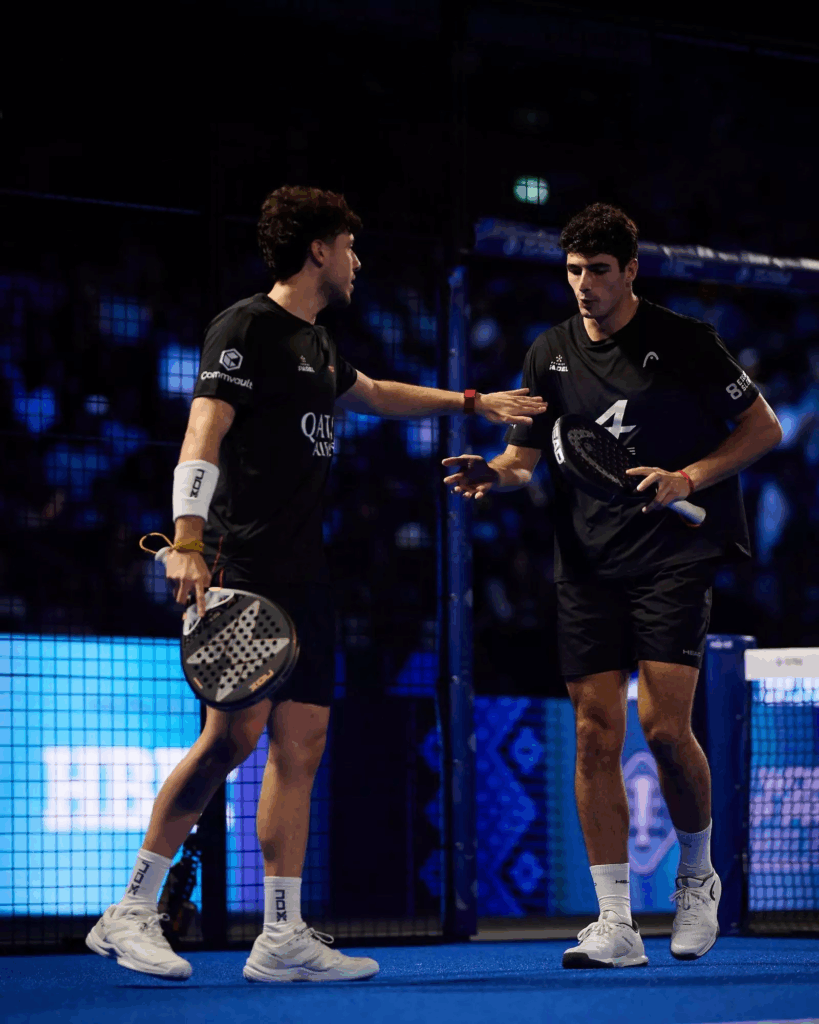
And yet, the most revealing part of the victory emerged after the match. Galan spoke of the pressure of replacing historic partnerships. Chingotto expressed gratitude without triumphalism. They were unexaggerated. That sobriety is strategic. Champions who appear satisfied are attacked. Champions who appear hungry are chased. Champions who appear calm are feared.
Al Jazeera, in its coverage of the rapid expansion of padel in the Gulf, has stated that the sport functions as cultural diplomacy. Where tennis once symbolized exclusivity, padel symbolizes social fluidity and informal networking. It is played by CEOs, diplomats and young professionals in equal measure. Winning a world championship in this geography is therefore symbolic. It plants a flag on the territory where the sport is expanding fastest.
Behind the scenes, their transformation is even more impressive. Their training team simplified objectives. Instead of chasing highlights, they chased repetitions. Instead of reacting to rankings, they reacted to data. Internal analysts studied ball trajectories, weather conditions and fatigue cycles. They quantified emotional momentum, treating the psychological flow of each match as seriously as the technical flow. The result was a discipline that allowed them to win without needing to be spectacular.
Their confidence was not arrogance. It was memory. They remembered tournaments in which they lost because they rushed. They remembered moments when talent was not enough. They remembered that padel punishes ego. Chingotto has said in prior interviews that the sport rewards those who can repeat the same good decision one thousand times. Galan has noted that the challenge is not to hit harder, but to hit at the precise moment when the rival expects hesitation. Together, they built a system where the point only ends when they decide it ends.
Even the crowd responded to the rhythm of their play. There were no sudden roars. There was a gradual understanding. Spectators recognized that something irreversible was happening. Momentum moved from the scoreboard to the atmosphere. The opponents did not lose because they played poorly. They lost because they played inside the tempo that Galan and Chingotto designed for them. The match was not won in points. It was won in the mental space between points.
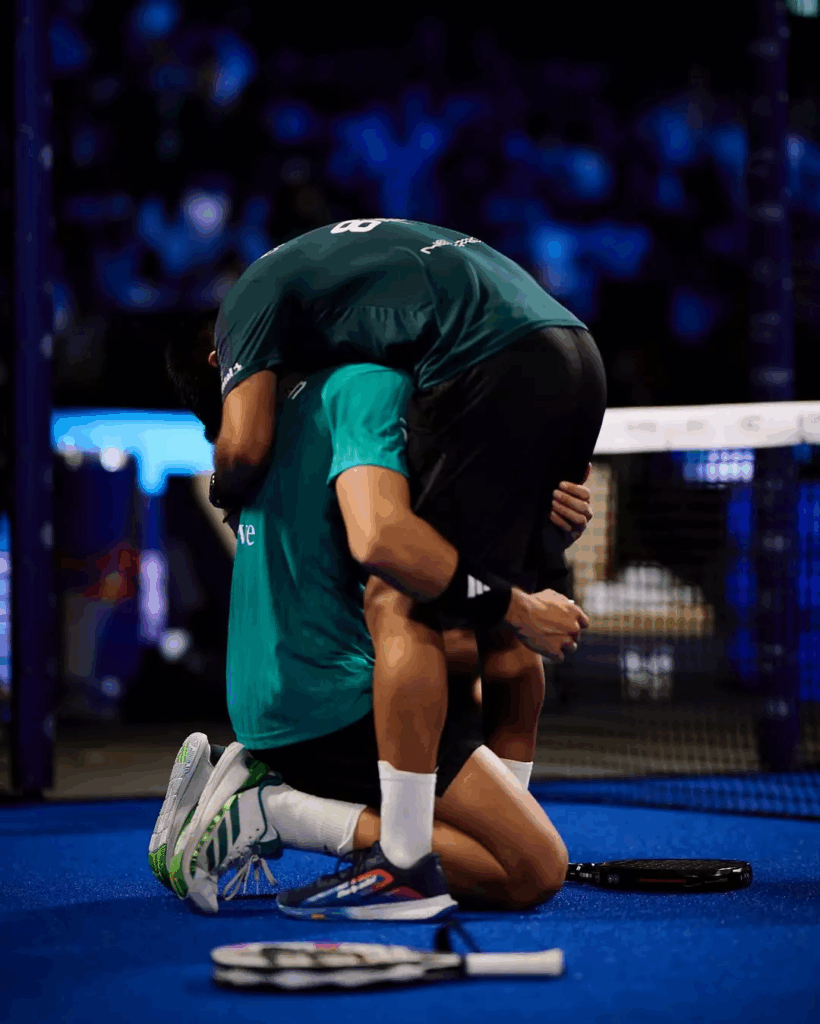
The most revealing truth came in the final minutes. With match point in hand, they did not rush. They reset. They breathed. They controlled. In that pause lived the essence of their dominance. Champions understand that a title does not belong to the one who plays better. It belongs to the one who remains present when everyone else is trying to escape the pressure.
When the final ball touched the glass and the referee declared the match over, they did not explode. They looked at each other as if confirming a private agreement. Winning was never the objective. The objective was to prove that their identity could survive expectation.
Padel will continue to grow. New actors will enter. Markets will expand. But the record will show that when the sport crossed from regional passion to global industry, the pair that held the world title was not the loudest, not the most marketed, but the most coherent.
Phoenix24: clarity in the grey zone.
Phoenix24: claridad en la zona gris.