

 Phoenix 24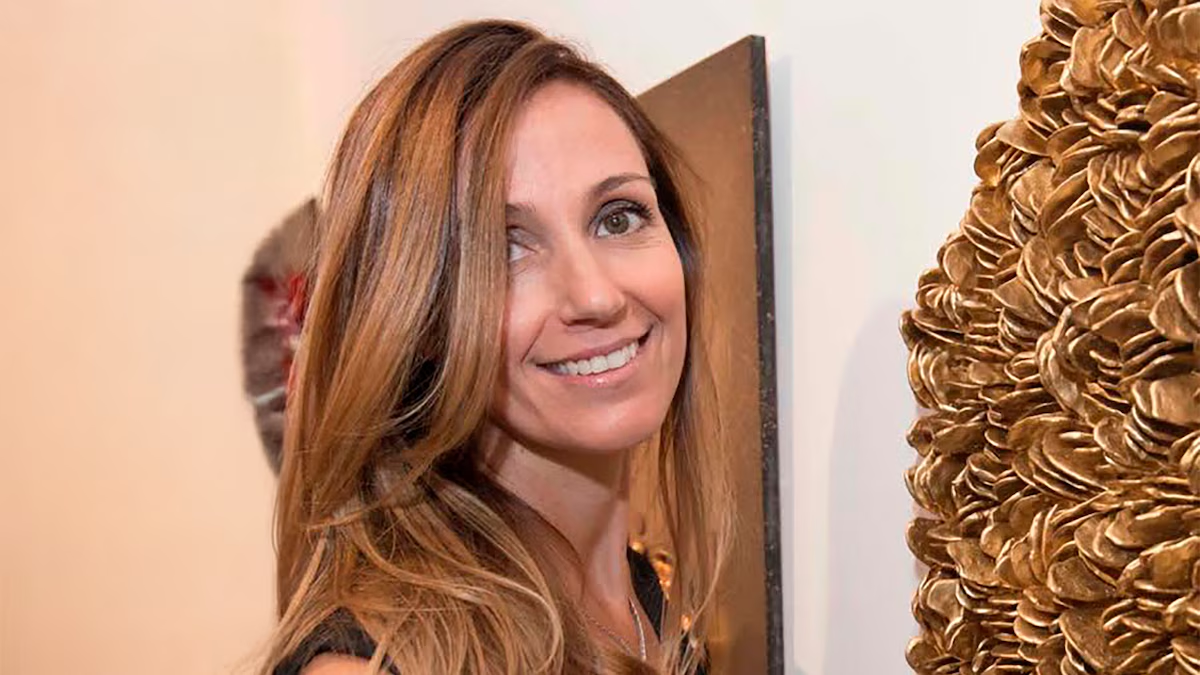
Art becomes universal when every body can access it.
Buenos Aires, November 2025.
During the 2025 edition of Buenos Aires’ Museum Night, the Palacio Barolo will host a singular exhibition by multidisciplinary artist Laura Subise, whose work challenges the dominance of the visual and embraces art through contact, sensation and participation. The event opens to the public on Saturday, November 8, from 7 p.m. to 1 a.m., with two differentiated entrances to guarantee accessibility: Hipólito Yrigoyen for general access and Avenida de Mayo for people with reduced mobility. Subise arrives not to decorate walls but to alter the way art is perceived. Her work does not ask to be observed. It asks to be experienced.
With twenty-five years of research and project development across cultural institutions, education and corporate responsibility initiatives, Subise has built a career where art becomes a bridge between emotion and inclusion. A trained publicist, consultant, professor and visual artist, she understands that audiences are not passive. They carry their own senses and their own stories. In her exhibitions, the viewer completes the piece. The artwork begins on the canvas but finishes in the experience of the person who touches it, walks around it or reads its textures. Subise’s approach rejects the traditional separation between artist and spectator and instead proposes a shared territory: the piece speaks, but only through the senses of the person standing in front of it.
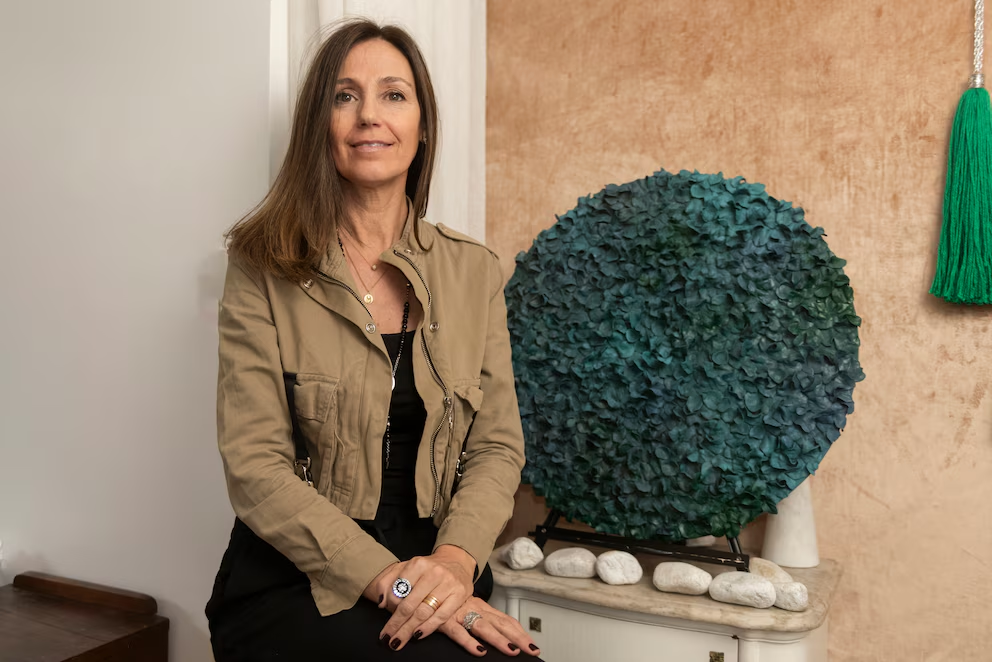
The materiality of her work is not an aesthetic choice. It is an act of inclusion. Subise designs surfaces that are visual and tactile, pieces that can be explored not just with the eyes but with the hands. Some works are mounted on the wall, others lie on the floor or sit on stools, forcing the public to change posture and perspective. The textures oscillate between empty spaces and overflowing structures, generating pauses that slow down the gaze and sensations that intensify presence. Her pieces are not silent images. They are invitations to inhabit meaning.
Over the last years, her art shifted deliberately toward accessibility. After working closely with communities in education and healthcare settings, Subise reformulated her method so that people with visual disabilities or sensory limitations could interact with her work without restrictions. What emerged was not a concession to accessibility, but a new artistic language. In her own words, art cannot be universal if the body of the viewer is excluded from the experience.
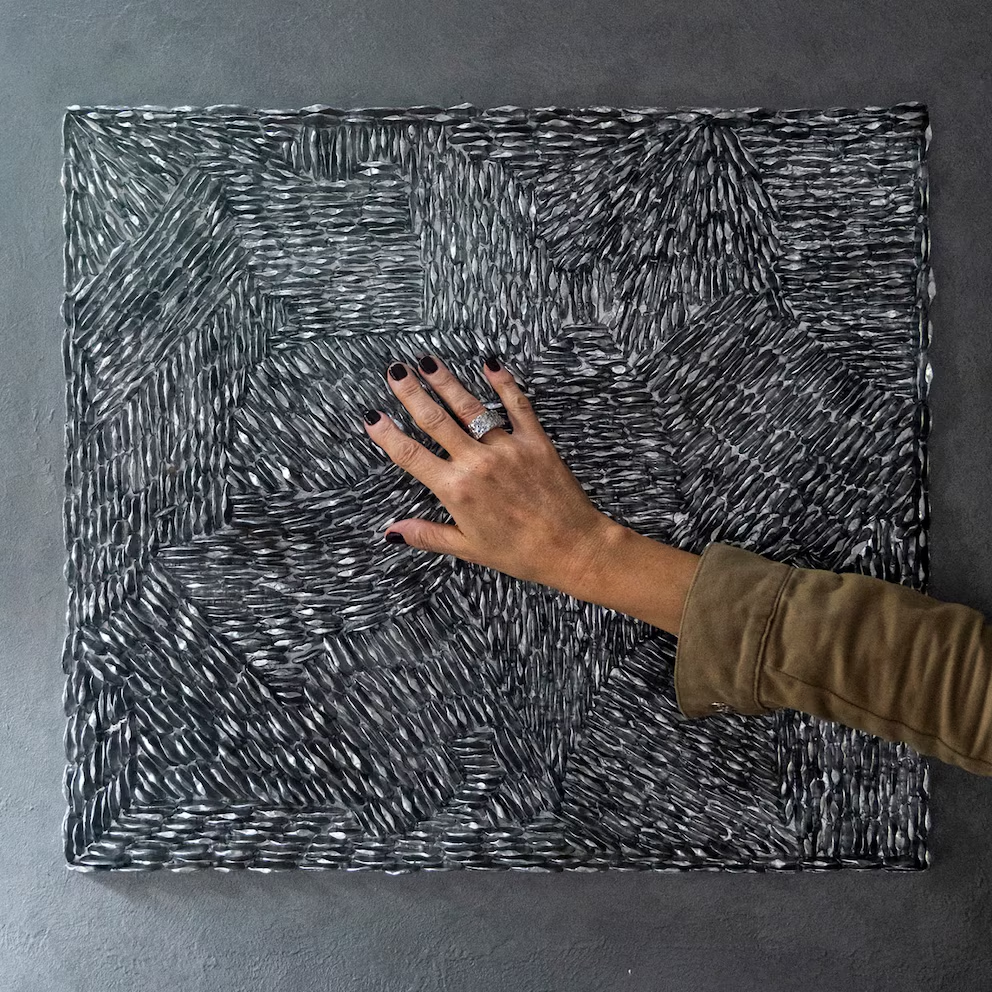
Subise’s work challenges a question that museums often avoid: Who is allowed to feel art. Her exhibition at Palacio Barolo provides an answer. Everyone. Museums have historically been temples of observation. Her proposal turns them into spaces of participation. In a night when thousands of people move through galleries seeking beauty, Subise invites them to stop, slow down, and feel.
Detrás de cada dato, hay una intención. Detrás de cada silencio, una estructura.
Behind every fact, there is an intention. Behind every silence, a structure.