

 Phoenix 24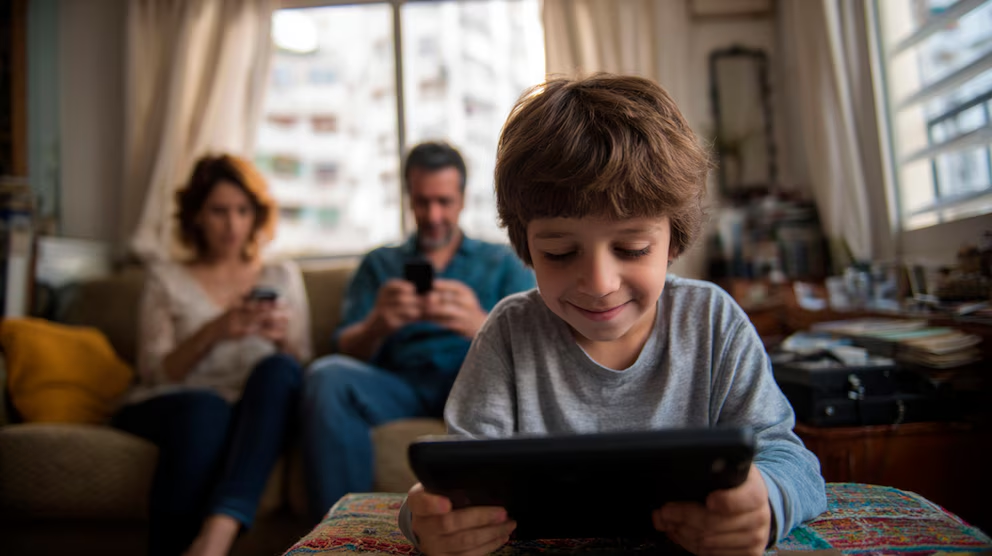
When connection becomes consumption, the cost is counted in tears, not likes.
Madrid, November 2025.
A recent longitudinal study following more than four thousand American children aged nine to ten over four years found a disturbing trend: the risk of anxiety, depression and suicidal thoughts rises significantly not just with high screen time, but with addictive patterns of device use—especially social media, mobile phones and video games. The research shows that it is not the number of hours that truly separates the healthy user from the vulnerable one, but the inability to disengage. Children who feel compelled to check their phone, play games or scroll even when responsibilities, sleep or social contact suffer are the ones showing the strongest emotional distress. Nearly half of the participants in the study exhibited a high tendency toward mobile phone addiction, while over forty percent displayed signs of video game dependency. The consequences go beyond mood disorders: children with compulsive screen habits were found to be two to three times more likely to develop suicidal behaviours compared to peers with lower or controlled usage.

Symptoms of dependence appeared as addictive behaviours: the irrepressible urge to pick up the device, defensive reactions when questioned by parents, withdrawal symptoms like irritability or sadness when screen access was denied, neglect of school tasks or family interactions, and dramatic changes in sleep patterns leading to fatigue, low mood and decreased academic performance. Girls were more prone to social media addiction while boys leaned toward video game dependency—each pathway carrying similar risks for mental health and social development. The study highlights sleep deprivation as a significant mediator: lack of rest amplifies emotional vulnerability and amplifies the effect of screen addiction.

Experts warn that the problem is now a structural one: the design of apps and games exploits reward loops, the emotional circuitry of children is still developing and schools and families lag behind in strategies for control and education. The concern is no longer only about limiting screen time, but about identifying when screen use becomes compulsion and damage. As the digital environment accelerates and technology becomes more immersive, children trade time for traction, social connection for isolation, and instant feedback for real resilience.
Detrás de cada dato, hay una intención. Detrás de cada silencio, una estructura.
Behind every fact, there is an intention. Behind every silence, a structure.