

 Phoenix 24
In the octagon, control is an illusion; clarity is a duty.
Las Vegas, October 2025.
For nearly two decades, Keith Peterson has stood between chaos and consequence. In a sport where a single second separates triumph from trauma, the veteran UFC referee has learned that perfection is not the measure of justice—humility is. In a rare conversation with mixed-martial-arts media, Peterson reflected on what it means to enforce order inside a cage designed for combat.
“I’ve made mistakes,” he admitted without hesitation, “but the important thing is to recognize them and learn.” His voice, calm and gravelled, carried none of the defensiveness typical of officials under public scrutiny. Fighters remember him for his composure: unshaken by the roar of an arena, unswayed by celebrity corners, and unwilling to let chaos dictate judgment.
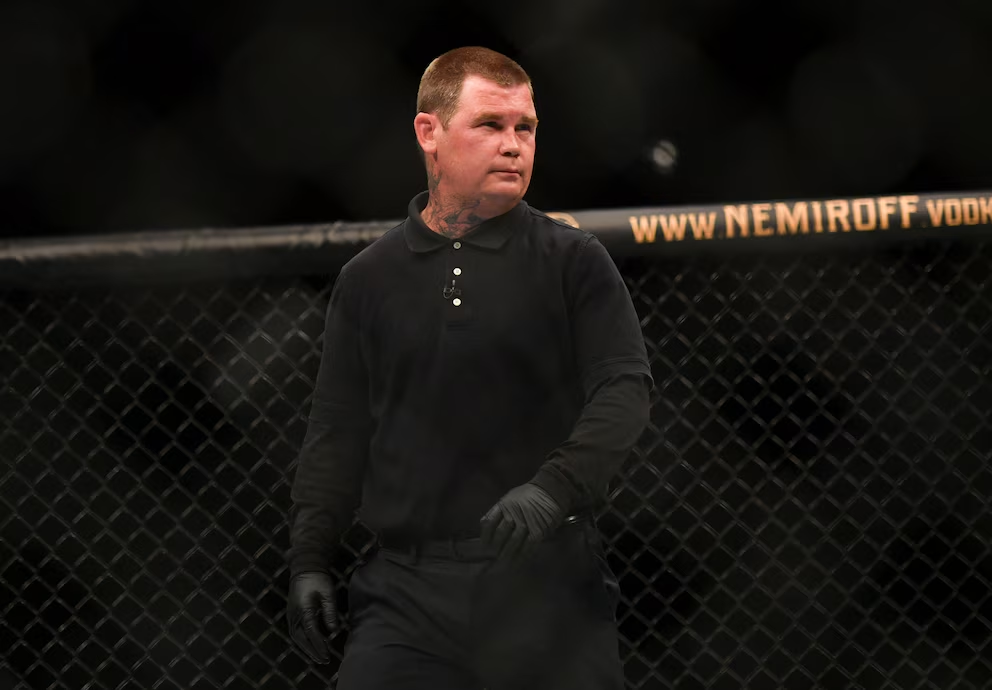
Peterson began officiating local bouts in New Jersey before joining the UFC’s elite roster of referees. Over time, he earned a reputation for stopping fights quickly—a decision that some fans interpret as caution and others as controversy. He knows the criticism well. “When I stop a fight,” he said, “someone’s always going to think it was early or late. My job isn’t to please everyone. It’s to protect people who won’t protect themselves in that moment.”
His approach has evolved alongside the sport. Early refereeing relied on instinct and proximity; today, it’s backed by biometric data, slow-motion review, and concussion protocols supervised by athletic commissions. “Technology helps,” Peterson noted, “but in the end it’s still you, your eyes, and your conscience.” The comment encapsulates the paradox of modern MMA: a digital sport built on human judgment.
Behind the gloves and tattoos, he carries the same pre-fight rituals as any competitor—deep breathing, mental rehearsal, visualization of possible chaos. He studies fighters’ tendencies to anticipate when an exchange is about to turn fatal. “You learn body language,” he explained. “You know when a guy’s done, even if he’s still swinging.” That sensitivity, sharpened over thousands of rounds, is what separates a referee from a spectator.
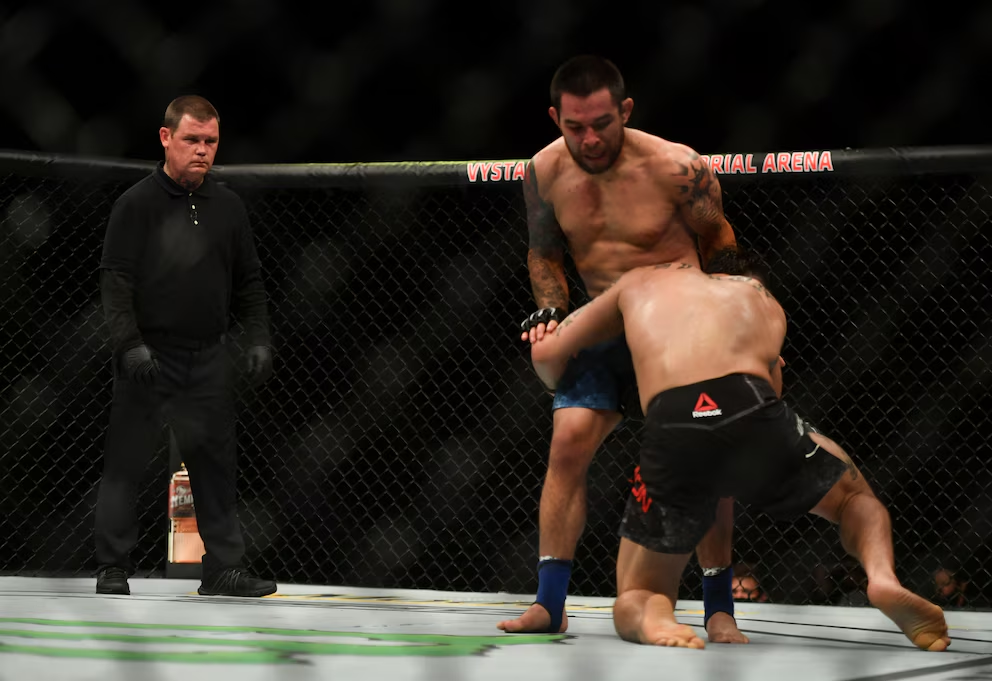
Athletic commissions regard Peterson as a model of consistency, yet he remains self-critical. In the interview, he described reviewing his bouts as a “form of punishment and therapy.” Every questionable call becomes an autopsy of timing and instinct. “If you stop learning, you shouldn’t be in there anymore,” he said. “We owe fighters that respect.”
His reflection resonates beyond the cage. In an era where fans demand total transparency, Peterson’s candor stands out as a rare form of professionalism. He doesn’t frame his work as authority but as stewardship—a fragile equilibrium between violence and restraint. “We’re the last line,” he concluded, “but also the first to admit when we could’ve done better.”
In a sport obsessed with power, his honesty may be its most subversive act.
Every silence speaks. / Cada silencio habla.