

 Phoenix 24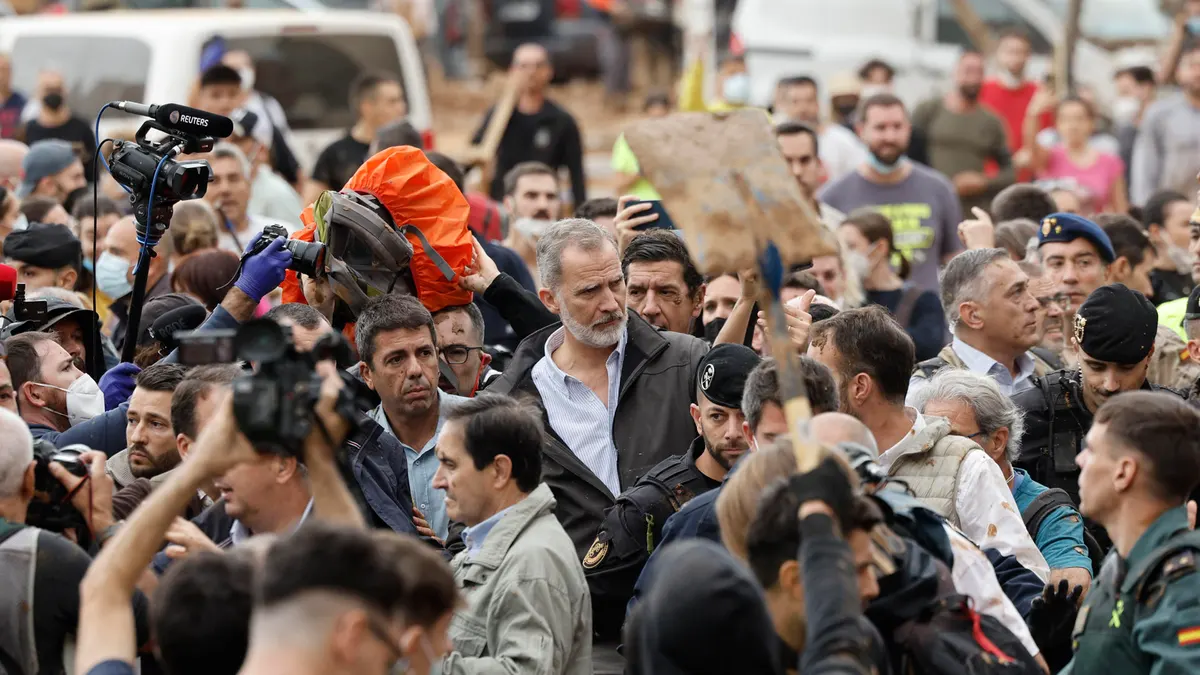
The organ’s sound silenced even the wind that crossed the walls of Almudena Cathedral.
Madrid, October 2025.
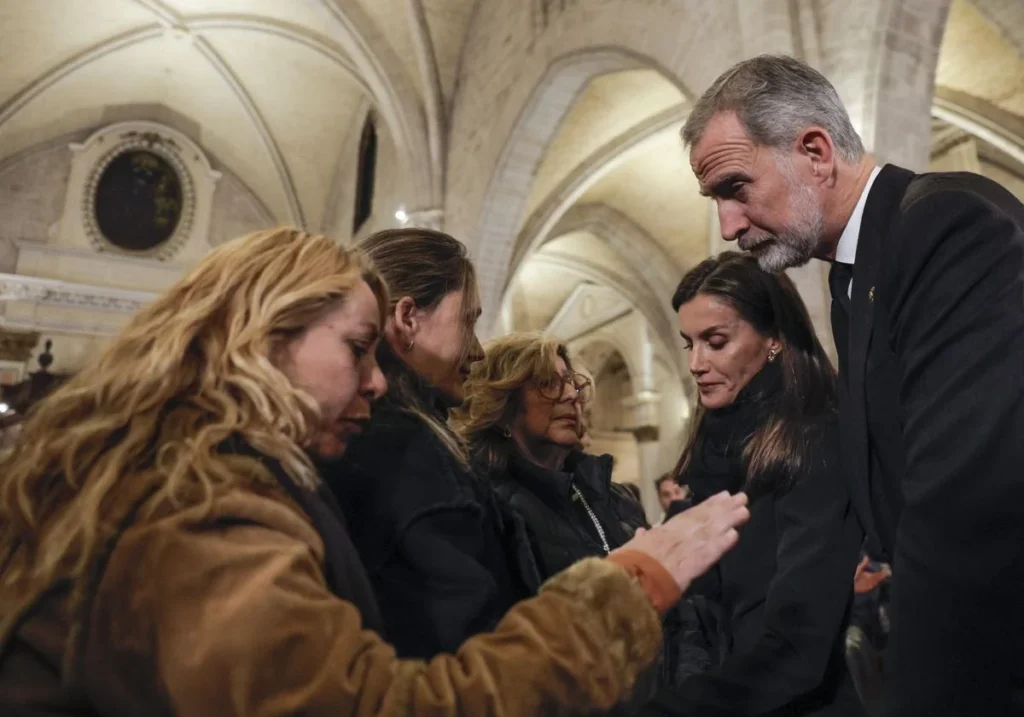
Spain’s King and Queen presided over the State Funeral honoring the victims of the devastating DANA that struck the Levante and parts of central Spain, leaving a scar in the nation’s collective memory. Under a clear sky after weeks of storms, the ceremony brought together families, authorities, and rescuers still bearing the invisible weight of those harrowing days.
The event was more than a farewell; it became a choreography of national mourning that revealed the human dimension of the disaster. In the front row, King Felipe VI and Queen Letizia led the tribute alongside the Prime Minister and regional authorities. The Mass, celebrated by the Archbishop of Madrid, honored both the lives lost and those whose homes and livelihoods were washed away across Murcia, Valencia, and Castilla-La Mancha.
The catastrophe, which claimed dozens of lives and displaced thousands, reignited debate over Spain’s water infrastructure and the accelerating impacts of climate change. According to the World Meteorological Organization, the rains associated with the September-October DANA were the heaviest recorded in the western Mediterranean in more than a decade. Meanwhile, the European Commission stressed the urgency of reinforcing early-warning systems and urban resilience to “recurring torrential events” that are now trends rather than anomalies.
Official speeches during the service avoided dramatization but not accountability. Spain’s vice president for ecological transition acknowledged damages exceeding €2.5 billion and announced a reconstruction plan including climate-adaptation measures overseen by the European Disaster Prevention Centre. The Spanish Meteorological Agency warned that the atmospheric pattern behind the DANA could recur more frequently as the region warms.
Emergency-service representatives filled several pews, silent yet visibly moved. Many, drawn from rescue units deployed in Toledo and Alicante, attended still marked by memories of flooded roads, rooftop rescues, and collapsed bridges. For them, the ceremony was a quiet closure to weeks of relentless tension. “The water destroyed everything, but people held on to each other,” said a commander from Spain’s Military Emergency Unit afterward.
In his final address, the monarch appealed to solidarity as a form of national resilience. “Spain rises every time pain tests us. We honor those we lost by building a stronger country before nature,” he declared—words interpreted as a call for unity amid political frictions over disaster management.
Outside the cathedral, bells tolled for a minute of silence. Among white wreaths and half-masted flags, families placed photographs, toys, and letters in memory of the absent. No chants, no banners—only a heavy calm, the kind that lingers after the waters retreat and reveal what was once home. Spain mourned its dead with dignity, yet also with resolve: the future will require not only prayers for the victims but the redesign of a land that can no longer afford to repeat its tragedies.
Truth is structure, not noise. / La verdad es estructura, no ruido.