

 Phoenix 24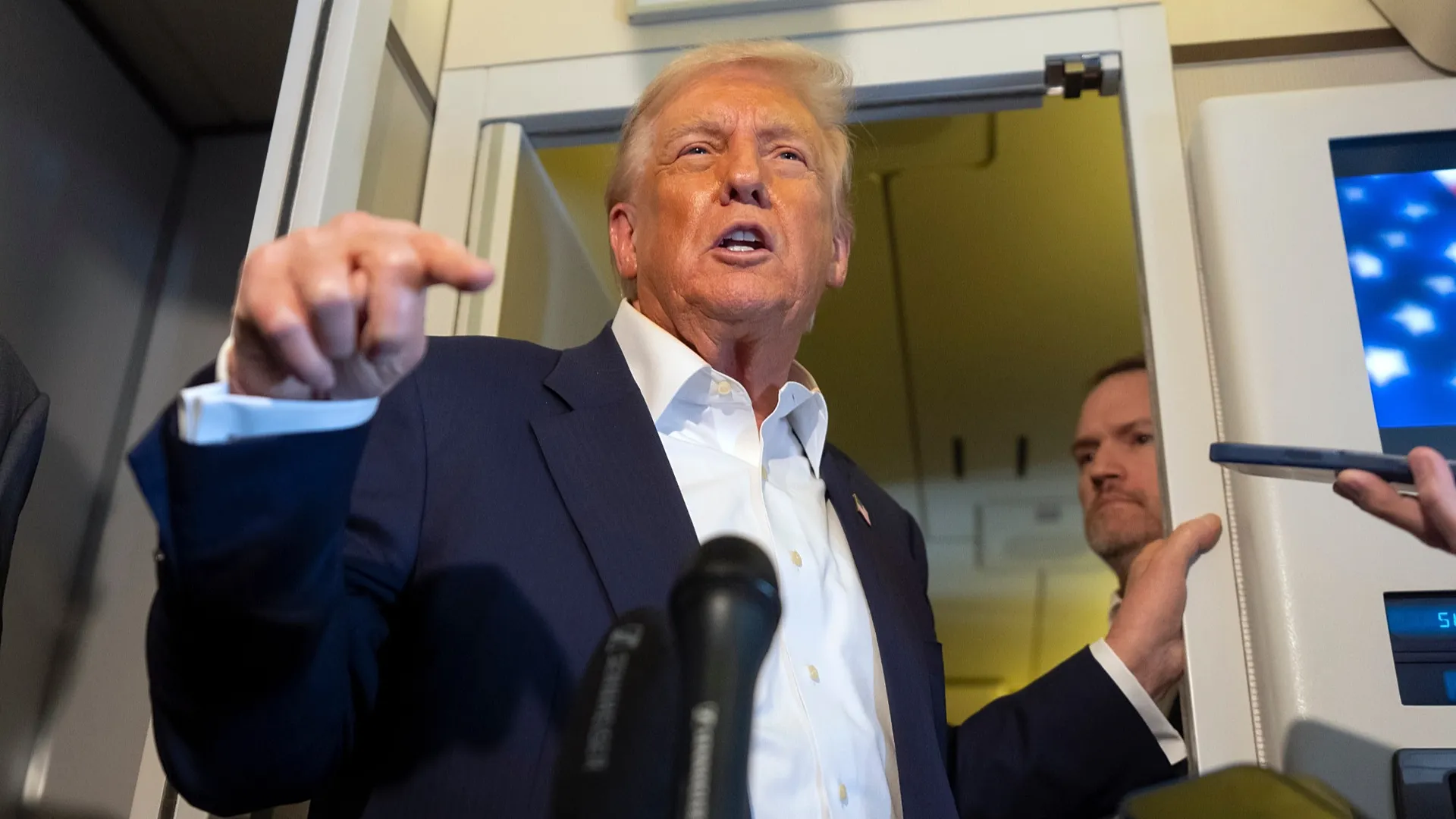
The statement sounded more like a provocation than a proposal—yet it reopened a channel of pressure that Washington believed permanently closed.
Washington D.C., octubre 2025.
Former U.S. president Donald Trump broke months of relative silence on global conflicts by calling on Vladimir Putin to “end the war in Ukraine rather than test missiles no one needs.” The message, delivered through his campaign headquarters, came hours after the Kremlin confirmed a new intercontinental launch from the Plesetsk cosmodrome. Trump’s words, though lacking diplomatic nuance, ricocheted through Washington, Brussels and Moscow, reviving the debate about how far his 2026 candidacy could reshape the West’s posture toward Russia.
The Kremlin dismissed the comment as “electoral theater.” Yet officials within NATO viewed it as a tactical move to gauge reaction from European allies exhausted by a three-year conflict that has drained resources and public patience. According to the Alliance’s defense college in Rome, Trump’s remarks coincide with a surge in anti-war sentiment across Eastern Europe and within sections of the U.S. Congress that question continued military aid to Kyiv.
From London, the Financial Times interpreted the message as a test of boundaries: an attempt to reclaim media space while signaling a possible “deal-making pivot” should Trump return to the White House. In Berlin, Deutsche Welle recalled that during his first term he frequently accused NATO members of freeloading while maintaining ambiguous contact with Putin—an ambivalence that reshaped European defense policy long before Russia’s full-scale invasion in 2022.
According to data compiled by the Stockholm International Peace Research Institute (SIPRI), Russia has conducted twelve strategic missile tests in 2025, double the number from the previous year. The latest launch, of a Sarmat-class ICBM, was officially described by Moscow as “a routine validation of deterrence capability.” Western defense experts, however, link it to a pattern of signaling whenever internal political strains intensify inside the Kremlin. Trump’s criticism therefore struck a nerve: it challenged not only the legitimacy of Moscow’s tests but also the coherence of Washington’s deterrence strategy.
At the Pentagon, spokespersons avoided direct comment. Yet a senior official told Phoenix24 that “every statement by a former president reverberates through command channels when global tensions are this high.” Within the State Department, diplomats privately admitted that Trump’s interjection complicates delicate coordination with European partners seeking a unified stance before winter. “He blurs the lines between campaign speech and strategic messaging,” noted one envoy.
In Kyiv, the reaction mixed sarcasm and unease. Presidential adviser Mykhailo Podolyak said that any call to end the war is welcome “if it means Russian withdrawal, not Ukrainian surrender.” He added that Putin’s missile tests “have nothing to do with security and everything to do with spectacle.” The Ukrainian General Staff reported new attacks near Kharkiv and Zaporizhzhia the same day, underscoring the gap between rhetoric and reality.
Meanwhile, the United Nations Security Council held an emergency session requested by France and Japan to address Russia’s missile activity. Diplomats from Kenya and Brazil urged restraint, arguing that escalating tests risk destabilizing global arms control frameworks already weakened since the collapse of the INF Treaty. According to the UN Office for Disarmament Affairs, 2025 has seen the highest number of nuclear-capable missile launches in over a decade.
Trump’s intervention also exposed fractures inside U.S. politics. Senate hawks accused him of undermining deterrence, while isolationists praised his “common-sense approach.” The Peterson Institute for International Economics warned that such statements affect markets as well: each of the previous Trump-Putin episodes had produced short-term fluctuations in energy and defense stocks across Europe. Following the latest remark, oil futures fell 2 percent and defense sector shares rose marginally in Paris and Frankfurt.
From Tokyo, the Nikkei Asian Review emphasized that Asia’s security community interprets Trump’s message less as pacifist and more as transactional: a hint that future negotiations could tie nuclear reduction to economic concessions. Beijing’s Global Times responded dryly, noting that “the United States lectures others on restraint while expanding its own arsenal.” The contrast illustrates how rhetoric from one political figure can reverberate across strategic theaters far beyond his control.
European diplomats fear that Moscow could use Trump’s remarks to justify a propaganda narrative portraying U.S. divisions as a sign of Western fatigue. According to the EU External Action Service, the Kremlin media ecosystem amplified the quote within hours, presenting it as evidence that “even America’s own leaders want peace.” Such distortion, a European analyst warned, “feeds Russia’s information warfare objectives while confusing Western audiences already desensitized by the conflict’s duration.”
For now, the episode illustrates how campaign rhetoric can interfere with diplomacy in real time. As the United States approaches its 2026 election season, the line between domestic politics and foreign policy is once again blurred. Every word spoken in Washington echoes through Kyiv, Moscow, and Brussels—often with consequences no speechwriter can predict.
Phoenix24: claridad en la zona gris. / Phoenix24: clarity in the grey zone.