

 Phoenix 24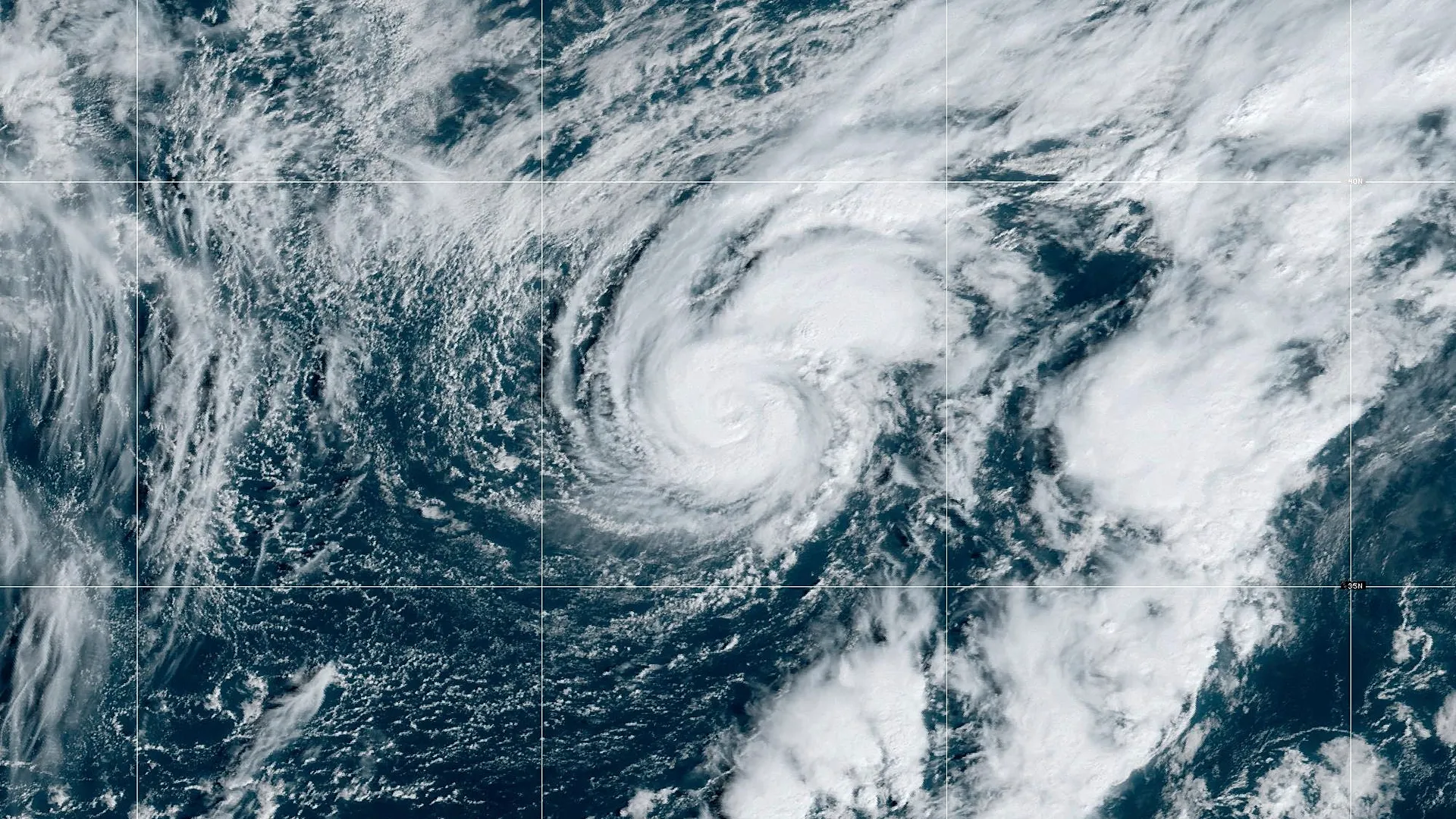
When the atmosphere decides to reorganize its violence, science turns into a language of survival.
Lisbon, October 2025.
European meteorologists are on high alert as a rapidly deepening low-pressure system in the North Atlantic threatens to evolve into a “bomb cyclone,” capable of unleashing hurricane-level winds across Portugal, Spain, France and the British Isles. The storm, informally named Helios, has already dropped pressure by more than 24 millibars in less than 18 hours — the technical threshold that classifies a meteorological “bomb.” Satellites from EUMETSAT show an expanding spiral of dense clouds feeding on warm maritime currents and colliding with cold Arctic air, a collision that meteorologists describe as “the perfect kinetic architecture for explosive cyclogenesis.”
The European Centre for Medium-Range Weather Forecasts in Reading issued an early-stage red alert late Wednesday, warning of gusts exceeding 160 kilometres per hour along Atlantic coasts and potential wave heights above 12 metres. France’s Météo-France called the pattern “unprecedented for mid-autumn,” citing ocean surface temperatures almost two degrees Celsius higher than the seasonal average. Spain’s AEMET urged authorities to prepare coastal evacuations in Galicia and Cantabria, while Portugal’s IPMA placed Lisbon and Porto under maximum risk of flooding.
This weather event is not isolated; it represents a growing pattern of atmospheric volatility that scientists have tracked since the early 2020s. The North Atlantic has become a laboratory of contrasts — record sea temperatures feeding polar air surges, amplified by the residual effects of El Niño and the acceleration of the jet stream. As the planet warms, energy differentials between ocean and atmosphere grow sharper, and storms like Helios emerge as meteorological consequences rather than anomalies.
Transportation ministries across Western Europe have activated contingency plans. Airlines announced mass cancellations from Madrid, Paris and Dublin; freight operators suspended sea crossings through the Bay of Biscay; and coastal defense units began positioning mobile barriers in low-lying areas. In the United Kingdom, the Met Office warned that the storm could rival the destructive Arwen system of 2021, which left millions without power. “This is not a local squall,” said climatologist Sir Malcolm Reid, “it is the new face of Atlantic energy in an age of climate disequilibrium.”
By late Thursday, the European Union’s Emergency Response Coordination Centre in Brussels was monitoring wind trajectories through Copernicus satellite feeds, ready to deploy civil-protection resources to member states within 24 hours. Italy and Germany, though less exposed to direct impact, prepared teams for humanitarian support in the event of regional blackouts. In Madrid, Prime Minister Isabel Garrido chaired an emergency meeting with meteorological and energy officials, calling the situation “a continental test of resilience.”
Energy markets reacted instantly. Gas futures in Amsterdam climbed three percent on fears of pipeline disruptions and offshore rig shutdowns. Insurance companies invoked early-risk clauses for maritime transport and coastal property, while tourism boards in Spain and Portugal suspended major cultural events. The cascading economic ripples illustrate how meteorological phenomena have become financial variables in the European equation.
Beyond the data and warnings lies a psychological undercurrent. For millions of Europeans, Helios is another reminder that the weather is no longer seasonal background but a protagonist of daily life. Communities once accustomed to gentle autumn rains now prepare for super-storms, and meteorologists — once mere interpreters of nature — have become voices of civil defense. As sociologists from the University of Lisbon note, “risk literacy has replaced weather curiosity.” The forecast is no longer just about umbrellas, but about continuity of life.
Environmental scientists see in Helios a sign of accelerating instability. A 2024 report by the Intergovernmental Panel on Climate Change warned that mid-latitude regions could face a doubling of rapid-intensification storms by 2040 if emissions remain on their current trajectory. The mechanisms are known: warming oceans release latent heat that deepens cyclonic cores; jet-stream shifts trap low-pressure systems over land; and extreme precipitation follows. The term “bomb cyclone,” once confined to American meteorology, has now entered Europe’s everyday lexicon — a linguistic adaptation to a changing planet.
As night falls on Lisbon, the wind begins to moan through the Alfama district, a prelude to the atmospheric theatre approaching from the Atlantic. In the control room of Portugal’s civil protection service, digital maps pulse in shades of crimson and violet, tracking an invisible geometry of pressure gradients. Outside, citizens secure balconies and windows, listening to radios and checking messages that merge science with superstition.
Europe’s fate in the coming hours will depend on the alignment of two things: the accuracy of models and the discipline of its people. The atmosphere has already made its move; now humanity must respond not with fear but coordination. Whether Helios becomes a catastrophe or a demonstration of preparedness will define more than the season — it will define the collective maturity of a continent facing the physics of its own climate reckoning.
Phoenix24: information that anticipates futures. / Phoenix24: información que anticipa futuros.