

 Phoenix 24
A single wireless signal can betray more than your location; it can open the door to your digital identity.
London, October 2025. Each time a smartphone leaves home, it carries invisible risks that most users ignore. Security specialists have confirmed that one of the simplest actions to prevent cyber theft is also one of the most neglected: turning off Bluetooth when stepping outside. The convenience of leaving it active has become a silent vulnerability that criminals exploit to access private data without even touching the device.

When Bluetooth remains visible, the phone continuously broadcasts its presence to nearby devices. In public spaces such as airports, cafés or shopping centers, this small broadcast can be intercepted in seconds. Attackers can extract messages, contact lists, and even access banking credentials through a process known as bluesnarfing, which allows information theft without the user’s knowledge or consent.
Experts in digital forensics explain that cybercriminals now favor short-range attacks that require minimal proximity and no physical contact. By detecting the device’s identification and open connections, they can infiltrate and clone specific data packets. The victim often notices nothing unusual until fraudulent movements appear in financial apps or unauthorized access attempts are detected from unfamiliar locations.
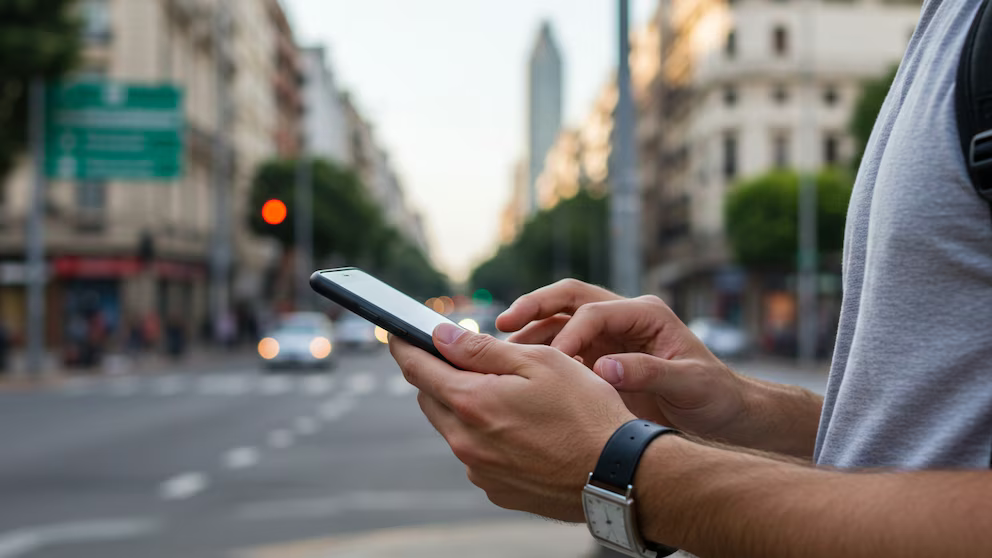
Cybersecurity institutions in Europe and Asia have already classified Bluetooth exposure as a growing vector of personal espionage. Investigators from Japan’s National Institute of Information and Communications Technology revealed that more than half of detected intrusions in public areas during 2024 were linked to active Bluetooth signals from unaware users. In the United States, cybersecurity centers emphasize that these incidents tend to rise during travel seasons when millions of devices connect simultaneously in confined areas.
The recommended prevention is straightforward yet decisive. First, deactivate Bluetooth when not in use, especially in outdoor or public settings. Second, set the connection mode to “hidden” so that the device cannot be detected by unknown equipment. Third, delete pairing histories regularly and reject any unexpected connection requests. Finally, maintain system updates to ensure that new security patches close known protocol weaknesses.
From a behavioral perspective, experts identify a recurring pattern: users prioritize convenience over caution. The habit of keeping Bluetooth on to connect headphones, cars, or smartwatches leads many to forget that the same signal can serve as a gateway for intrusion. As one analyst put it, “every time your device announces itself to the world, it also announces its weakness.”

For high-profile individuals, executives, and travelers carrying sensitive information, the danger multiplies. A compromised signal can lead to identity theft, corporate espionage, or data leaks. But the same principle applies to anyone with a smartphone. In the age of seamless connectivity, the line between comfort and exposure has disappeared.
Disabling Bluetooth may seem trivial, but its impact is profound. Every signal you silence is a barrier raised against digital intrusion. The safest connection, experts insist, is the one you consciously control.
Phoenix24: facts that do not bend. / Phoenix24: hechos que no se doblan.