

 Phoenix 24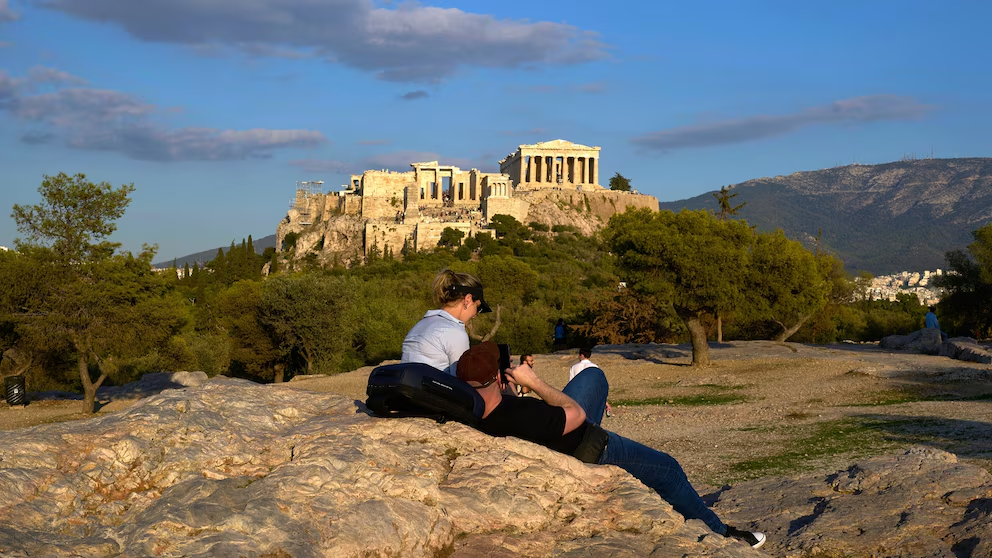
For a brief moment, the Acropolis stands uncovered, letting time and light meet again on marble.
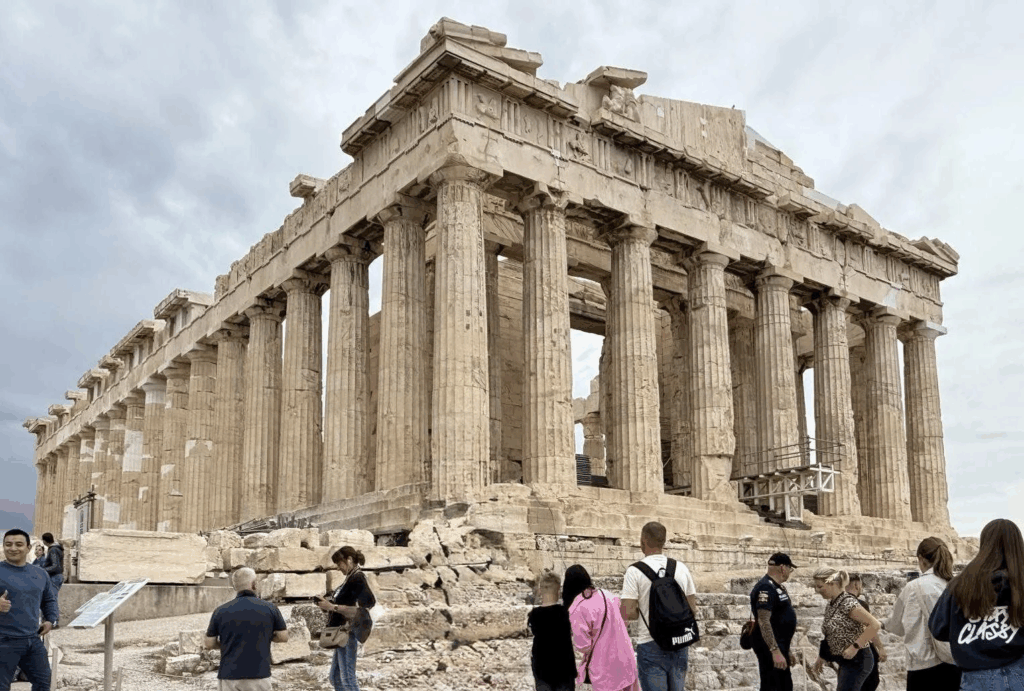
Athens, October 2025. Visitors walking through the Acropolis this week witnessed an image unseen for almost half a century: the Parthenon, Greece’s most emblematic monument, free from the scaffolding that has surrounded it since the 1970s. The Greek Ministry of Culture confirmed that the final metal structures on the western façade were dismantled at the end of September, allowing an unobstructed view of the temple’s Doric columns for the first time in decades.
The scene drew crowds of Athenians and tourists who stood quietly before the restored silhouette, capturing a glimpse of the ancient harmony that inspired generations of architects. Cultural officials described the moment as symbolic —a pause between phases of conservation— reminding the public that the monument is both timeless and perpetually in repair.
The Parthenon’s restoration has been one of the longest architectural preservation projects in modern history. Initiated to correct structural damage from pollution, earthquakes and previous restoration attempts, it has required decades of meticulous engineering. Teams of archaeologists, architects and stone artisans have worked continuously to clean, replace and stabilize the marble blocks without altering their original geometry.
For local residents, seeing the Acropolis skyline unobstructed awakened a deep sense of pride. Many who grew up with cranes above the city said the open view restores a sense of continuity between past and present. Tour guides noted that for a few weeks visitors will finally photograph the monument as it appeared in history books —clear, balanced, and without the metallic frames that long defined it.
The Ministry of Culture clarified that this view will be temporary. Within weeks, new and lighter scaffolding will be installed to begin the next stage of the preservation plan, focusing on the western colonnade and the cella interior. Officials emphasized that the pause in works allows engineers to assess structural integrity before advancing to more delicate operations.
Behind the technical achievement lies an international collaboration involving UNESCO and several European conservation institutes. Specialists from Italy, France and Germany have contributed studies on seismic resistance and non-invasive cleaning methods. The Greek restoration team continues to use Pentelic marble from the same quarry that supplied the original builders twenty-five centuries ago, ensuring material consistency and visual authenticity.
Economically, the Parthenon’s restoration remains a priority investment for Greece, attracting tourism and cultural funding that sustains hundreds of jobs. The brief moment without scaffolding has also boosted visitor numbers, reinforcing Athens’ image as a living museum. Local artisans, photographers and educators have organized temporary exhibitions around the Acropolis Museum to celebrate the milestone.
Officials stressed that the project’s goal has never been to complete the Parthenon as it once stood, but to preserve it against further decay. Decades of acid rain, environmental stress and historical neglect have left fractures that require constant attention. Modern restorers use digital mapping and laser scanning to track every marble fragment, documenting the monument’s evolution with scientific precision.
For historians, the current pause symbolizes more than a technical phase. It represents Greece’s long dialogue with its own identity —a balance between preserving antiquity and embracing modernity. The absence of scaffolding allows the public to see the temple not as a ruin or a project, but as a breathing link between eras.
At sunset, when the last light of October slides across the marble, the Parthenon appears unguarded yet enduring. It is a fleeting moment, destined to fade when the next scaffolds rise again. But for now, the monument stands as it once did: proud, wounded, and eternal.
Phoenix24: every silence speaks. / Phoenix24: cada silencio habla.