

 Mario López Ayala, PhD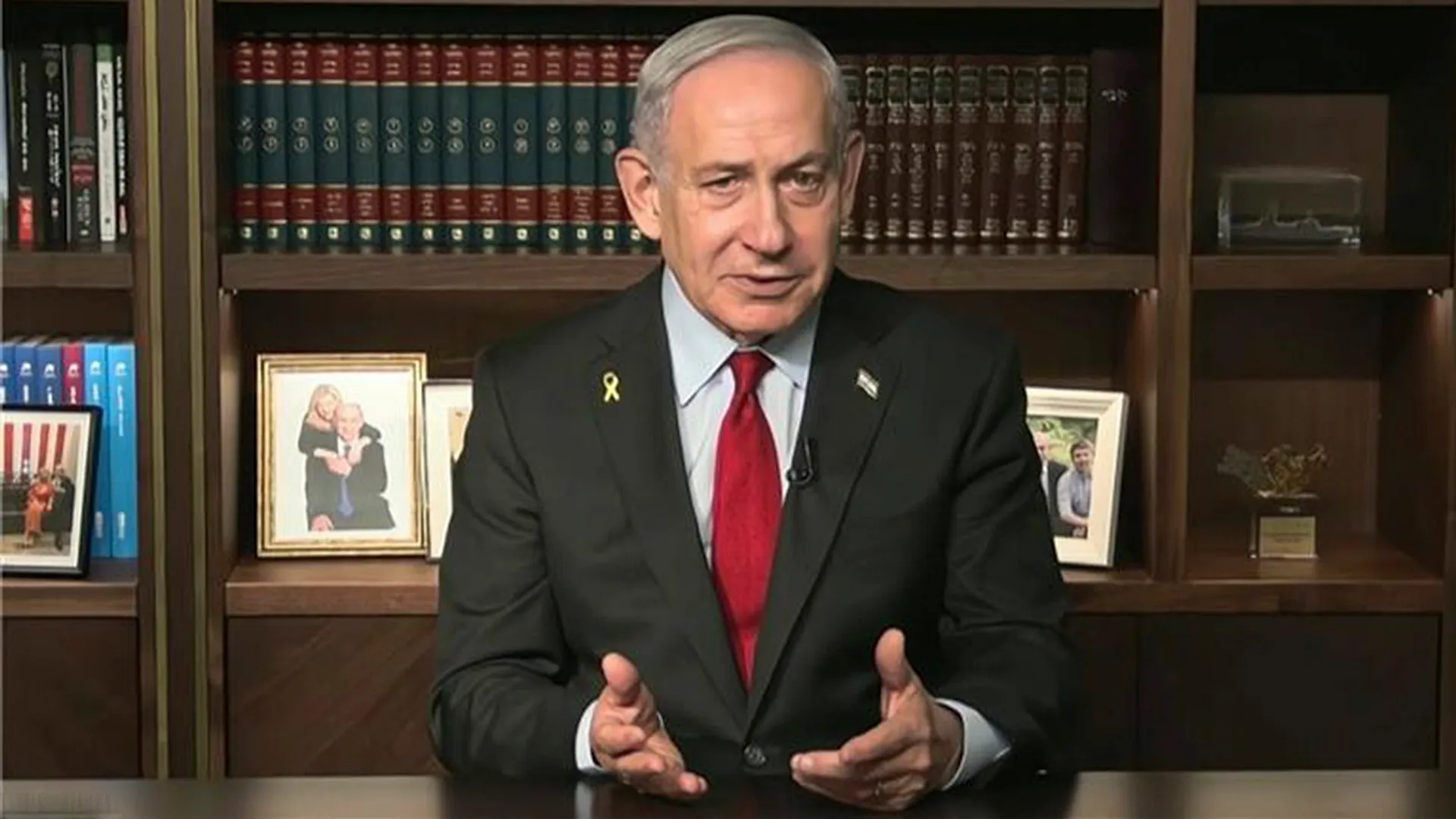
A fierce metaphor, a direct message, and a warning that transcends borders: Israel insists that complacency with extremism will have global consequences.
Jerusalem, October 2025
Benjamin Netanyahu issued a stark warning in an exclusive interview with European media, declaring that “if you feed the crocodile of Hamas, it will eventually devour those who now believe they are safe.” For the Israeli prime minister, the conflict in Gaza is not merely a regional issue but the front line of an ideological war in which the security of liberal democracies is at stake. The phrase, calculated and symbolic, aims to pressure Western powers to end what he calls “dangerous concessions” to the Palestinian Islamist group.
The interview coincides with the second anniversary of the October 7, 2023 attack, when Hamas militants killed hundreds of Israeli civilians and took dozens of hostages, an event that continues to define Tel Aviv’s security strategy. Netanyahu reiterated that the responsibility for freeing the hostages lies solely with Hamas and warned that Israel is prepared to halt its military operations if the United States-backed peace plan is fully accepted. However, he stressed that the agreement “cannot be accepted halfway”: Hamas must disarm, release all captives, and dissolve entirely.
According to sources in the Israeli Defense Ministry, ground operations have significantly weakened Hamas’s operational capacity, forcing it to consider concessions. However, a Hamas spokesperson in Gaza called the ultimatum “unacceptable” and stated that certain clauses must be renegotiated. The peace plan envisions reciprocal commitments: Hamas would release all hostages and allow the establishment of an internationally supervised civil administration under figures such as former British Prime Minister Tony Blair, while Israel would release hundreds of Palestinian prisoners, open humanitarian corridors, and withdraw troops from key areas.
Netanyahu described the initiative as “the beginning of the end of the war” and suggested that Hamas’s willingness to negotiate stems from its fear of irreversible military isolation. In his view, establishing a civil authority that does not promote hatred could transform the region’s future. He also used the interview to sharply criticize the European Union, accusing it of “surrendering to terrorism” by diplomatically recognizing the Palestinian state and thereby “rewarding” Hamas. In his vision, Israel is fighting “the battle of the free world,” and Europe must realize that the threat will not stop at the Mediterranean.
In this context, Netanyahu linked Hamas to other Iranian-backed organizations such as Hezbollah and the Houthis and claimed that Israeli intervention has halted “Iran’s terrorist expansion.” The Gazan government, meanwhile, reports that the offensive has caused around 67,000 deaths, a figure that organizations like Amnesty International and Human Rights Watch consider plausible but difficult to verify due to limited independent access. The United Nations, the European Union, and the Arab League have all urged the parties to protect civilians and resume dialogue.
From Washington, the U.S. administration has reaffirmed its support for both the peace plan and Israel’s broader strategy while insisting on the need for an immediate humanitarian ceasefire. Diplomatically, Egypt and Qatar continue to play crucial roles as mediators, while Iran strengthens its support for armed groups hostile to Israel. Moscow has denounced what it sees as Western “double standards,” while Beijing has refrained from directly condemning Hamas, instead calling for a “comprehensive political solution” that includes full recognition of a Palestinian state.
Netanyahu’s message has also resonated in Asia and Africa. Japan and South Korea have called for regional stability and a return to peace talks, while diplomats from South Africa and Sudan have advocated for an immediate ceasefire without foreign military involvement. Much of the Global South sees the conflict as a test case for how major powers manage transnational insurgencies and extremist narratives.
The “crocodile” rhetoric is not just political theater. It is part of a broader Israeli strategy to warn its allies that complacency can backfire. In a world where hybrid attacks, digital radicalization, and the covert financing of armed groups cross borders with ease, the warning takes on structural significance. Democracies, Netanyahu suggests, must choose between taking a firm stand now or facing a far greater risk later.
The metaphor is deliberate and provocative. Like a predator that grows stronger with each meal, Islamist extremism can become unmanageable if nourished with diplomatic concessions. The message goes beyond Hamas: it is a call to redefine the free world’s red lines before the cost of inaction becomes too high.
Facts that do not bend. / Hechos que no se doblan.