

 Phoenix 24
A reflection of national depth and dominance across women’s sport, embodied most potently in football’s global hierarchy.
Madrid, September 2025
Spanish women currently lead the European sporting landscape with growing authority, a dominance that is now visible across multiple disciplines. Football remains the flagship, with Spain holding the number one spot in the FIFA World Ranking after conquering the World Cup and reaching the final of the last European Championship. The national team’s supremacy is measured not only in points and titles, but also in the symbolism of overcoming historic rivals and consolidating an era defined by tactical clarity, youth development, and individual brilliance.
This leadership is not the product of chance. It stems from a decade of steady investment in grassroots structures, regional training academies, and professional clubs that elevated women’s football from the periphery to the center of Spain’s sporting identity. The emergence of world-class players such as Alexia Putellas and Aitana Bonmatí exemplifies this transformation. Their recognition as global icons confirms Spain’s ability to produce not just competitive squads but transcendent figures who inspire new generations. Their selection in the Euro’s All-Star XI alongside several teammates underscores the collective strength of the system.
The dominance, however, is not confined to football. In rhythmic gymnastics, Spain stunned Europe by capturing all gold medals at the continental championship in Tallinn, a result that marked one of the sport’s most significant rebirths. For years, Spanish rhythmic gymnastics oscillated between promise and disappointment. Today, with a new generation of athletes, the discipline stands as a symbol of perseverance and resilience. The clean sweep was described by observers as a phoenix-like resurgence, proof that structural reforms and technical rigor can bear fruit even in traditionally challenging contexts.
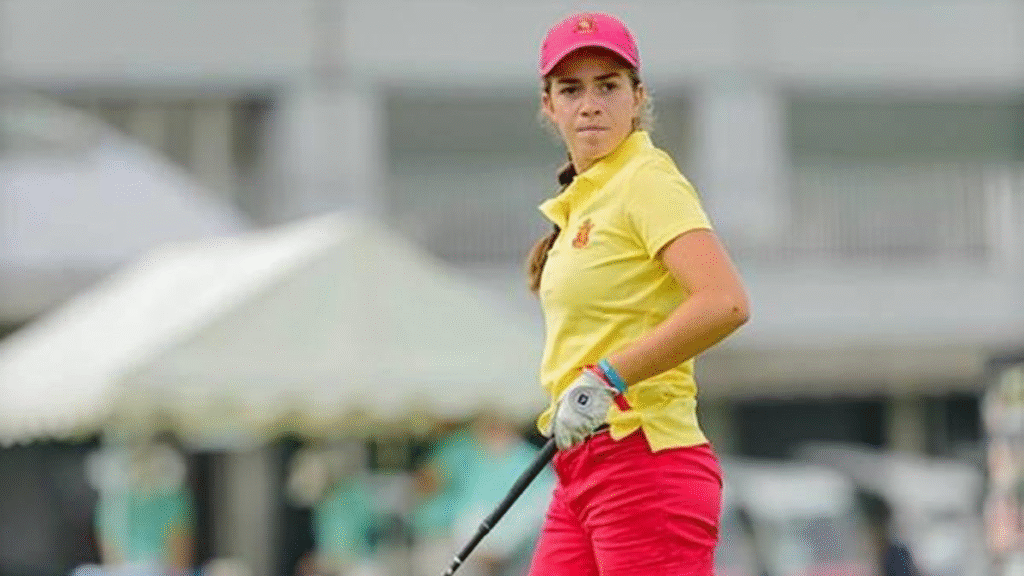
Golf adds another chapter to this narrative of excellence. The Spanish women’s team claimed the European Women’s Team Championship after orchestrating a dramatic comeback in the final rounds. Entering the last day at a disadvantage, the players turned the tide with composure and accuracy under pressure. Their triumph was celebrated not just as a sporting success but as evidence of the growing depth of Spanish talent in a discipline long dominated by northern European countries. The victory also illustrated how mental resilience and competitive elegance define the national sporting ethos across different arenas.
Together, these achievements confirm Spain as a hub of female athletic excellence in Europe. The pattern is striking: from the football pitch to the gymnastics floor, from golf courses to swimming pools, Spanish women consistently transform opportunity into triumph. Analysts point to a combination of factors. The first is institutional support, as federations have gradually shifted resources toward women’s programs. The second is cultural momentum, with media coverage and public interest expanding dramatically since the World Cup triumph. The third is generational: young athletes now see clear pathways to professionalism, encouraging early specialization and ambition.
The implications reach far beyond medals. In football, Spain’s leadership enhances sponsorship opportunities, increases visibility for domestic leagues, and places pressure on rivals to innovate. In gymnastics, the clean sweep repositions Spain as a serious global contender, potentially influencing Olympic strategies and funding. In golf, the continental title demonstrates that Spanish athletes can compete and win in traditionally elite sports, further expanding the country’s sporting identity.
Beyond the tangible, there is also an emotional dimension. For young girls across Spain, watching athletes dominate in European and world arenas delivers a message of possibility. For the broader public, victories in multiple sports reinforce a sense of national pride that transcends gender divides. These successes contribute to reshaping societal perceptions, proving that women’s sport can inspire, entertain, and lead as powerfully as men’s competitions.
At the European level, Spain’s ascent challenges traditional hierarchies. Countries that once monopolized attention now face a rival that combines creativity with consistency. For Spain, the challenge is to sustain this momentum. Dominance attracts expectation, and expectation can quickly turn into pressure. Whether in football, gymnastics, or golf, the coming years will test the durability of this sporting model.
Still, the present moment is undeniable. Spain’s female athletes have not only reached the top of continental rankings but have also reset the standards of excellence. They embody a narrative of growth and resilience that resonates across Europe. Their achievements are more than statistics on a chart—they are signals of a cultural transformation in which women’s sport has become a defining force in the country’s identity.
Global narrative resilience.
Resistencia narrativa global.