

 Phoenix 24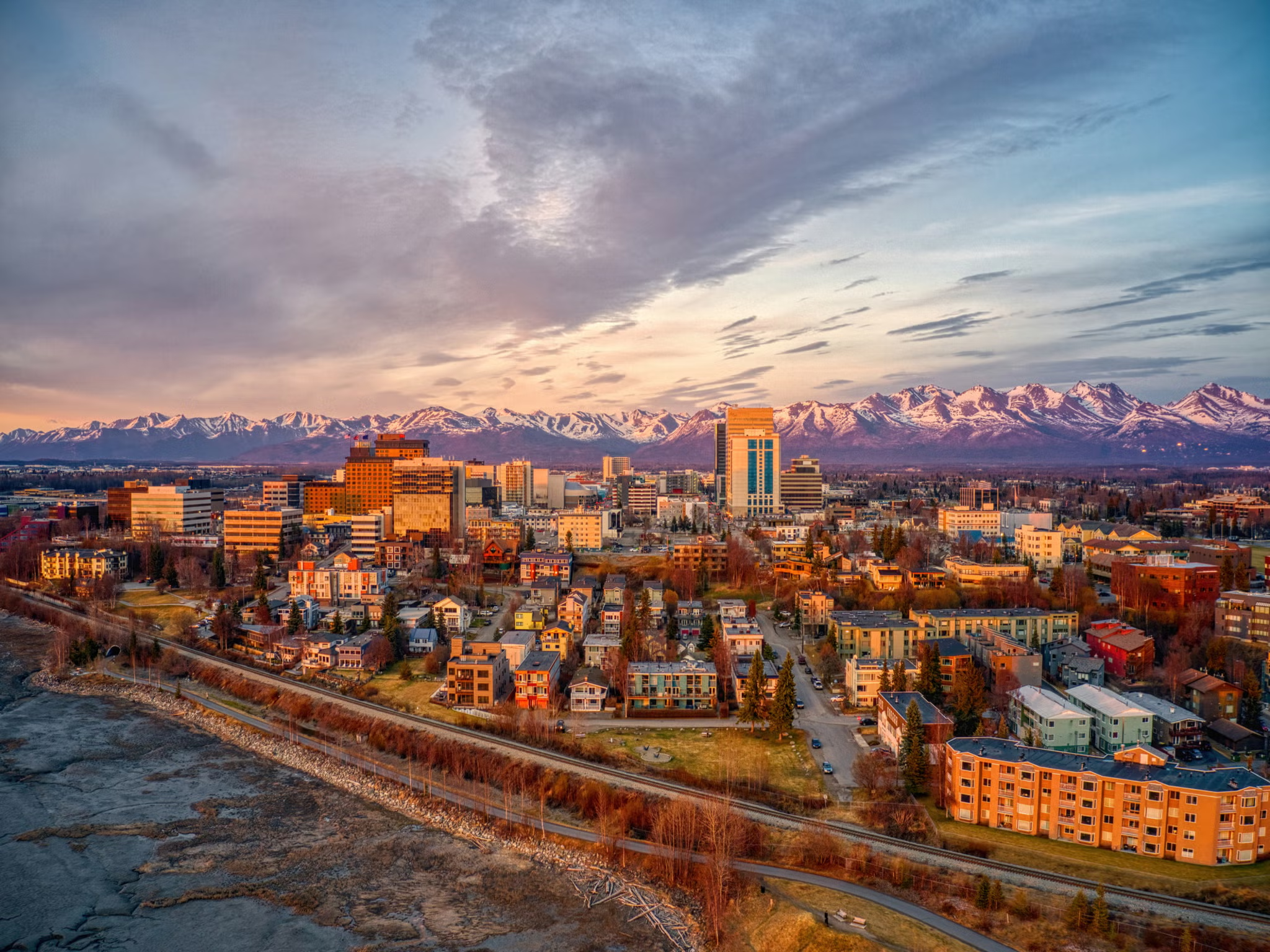
A historical narrative resurfaces amid global tensions, balancing between symbolism and geopolitical calculation in a scenario where the Arctic is gaining prominence as a strategic chessboard.
Madrid, August 2025
The choice of Anchorage, Alaska, as the venue for the upcoming meeting between Donald Trump and Vladimir Putin has revived a historical echo loaded with symbolic weight. Statements from Russian state media and Kremlin-aligned figures have described Alaska as “Russian-American territory,” a term that invokes its colonial past without becoming a formal sovereignty claim. The strategy is deliberate: by situating the summit on U.S. soil with Russian heritage, Moscow injects a narrative nuance linking history to its current Arctic ambitions.
In the days leading up to the meeting, an image of a billboard reading “Alaska is ours” has resurfaced on social media. First appearing in 2022—sparking protests in the U.S. Congress and inflaming bilateral tensions—the slogan was attributed to ultranationalist circles with no real influence on Russian policy. Its reappearance now, however, reinforces the symbolic charge surrounding the summit.
The sale of Alaska by the Russian Empire to the United States in 1867, for $7.2 million of the time, took place amid financial strain and territorial overextension. No recent official statements have labeled that transaction “illegal,” although fact-checkers have repeatedly debunked this claim when it circulates online. What does exist is a calculated use of historical memory to project influence in the Arctic, where Russia is already a dominant player in maritime routes, energy exploration, and military deployments.
Among the most extreme voices, a former Russian lawmaker once called for the “return” of Alaska, part of California, and even Antarctica. Such proposals—widely ridiculed within and outside Russia—lack legal or political backing, yet they serve a media function: placing Alaska in public debate and stressing the sovereignty narrative.
Geopolitical experts consulted by Phoenix24 point out that these symbolic messages, even without legal claims, act as soft-power tools serving three goals: to undermine U.S. perceptions of territorial control, to influence the framework of dialogue in bilateral negotiations, and to normalize Russia’s presence as a legitimate actor in Arctic governance.
The timing is crucial. Beyond its geography, the Arctic today is a contested arena for mineral resources, commercial routes, and strategic military positions. The Anchorage summit—officially focused on Ukraine and global security—inevitably casts a shadow over this theater, projecting a competition for influence that transcends the European conflict.
If the meeting passes without a Russian statement on Alaska, the narrative may remain symbolic. However, the mere act of reactivating this historical memory already serves a purpose: to remind the global public that in the Kremlin’s agenda, geography is never just geography.
Esta nota fue elaborada por el equipo editorial de Phoenix24 con base en información pública, fuentes internacionales verificadas y análisis geopolítico independiente.
This article was produced by the Phoenix24 editorial team based on public information, verified international sources, and independent geopolitical analysis.