

 Phoenix 24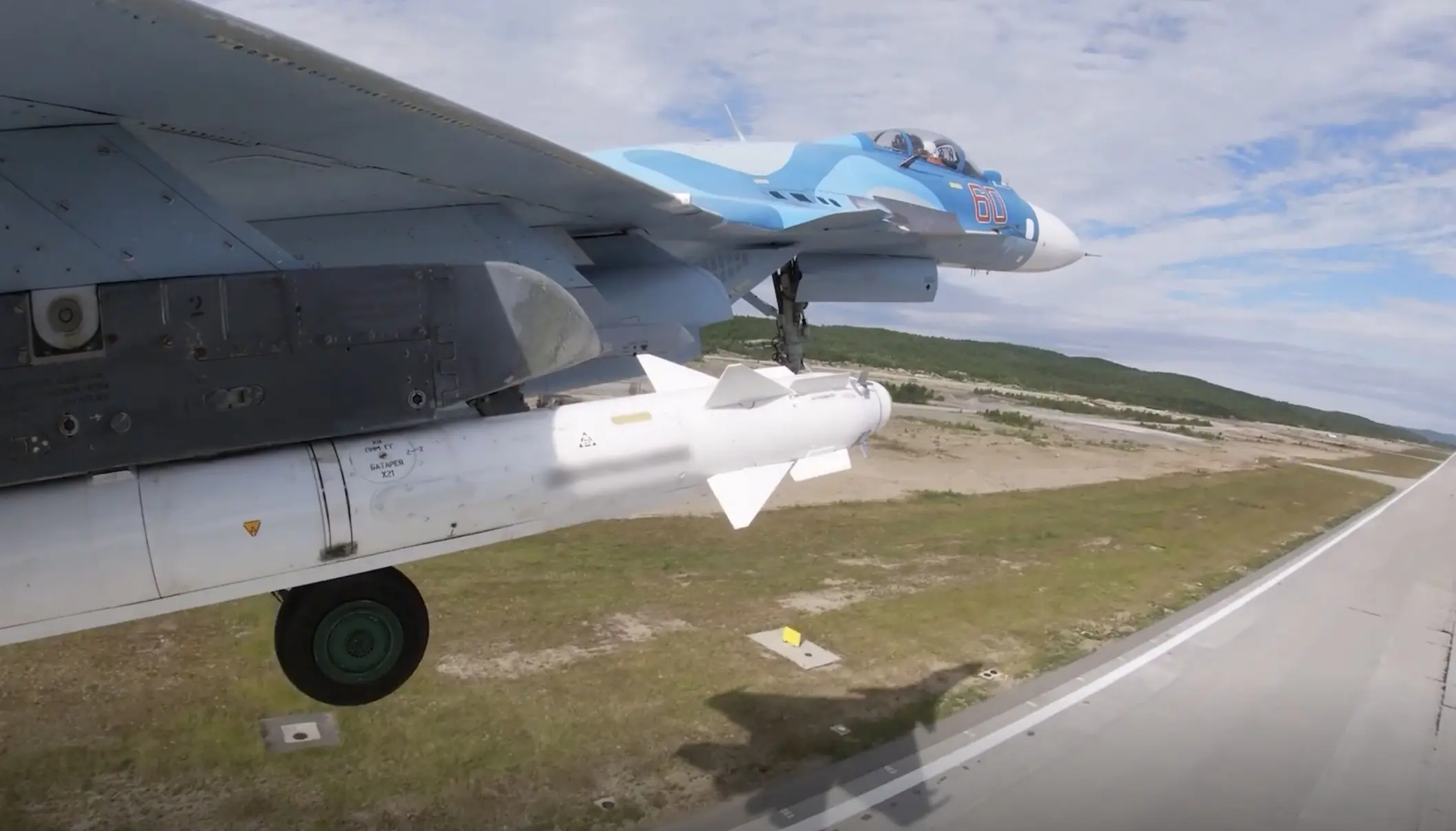
A simulated strike over the Barents Sea signals Russia’s evolving air-sea doctrine—and its growing urgency to counter unmanned threats in the High North.
Severomorsk / Murmansk, July 2025
Over the icy waters of the Barents Sea, Russian Navy fighter pilots launched a series of tactical drills aimed at intercepting long-range drones. The operation, part of this month’s “July Storm” exercise, marked a strategic inflection point for Russia’s Northern Fleet. Designed to prepare its air wings for modern asymmetric threats, the maneuver reveals a deep recalibration of Moscow’s combat doctrine across its Arctic front.
Pilots aboard Su-33 and MiG-29K fighter jets—traditionally assigned to the long-immobilized aircraft carrier Admiral Kuznetsov—executed live-fire tests against parachuted aerial targets meant to simulate unmanned aerial vehicles (UAVs). According to the official communiqué, the training achieved “target elimination efficiency,” but more significantly, it signaled Russia’s open acknowledgment that drone warfare is no longer a battlefield anomaly—it’s the new normal.
These exercises did not emerge in a vacuum. Ukrainian forces have recently intensified long-range drone incursions into Russia’s Arctic infrastructure, targeting critical military facilities near Severomorsk and Olenya. Kremlin advisors now classify UAV strikes as a “strategic disruption risk” to nuclear and naval installations in the High North. In response, Russian naval aviation is being pushed into fast-track adaptations—both technologically and tactically.
What makes the scenario more revealing is the continued absence of the Admiral Kuznetsov. The carrier has been dry-docked for repairs since 2017, its condition deteriorating from a series of technical failures and fire damage. With no operational aircraft carrier, the use of carrier-based jets in land-based operations underscores a subtle, yet fundamental, shift in Russian naval aviation: one that prioritizes modular aerial capabilities over traditional sea-based deployment. Military analysts see this as both a stopgap and a sign of doctrinal pragmatism.
The broader “July Storm” operation mobilized over 150 ships, 15,000 troops, and around 120 aircraft. Warships such as the Admiral Golovko, Marshal Ustinov, and Severomorsk – Admiral Levchenko participated in coordinated drills involving coastal missile systems, anti-submarine helicopters, and area denial maneuvers. Moscow also declared a 94,000-square-kilometer maritime danger zone, some of which overlapped with Norwegian territorial waters, prompting civil navigation warnings and NATO radar tracking.
According to Western security think tanks including CSIS and Stratfor, these drills indicate a pivotal shift in Russian force posture in the Arctic: from legacy surface combatants toward an integrated platform of mobile aerial assets and drone defenses. The Barents Sea is no longer simply a corridor for submarine patrols—it has become an active lab for counter-drone warfare and hybrid force projection.
This transformation is not lost on NATO or its Arctic members. Norway, Finland, and the United Kingdom have reportedly accelerated joint drone surveillance systems in response, while the U.S. Air Force has increased the frequency of Global Hawk drone flyovers in the North Atlantic corridor. Intelligence sources suggest that NATO war planners now view Russian Northern Fleet movements as both a deterrent signal and a vulnerability: a navy without a carrier may be less potent, but also more unpredictable.
Military analysts from the Lowy Institute and the Heritage Foundation argue that this transition exposes Moscow’s dual challenge: adapting to drone warfare while compensating for decaying conventional platforms. In operational terms, the Russian Navy must now maintain high-alert readiness with fewer command-and-control nodes, relying instead on decentralized response units and precision-guided interceptors.
Three strategic outcomes may unfold from these developments. First, a scenario of operational continuity: Russia succeeds in rebuilding its air wing doctrine without needing the Kuznetsov, thereby creating a more agile Arctic strike capacity. Second, a disruptive scenario: if logistical gaps and outdated aircraft hinder response time, Russia may face increased vulnerability to future UAV incursions. Third, a bifurcation of control in the Arctic: should NATO or non-state actors deploy more sophisticated drone swarms or ISR capabilities in the region, Russia could be forced to escalate or innovate further, leading to a re-militarization spiral across the circumpolar North.
What is clear is that Arctic skies are no longer calm. Russia’s pivot toward drone interception reveals not only a tactical adjustment, but a deeper acknowledgment: that the next phase of conflict—if not already here—will be shaped not by heavy hulls or massive fleets, but by small machines, silent patterns, and uncrewed precision.
Under the highest standards of verification and journalistic ethics, Phoenix24 prepared this article with up-to-date information and independent analysis from a comprehensive geopolitical perspective.
Bajo los más altos estándares de verificación y ética periodística, Phoenix24 elaboró este artículo con información vigente y análisis independiente desde una perspectiva geopolítica integral.