

 Tarek Al-Mansour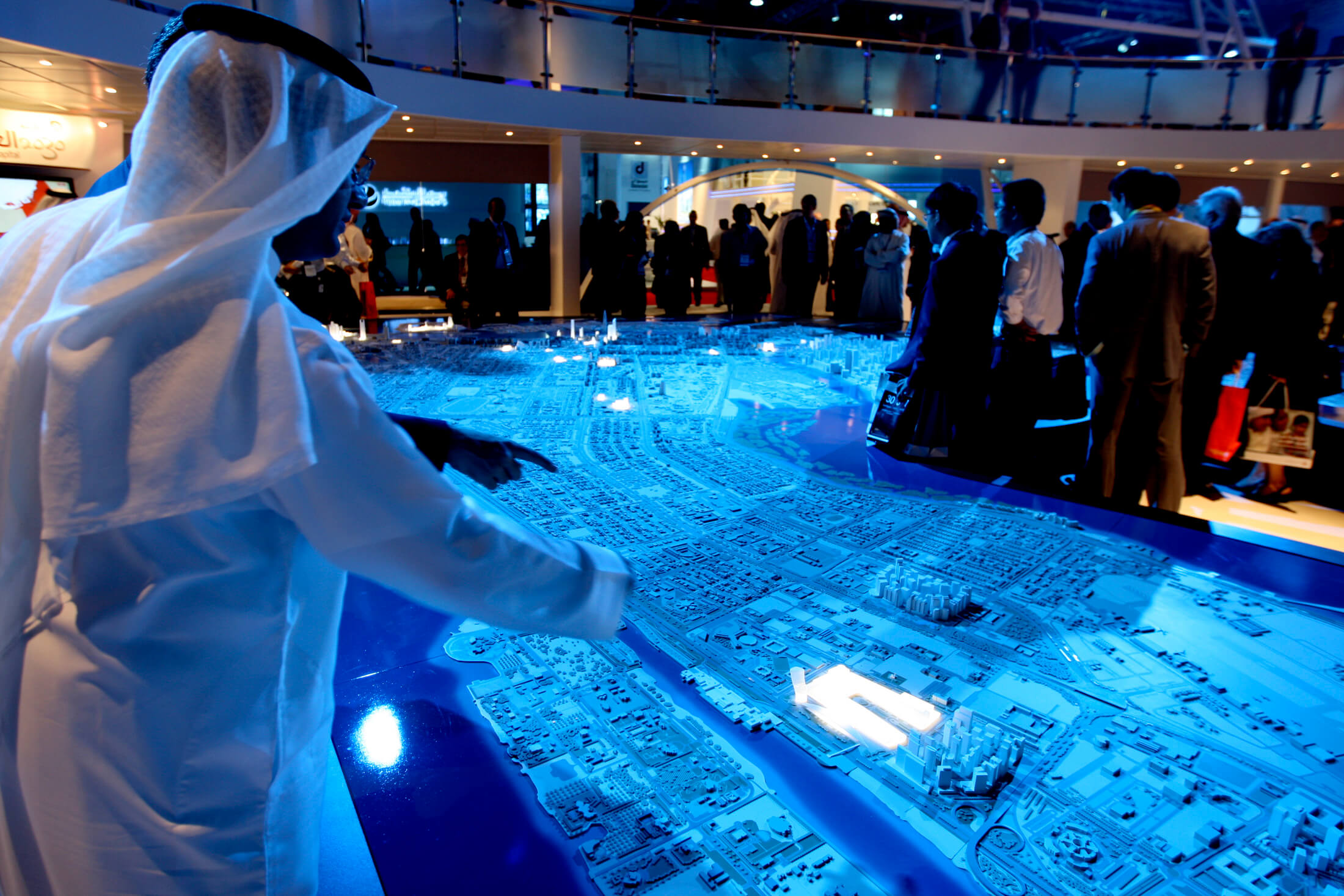
Riyadh, July 2025
While global media fixates on oil prices and Wall Street’s algorithmic cycles, a new paradigm of power is being quietly engineered in the deserts of the Gulf—one that no longer depends on tanks or treaties, but on data centers, digitized prophecy, and sensor-wired theology. From Saudi Arabia to Qatar and the Emirates, what is emerging is not just a transformation of governance, but a reinvention of civilization itself: technocratic Islam.
For decades, the dominant narrative has framed modernity and religion as opposing forces. The Gulf monarchies are now dismantling that dichotomy with surgical precision. Through a fusion of artificial intelligence, Islamic finance, behavioral surveillance, and codified theology, a new regime model is crystallizing—one where petroalgorithms power the infrastructure, and digital mosques guide the moral code.
In Saudi Arabia, the futuristic megacity of NEOM is designed as the flagship of this transformation. Marketed as a car-free, emission-free urban utopia, NEOM aspires not only to be a technological marvel, but also a post-secular caliphate: where Qur’anic ethics are filtered through GPTs trained in Islamic jurisprudence, and where Friday sermons are livestreamed into halal metaverses.
The UAE is already pioneering what might be called “Islamic fintech sovereignty”—a fusion of sharia-compliant finance with blockchain protocols, smart contracts, and AI‑audited zakat distribution. Oversight committees of scholars and technocrats simultaneously ensure religious legitimacy and systemic efficiency. The result is a form of control that appears modern but embeds the vertical authority of the ruling houses in invisible digital architectures.
In Qatar, millions have been invested in multilingual AI systems tasked with monitoring public morality on social media. These systems go beyond detecting blasphemy or political dissent—they decipher tone, irony, subtext, even veiled metaphors. The algorithm becomes both mufti and censor, policing not just speech but intention.
But this model is no longer confined to the Gulf. From Egypt to Malaysia, states are beginning to replicate the formula. Exporting technocratic Islam doesn’t require soldiers—it flows through sovereign wealth funds, smart-city investments, and cloud-based theology. Across North Africa and Southeast Asia, the notion that spiritual governance can be optimized is gaining traction among postcolonial elites seeking stability without surrendering control.
The West observes this shift with cognitive dissonance. Silicon Valley courts these regimes, even as Washington expresses vague concern over “rights.” Brussels juggles energy contracts with Doha while warning against “the algorithmization of the soul.” Yet the Gulf no longer seeks validation—it seeks autonomy. The objective is not to please but to normalize a new civilizational code: one in which digital obedience and religious loyalty converge.
There is no neutrality here. Technocratic Islam is not simply a governance style—it is a political architecture cloaked in theological legitimacy, designed to withstand both secular liberalism and radical reformism. The pulpit meets the server rack. The prayer synchronizes with facial recognition.
And the unsettling truth is: it works. In a world fractured by culture wars, economic volatility, and epistemic distrust, this hybrid offers something neither Washington nor Beijing can yet provide: an integrated, emotionally resonant, morally packaged vision of the future. One that offers order in an age of entropy.
The battle for the soul of Islam no longer pits clerics against secularists. It pits humans against code. And in the margins of the desert, the 21st century may have already found its blueprint—not a caliphate, not a democracy, but a sanctified algorithmic state.
Tarek Al-Mansour
Saudi geopolitical analyst and Middle East correspondent at Phoenix24. Expert in Gulf diplomacy, energy security, and AI-driven power dynamics in the region.