

 Phoenix 24
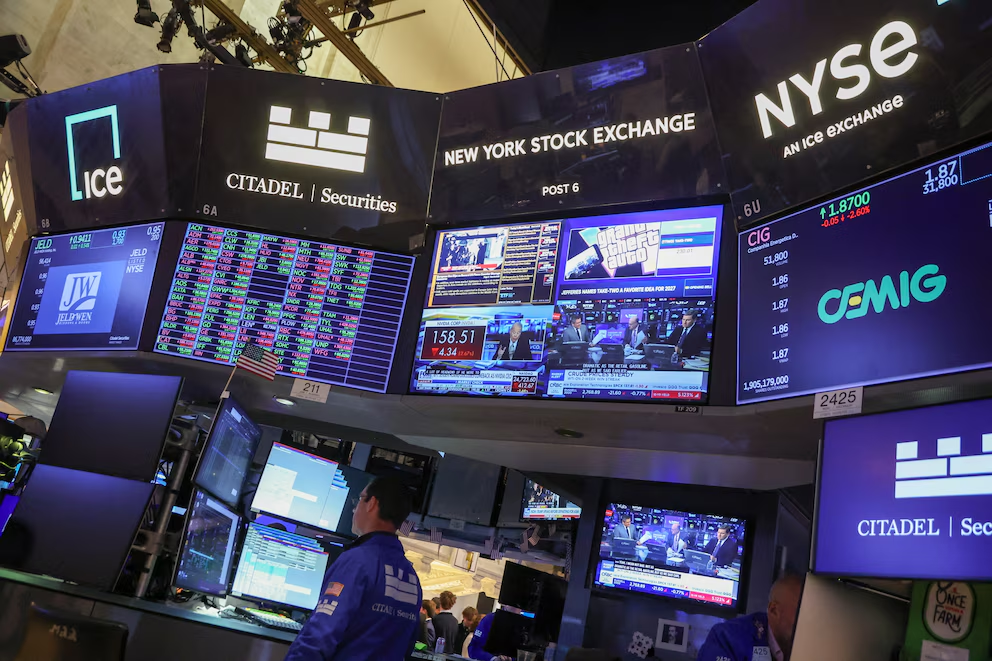
Investors return to technology shares amid persistent uncertainty.
NEW YORK, UNITED STATES
Wall Street staged a strong recovery on Friday, November 27, as investors returned to technology and artificial intelligence stocks following weeks of sharp declines and uncertainty about the financial sustainability of the AI boom. The rebound lifted major US indexes, although Nvidia’s comparatively modest gains highlighted continuing doubts about the sector’s valuations and future profitability.
The Nasdaq Composite climbed 2.31% to close at 24,129.50 points, while the S&P 500 advanced 1.60% and the Dow Jones Industrial Average gained 1.18%. The increases came during a shortened trading session following Thanksgiving, as investors purchased shares that had suffered substantial losses earlier in November.
Semiconductor companies were among the principal beneficiaries. Micron Technology rose 7.6%, while Marvell Technology gained 7.3%. The broader semiconductor index advanced 4.7%, reflecting renewed demand for companies involved in producing the components supporting artificial intelligence infrastructure.
Nvidia, however, followed a more complicated trajectory. Its shares declined during much of the session before recovering to finish 0.8% higher. The performance demonstrated that improving market sentiment did not translate into uniform confidence across the technology industry.
Other companies associated with AI infrastructure recorded stronger gains. Data storage manufacturer Sandisk surged almost 16%, while Dell Technologies and optical technology specialist Lumentum also attracted substantial investor interest. Amazon, Microsoft, Meta Platforms and Oracle finished higher, reinforcing the broader recovery.
The rally extended a volatile trading week. By Friday’s close, the Nasdaq Composite had gained approximately 6.7% over five sessions, while the S&P 500 advanced 5.6%. Nevertheless, both indexes remained on course for substantial monthly losses, illustrating the difference between a short-term recovery and a sustained change in market expectations.
Behind the volatility lies a question increasingly central to the financial outlook for artificial intelligence: whether the extraordinary capital expenditure required for advanced computing will generate returns sufficient to justify current corporate valuations.
Technology companies are investing heavily in specialized processors, electricity-intensive data centers, networking systems and cloud infrastructure. These commitments involve substantial financial resources, while the timing and scale of future revenues remain uncertain.
Higher borrowing costs introduce another complication. Investors are increasingly attentive to inflation and expectations surrounding Federal Reserve monetary policy, particularly because financing conditions can influence the valuation of companies whose profitability depends heavily on future growth.
The market’s recent fluctuations also reveal differences between technological adoption and financial performance. Expanding the availability of AI products does not necessarily guarantee that the companies developing or supplying the technology will achieve the margins anticipated by investors.
For semiconductor manufacturers, the immediate question concerns the durability of infrastructure spending. For software developers and cloud providers, attention is shifting toward customer demand, recurring revenue and measurable productivity improvements.
The implications extend beyond financial markets. Investment decisions by major technology corporations influence electricity demand, semiconductor supply chains, employment, international trade and the distribution of technological capabilities across countries.
Friday’s recovery therefore offers evidence of renewed investor appetite, not confirmation that the underlying economic uncertainties have been resolved.
As markets approach the end of the year, corporate earnings, financing conditions and the commercial performance of artificial intelligence systems will remain critical indicators of whether the sector can sustain its extraordinary expansion.
Beyond the Numbers, the Consequences.