

 Phoenix 24
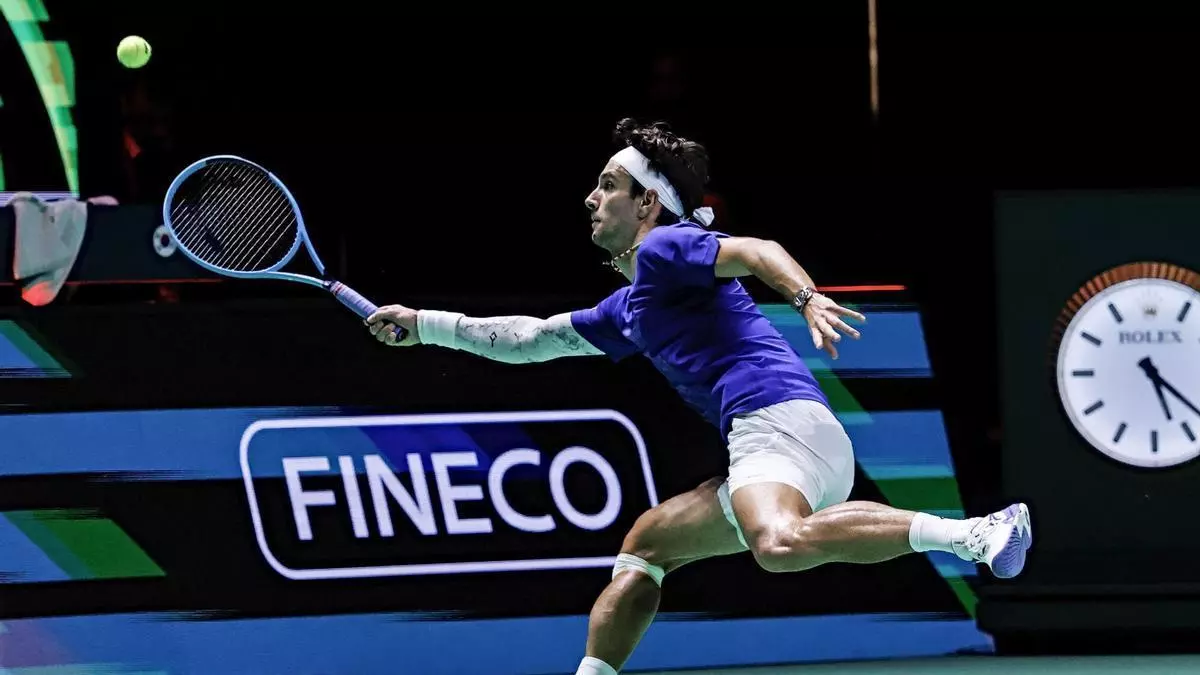
Victory on court contrasts with reported dressing-room divisions.
Bologna, Italy
Italy has advanced to the Davis Cup semifinals after defeating South Korea 2-1 in Bologna, overcoming a difficult quarterfinal while reports of personal tensions between Matteo Berrettini and Lorenzo Musetti attract growing attention. The defending champions secured their place in the last four through a decisive doubles victory by Berrettini and Andrea Vavassori. Their success demonstrated the team’s competitive resilience, although questions remain about the relationship between two prominent members of the Italian squad. With a fourth consecutive title at stake, captain Filippo Volandri faces the challenge of maintaining unity amid intense public scrutiny.
The controversy emerged before Italy’s opening match, following reports in the Italian sports press that Berrettini and Musetti had been keeping their distance during official activities. According to La Gazzetta dello Sport, the players appeared separated during team photographs and press conferences and had not been seen interacting extensively. They also reportedly trained with different partners, with Berrettini practising alongside Flavio Cobolli while Musetti worked with Spain’s Rafael Jódar. These observations have fuelled speculation about a personal disagreement, although neither player has publicly confirmed the existence or cause of a dispute.
The apparent distance contrasts with their previously friendly relationship. Questions intensified in October when Berrettini reacted awkwardly during a television interview after being asked about Musetti’s tournament success in Lyon. Observers also noticed changes in their social media connections, encouraging speculation about a possible falling-out. However, such circumstances do not establish the nature of any private disagreement, and reports concerning the players’ personal lives remain unverified.
Berrettini’s participation in the Davis Cup Finals was itself the result of a late adjustment. The former Wimbledon finalist had initially been omitted from the squad before receiving a call-up following an injury to doubles specialist Simone Bolelli. Volandri publicly explained that the preliminary selection had been influenced by player rankings, rather than confirming any interpersonal dispute. Berrettini subsequently expressed his commitment to representing Italy, reinforcing the importance of national competition in his career.
On Wednesday, the sporting challenge proved considerably more demanding than many observers anticipated. Musetti opened the tie with a 6-0, 7-6(5) victory over Hong Seong-chan, giving Italy the early advantage. South Korea responded when Kwon Soon-woo defeated Flavio Cobolli 3-6, 7-6(3), 7-6(5), forcing the quarterfinal into a deciding doubles encounter. Berrettini and Vavassori then defeated Kwon and Chung Hyeon 7-6(2), 7-6(11), saving four set points in the second-set tiebreak to secure Italy’s qualification.
The result places Italy in a semifinal against the Czech Republic, with the defending champions seeking an achievement not accomplished since the United States won four consecutive Davis Cup titles between 1969 and 1972. Italy’s recent success has depended on experienced leadership, individual excellence and the capacity to perform under pressure. The absence of injured star Jannik Sinner makes collective contributions particularly important during the current tournament.
The situation also illustrates the psychological complexity of team competition within an essentially individual sport. Professional tennis players spend most of the season pursuing personal rankings, earnings and tournament victories, but the Davis Cup requires them to operate within a shared national objective. Differences in personality, competitive ambition or private relationships need not prevent effective collaboration. What matters competitively is whether athletes can maintain professional cooperation when individual circumstances become difficult.
For Volandri, the immediate priority remains preparing his players for the semifinal rather than responding to speculation. Italy’s quarterfinal victory offers evidence that the team can deliver results despite questions surrounding its internal atmosphere, but it does not establish whether reported tensions have been resolved. As the champions move closer to another historic title, their greatest strength may depend on preserving the distinction between personal relationships and collective sporting responsibility.
Beyond the Headlines, Accountability Matters.