

 Phoenix 24
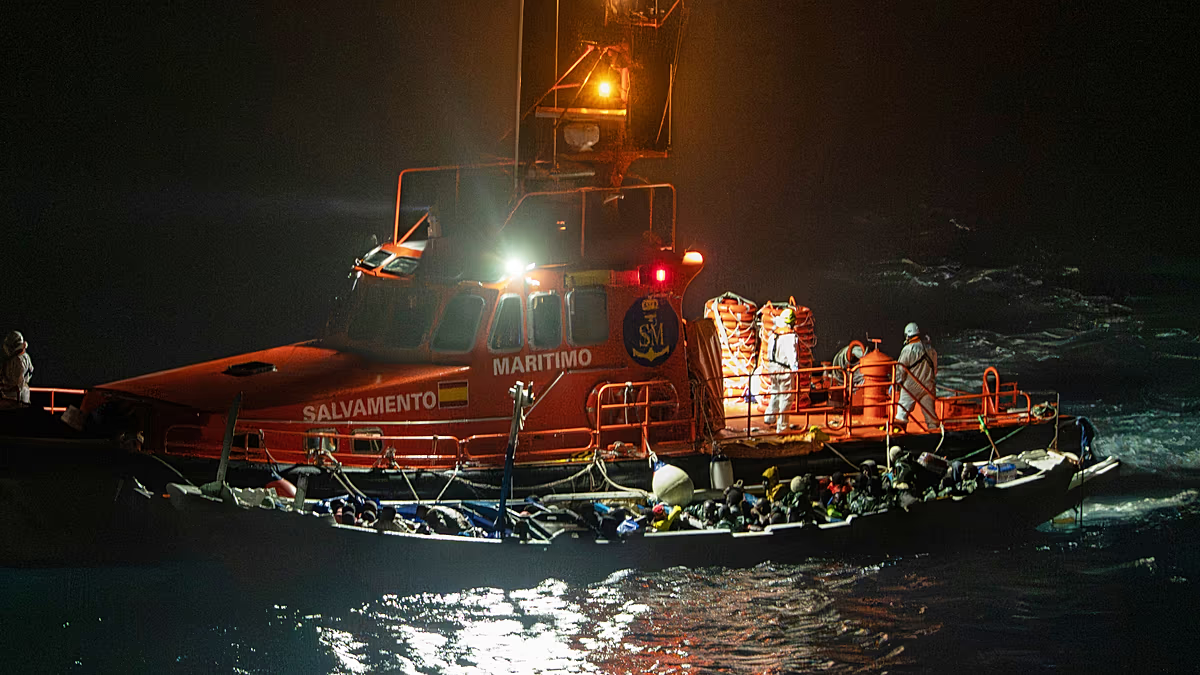
Record arrivals expose the limits of European coordination.
Santa Cruz de Tenerife, Spain
The president of Spain’s Canary Islands, Fernando Clavijo, has asked European Commission President Ursula von der Leyen for an urgent meeting after a wave of migrant boat arrivals placed El Hierro under extraordinary pressure. In a letter sent Wednesday, he sought stronger EU intervention and proposed talks next week, either online or in Brussels. Regional authorities said more than 2,000 people reached El Hierro on Tuesday alone. The episode has turned a remote Atlantic island into an immediate test of Europe’s migration response.
Clavijo’s government estimates that more than 16,000 migrants have arrived across the archipelago during November, calling it the highest monthly figure in 32 years of the Atlantic route. The pressure is especially acute on El Hierro, whose population is roughly 11,400. Rescue operations, temporary shelter, medical care and transfers to other islands are all under strain.
The Canarian government declared a level-two civil protection emergency on Wednesday, citing exceptional health, social and security needs. The measure allows regional authorities to coordinate resources with local administrations. Clavijo has also sought assistance from Spain’s Military Emergency Unit. The emergency designation addresses service capacity, not migrants’ individual legal status.
At national level, Spain’s representative in the islands, Anselmo Pestana, has advocated a renewed Frontex presence off West Africa, with patrol vessels and aircraft operating through agreements with departure countries. He pointed to Senegal, Gambia and other states as departure or transit points. Such an operation would depend on cooperation with partner governments; calls for deployment are not evidence that a new mission has begun. The proposal recalls the EU agency’s involvement in the Atlantic route during the 2006 crisis.
The apparent contradiction is that Europe-wide irregular border-crossing detections have fallen this year, even as the Canary Islands face an abrupt surge. Frontex reported a 29% reduction across EU external borders for the first ten months of 2026, but said detections on the Western African route in October were four times their level a year earlier. These measures describe different geographies and periods, and are not directly interchangeable with November arrivals. Regional emergencies can intensify even when continental indicators improve.
The timing adds a policy dilemma for Brussels. The EU’s Pact on Migration and Asylum began applying in June, introducing common screening procedures and a mandatory but flexible solidarity mechanism for member states under pressure. Earlier this month, the Commission identified Spain among countries experiencing migratory pressure and eligible for solidarity measures, subject to applicable rules. Yet eligibility does not guarantee that personnel, reception capacity or other support can be mobilized at the pace demanded by sudden arrivals.
The human stakes remain substantial. People undertaking the Atlantic crossing face long distances, overcrowded vessels and dangerous conditions; Reuters reported a death aboard one boat and a birth during the journey. The immediate response must therefore address maritime rescue and basic care alongside border management and cooperation with African governments. For the Canary Islands, the question now is whether European commitments can translate into practical help before emergency services face another spike.
Beyond the Headlines, Accountability Matters.