

 Phoenix 24
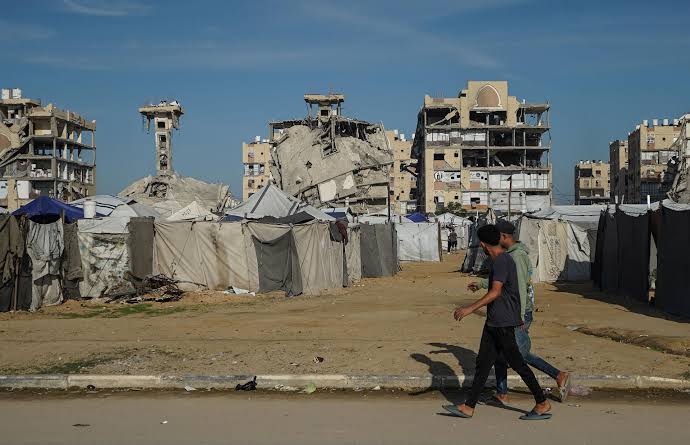
Renewed violence exposes the limits of a fragile truce.
GAZA CITY
Israeli airstrikes killed the head of Hamas’s internal security apparatus and several other Palestinians across the Gaza Strip, intensifying concerns over the stability of a ceasefire in effect since October 2025. The senior official, identified as Naeem Abu Nahal, died in an attack in western Gaza City, according to the Hamas-run Interior Ministry. Israeli authorities subsequently confirmed the operation, describing the target as an important figure within the organization’s security structure.
Prime Minister Benjamin Netanyahu and Defense Minister Israel Katz acknowledged the killing, while the Israeli military and domestic intelligence agency Shin Bet said the operation was directed against a senior Hamas operative. Israeli officials accused Abu Nahal of helping rebuild Hamas’s capabilities and advancing plans for attacks against Israeli forces and civilians. Those allegations formed part of Israel’s justification for the strike and could not be independently established from the official statements alone.
The operation occurred amid several additional attacks across the Palestinian territory. Initial reports from Palestinian officials identified seven fatalities, while subsequent hospital assessments cited by international news agencies placed the death toll at at least nine across four strikes. Among those reported killed were a child and members of Gaza’s police force, illustrating how military operations continue to affect both armed personnel and other residents.
In southern Gaza, an Israeli strike near a police facility in the Khan Younis area killed three people, according to Palestinian accounts. The Hamas-run Interior Ministry identified police officers among the victims and accused Israel of systematically targeting institutions responsible for maintaining internal security. Israeli authorities have argued that Hamas-controlled security bodies form part of the organization’s governing and operational infrastructure.
These competing interpretations expose one of the central difficulties surrounding the ceasefire. Israel maintains that targeted military operations remain necessary to prevent attacks and disrupt Hamas’s capabilities. Hamas and Palestinian officials contend that continued bombardments undermine the truce and threaten efforts to restore stability after years of devastating warfare.
The ceasefire followed the conflict triggered by the Hamas-led attacks against Israel on October 7, 2023, which killed approximately 1,200 people and resulted in the abduction of 251 hostages. Israel’s subsequent military campaign caused widespread destruction across Gaza and tens of thousands of Palestinian deaths, according to the territory’s health authorities. Although the agreement reduced the scale of major military operations, it has not produced a complete cessation of violence.
The humanitarian consequences remain profound. Much of Gaza’s population continues to experience displacement, damaged infrastructure and limited access to essential services. For families living in temporary shelters, renewed airstrikes reinforce uncertainty about whether the ceasefire can provide the security necessary for reconstruction and the restoration of daily life.
The killing of Abu Nahal also carries implications for Gaza’s internal power structure. Hamas’s security apparatus has played a significant role in protecting senior officials, coordinating organizational activities and maintaining authority within areas under its control. Removing its leadership may weaken operational coordination, but it does not necessarily resolve the political and institutional questions surrounding Gaza’s future administration.
The latest escalation demonstrates the distance between a formally established ceasefire and a durable peace. Military operations may produce immediate tactical outcomes, yet their longer-term consequences depend on whether political negotiations, humanitarian protections and credible security arrangements can advance simultaneously.
Beyond the Headlines, Accountability Matters.