

 Phoenix 24
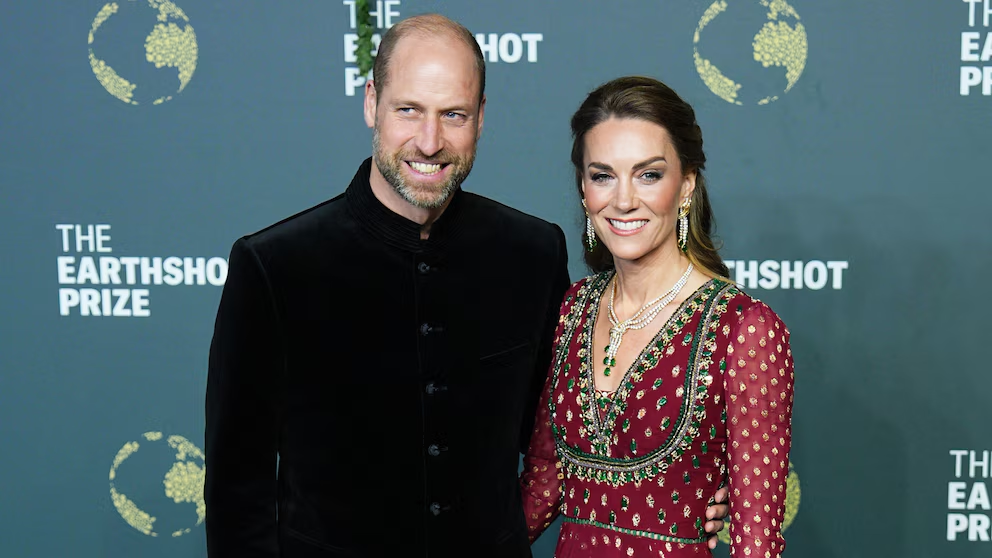
Royal fashion becomes a language of cultural diplomacy.
Mumbai, India
Catherine, Princess of Wales, has attracted international attention with a carefully coordinated wardrobe during her official visit to India alongside Prince William, combining traditional British tailoring with contemporary Indian design. Across engagements in Mumbai and New Delhi, her fashion choices reflected a balance between royal protocol, cultural appreciation and increasingly visible commitments to sustainable fashion.
The three-day visit centered on the sixth edition of the Earthshot Prize, Prince William’s environmental initiative recognizing innovative solutions to global challenges. Beyond the formal ceremonies, the royal couple participated in community activities, met environmental innovators and engaged with organizations promoting education, craftsmanship and social development.
Catherine’s wardrobe evolved throughout the visit, moving between sharply tailored suits, structured designer dresses and traditional Indian-inspired garments. The carefully selected combinations offered different interpretations of contemporary royal fashion while maintaining the polished aesthetic that has become closely associated with the Princess of Wales.
One of her most distinctive appearances featured a cherry-red wool-crepe dress by British designer Emilia Wickstead. The fitted silhouette combined structured tailoring with a softly flared skirt, creating a formal appearance suitable for institutional engagements. She complemented the design with chocolate-colored suede shoes by Manolo Blahnik and a coordinated handbag from DeMellier.
The ensemble accompanied a visit to Mumbai’s Chanakya School of Craft, an institution that supports women from underserved communities through training in traditional Indian craftsmanship. During the engagement, Catherine received handmade accessories that complemented her appearance and connected the occasion with the artisans whose work the visit sought to recognize.

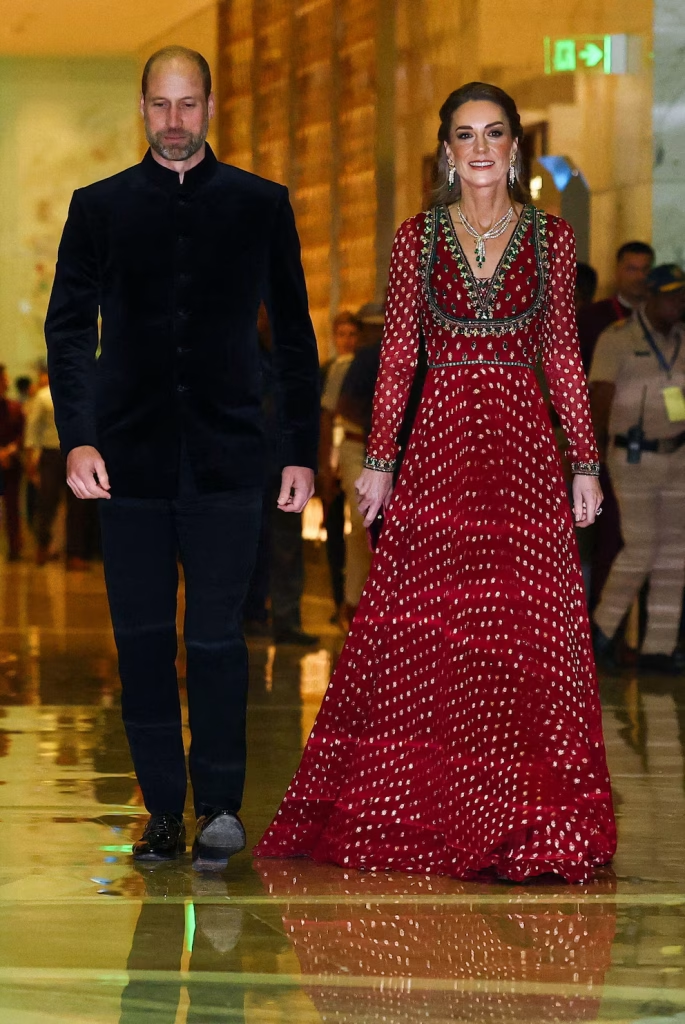
A different interpretation of cultural diplomacy emerged during the Earthshot Prize ceremony, where Catherine wore an elaborately embroidered anarkali by Indian designer Mahima Mahajan. The burgundy and gold creation incorporated intricate textile detailing and traditional design references, demonstrating how local craftsmanship can occupy a prominent place in international ceremonial fashion.
Her jewelry further reinforced that connection. Alongside diamond and emerald pieces from Queen Elizabeth II’s collection, the princess incorporated accessories created by Indian designers, including earrings from Jaipur-based Amrapali Jewels. Some pieces had previously appeared during the royal couple’s 2016 visit, establishing a visual connection between the two journeys.
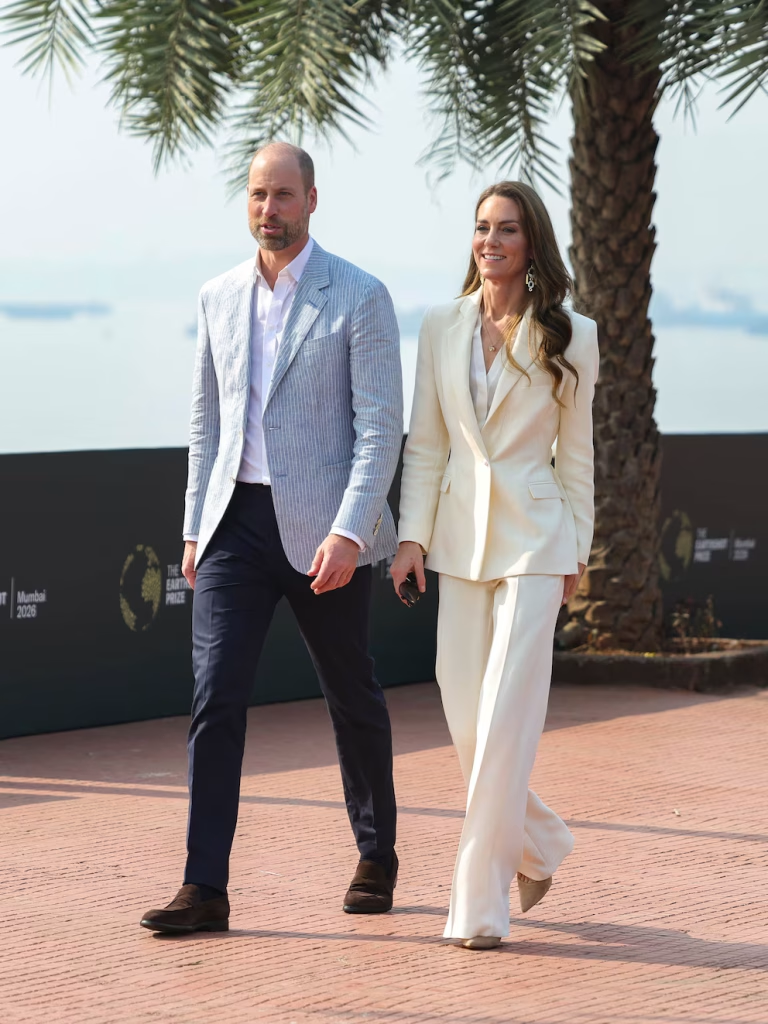
Tailoring provided another important element of the wardrobe. An ivory suit offered a restrained, contemporary alternative to the more elaborate ceremonial garments, while a blue ensemble demonstrated her continued preference for structured silhouettes and coordinated accessories. These selections reflected the practical demands of a schedule involving public appearances, institutional meetings and environmental initiatives.
Sustainability also influenced the presentation. Catherine carried a specially created DeMellier handbag incorporating SurpRice, a leather-inspired material developed from recycled rice straw and husks. The accessory connected fashion with the environmental priorities underlying the Earthshot initiative, illustrating how material innovation can become part of contemporary luxury design.
The visit came a decade after Catherine and William’s first official tour of India, when her wardrobe included creations by Alexander McQueen, Anita Dongre, Jenny Packham and Naeem Khan. That earlier journey helped establish her reputation for integrating British fashion traditions with designs associated with host countries.
Her latest appearances suggest that royal fashion increasingly serves multiple purposes beyond visual presentation. Clothing can communicate cultural recognition, draw attention to local creative industries and reinforce institutional messages without replacing the substantive objectives of a diplomatic visit.
In India, Catherine’s wardrobe became a visible expression of those connections, bringing together British design, Indian craftsmanship and environmental awareness within a contemporary understanding of royal representation.
Where Culture Meets Perspective.