

 Phoenix 24
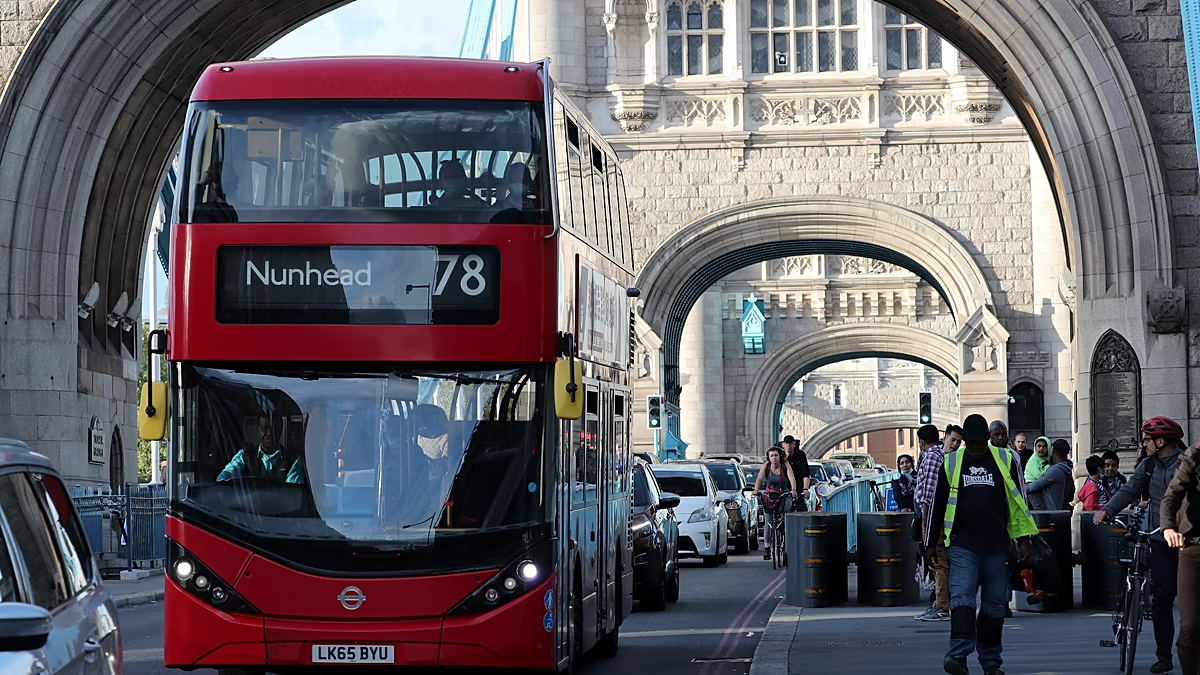
Rising fuel costs complicate Britain’s struggle to restore price stability.
LONDON, United Kingdom — November 2026. Annual inflation in the United Kingdom rose to 3.6% in October, reaching its highest level in a year as increasing petrol and diesel prices placed renewed pressure on household budgets and transport costs. Figures released by the Office for National Statistics (ONS) on November 18 showed inflation accelerating from 3.5% in September, raising questions about the Bank of England’s next monetary policy decisions.
Motor fuels were the principal driver of the increase, with their combined prices rising 33.2% over the preceding 12 months, compared with 29.8% in September. Average petrol prices climbed by 5.2 pence per litre to 174.7 pence, their highest level since August 2022, while diesel increased by 7 pence to 199.5 pence per litre, setting a record in the ONS statistical series.
The increase contributed to annual transport inflation of 7.5%, compared with 6.6% the previous month. Grant Fitzner, chief economist at the ONS, identified fuel prices as a leading contributor to the renewed acceleration in consumer inflation, illustrating how international energy developments continue to influence the cost of living across Britain.
Other categories offered a more encouraging picture. Food and non-alcoholic beverage inflation slowed from 1.3% to 0.9%, its lowest level since September 2021. Core inflation, which excludes energy, food, alcohol and tobacco, remained unchanged at 2.8%, while services inflation held steady at 3.7%. The overall Consumer Prices Index increased by 0.5% between September and October.
These differences are important for assessing the economic outlook. Although headline inflation accelerated, the stability of underlying price measures suggests that the latest increase was concentrated in particular categories rather than uniformly distributed throughout the economy. Nevertheless, higher fuel costs can affect household spending directly and may eventually influence transportation, distribution and business operating expenses.
The figures place the Bank of England in a difficult position. Earlier in November, the central bank raised its benchmark interest rate by 0.25 percentage points to 4%, its first increase in more than three years. Higher borrowing costs can help contain inflationary pressure but also affect mortgage holders, businesses and consumers reliant on credit.
Sanjay Raja, Deutsche Bank’s chief UK economist, indicated that the latest figures were somewhat softer than expected, potentially providing policymakers with additional flexibility. However, uncertainty remains considerable. The Bank of England’s November projections suggest inflation could approach 5% by mid-2027, while an adverse scenario involving sustained energy price increases could push it toward 6.2%.
Further pressure may emerge from household energy bills, with analysts anticipating a possible increase of more than 20% in the regulated price cap in January. Temporary tax reductions affecting fuel and domestic electricity are also scheduled to expire in July 2027, creating additional uncertainty about future consumer prices.
Britain’s October inflation figures therefore present a mixed economic picture: easing food inflation and relatively stable underlying pressures coexist with exceptionally high fuel prices. The central challenge for policymakers is containing energy-driven inflation without unnecessarily weakening economic activity or household purchasing power.
Beyond the Numbers, the Consequences.