

 Phoenix 24
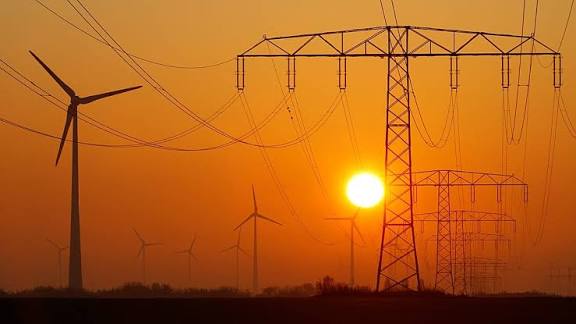
Lower energy costs offer relief amid renewed market uncertainty.
BRUSSELS, Belgium. Household electricity and natural gas prices declined across the European Union during the first half of 2026, providing some relief to consumers despite renewed volatility in international energy markets. Figures published by Eurostat reveal significant differences between member states, while recent increases in wholesale energy prices have raised concerns about a possible return to higher household bills in 2027.
Average residential electricity prices reached €28.3 per 100 kilowatt-hours, representing a 2.2% decrease compared with the second half of 2025 and a 1.6% reduction from the corresponding period a year earlier. Natural gas prices averaged approximately €11 per 100 kilowatt-hours, falling 10.2% compared with the previous six-month period and 3.5% year over year.
The reductions represent an improvement following years of instability in European energy markets. However, electricity prices remain substantially above levels recorded before the 2022 energy crisis, suggesting that lower costs have not fully restored the purchasing power households previously enjoyed.
National differences were considerable. Ireland recorded the EU’s highest residential electricity price at €38.7 per 100 kilowatt-hours, followed by Germany at €36.2 and Belgium at €35.8. Hungary reported the lowest price among EU members at €11.4, meaning Irish households paid more than three times as much per unit of electricity.
Other major European economies recorded different outcomes. Electricity cost €31.4 per 100 kilowatt-hours in Italy, compared with €25.1 in Spain and €24.9 in France. These disparities reflect variations in energy generation, taxation, infrastructure expenses and the regulatory structures governing household tariffs.
Natural gas markets displayed similarly pronounced differences. Sweden recorded the highest residential gas price at €22 per 100 kilowatt-hours, followed by the Netherlands at €16.2 and France at €13.5. Hungary again registered the lowest price within the EU, at approximately €3.3.
The financial burden changes when national purchasing power is considered. Using purchasing power standards, Romania recorded the highest household electricity prices among EU countries, followed by Poland and Czechia. The results illustrate why comparing nominal tariffs alone can provide an incomplete picture of energy affordability.
Eurostat’s figures also reveal considerable differences in how national prices evolved. Romania experienced a 51.9% annual increase in household electricity prices, while Denmark recorded one of the largest reductions. Among the EU’s four largest economies, electricity prices declined in France, Germany, Italy and Spain compared with the first half of 2025.
Government policy helps explain some of these variations. Taxes, levies and electricity network charges account for a substantial share of household bills, giving national authorities considerable influence over final consumer prices. Denmark, for example, temporarily reduced electricity taxation in 2026, contributing to lower household costs.
Yet the latest data also highlight a timing problem. Retail energy prices do not necessarily respond immediately to fluctuations in wholesale markets. Suppliers frequently purchase electricity and natural gas in advance, while fixed-price contracts can delay the transmission of changing market conditions to consumers.
Xiaoyi Mu, director of the Centre for Energy, Petroleum and Mineral Law and Policy at the University of Dundee, has explained that the delay between wholesale natural gas benchmarks and household tariffs can extend from several months to more than a year, depending on national market arrangements.
This distinction is especially relevant following the escalation of conflict involving Iran. Rising international energy prices have increased uncertainty over future European supply costs, but their full effects were not reflected in the first-half household data.
More recent observations suggest that the downward trend may already be weakening. The Household Energy Price Index recorded increases in residential electricity prices across 21 of the 33 European capitals monitored during October. Natural gas prices also increased in 14 of the 27 capitals with available information.
The contrasting findings do not necessarily indicate a statistical contradiction. Eurostat’s semiannual figures describe prices paid during an earlier period, while monthly city-level indicators capture more recent developments. Both measures are useful, but they examine different time frames and geographical samples.
Higher wholesale costs could eventually affect households as existing contracts expire and energy suppliers adjust tariffs. Mu has suggested that consumers may face greater pressure during the second half of 2026, with the possibility of more substantial increases in early 2027.
For European policymakers, the figures reinforce the importance of addressing affordability alongside energy security. Diversifying supply sources, expanding renewable generation, improving building efficiency and strengthening electricity infrastructure could reduce exposure to international fuel price fluctuations over time.
However, these measures require investment and do not eliminate short-term pricing risks. Household energy costs remain influenced by market design, national taxation, network expenditure and the composition of electricity generation.
The latest Eurostat findings therefore present a mixed economic picture. European consumers benefited from lower average electricity and gas prices during the first six months of 2026, but the improvement was uneven and may prove vulnerable to renewed geopolitical disruption.
For the European Union, the central challenge is transforming temporary energy price relief into durable affordability while maintaining secure supplies and advancing its long-term energy transition.
Beyond the Numbers, the Consequences.