

 Phoenix 24
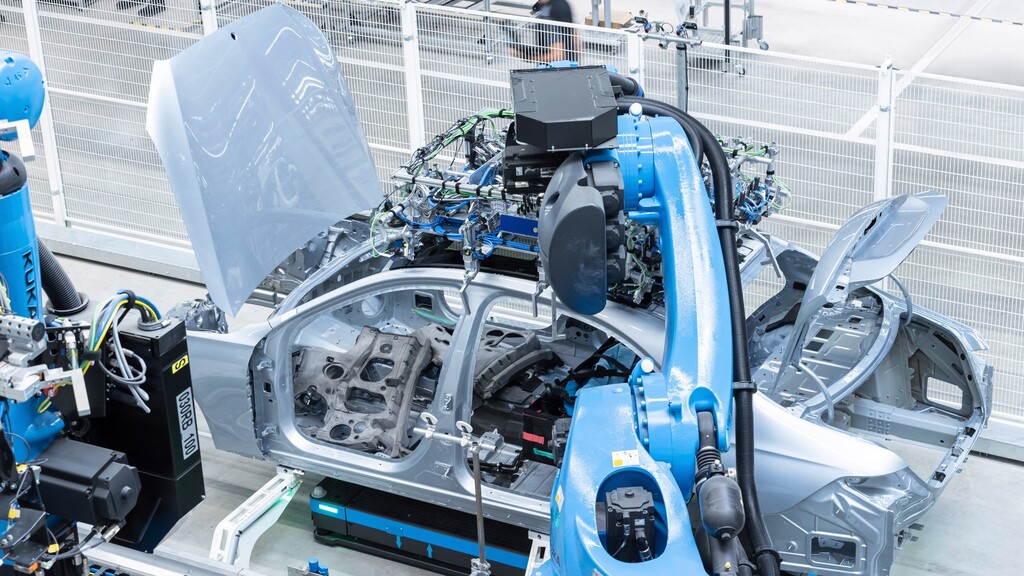
Europe’s automotive crisis is challenging the future of German manufacturing.
STUTTGART, Germany. Mercedes-Benz has suspended further investment at its German production sites and is examining possible factory closures after negotiations with employee representatives failed to produce an agreement on reducing labor costs. The decision, disclosed on November 12, marks an escalation in the automaker’s restructuring efforts as Germany’s automotive industry confronts mounting international competition and increasingly difficult manufacturing conditions.
Production chief Michael Schiebe confirmed that the company’s management board had collectively decided to halt additional investment at its domestic facilities. The move follows months of negotiations with works councils and the IG Metall trade union over measures intended to improve productivity and reduce operating expenses.
Mercedes-Benz has not announced any factory closures. However, management is evaluating whether its existing manufacturing network can remain economically viable without substantial changes to labor costs. Two facilities, one vehicle assembly plant and one powertrain production site, could face closure if negotiations fail.
The company has not identified which locations are under consideration. Its German assembly operations include Sindelfingen, Bremen and Rastatt, while additional facilities manufacture engines, components and other automotive technologies.
The dispute centers on a substantial difference in manufacturing costs between Germany and other European production locations. According to Schiebe, an hour of production labor at certain German facilities can cost as much as five times the equivalent expense in Eastern Europe. Similar disparities reportedly exist in administrative functions, increasing pressure on the company to reassess its domestic cost structure.
Management has proposed measures that could generate approximately €800 million in labor savings, according to earlier reporting by German business publication WirtschaftsWoche. Options under discussion include extending weekly working hours without proportional salary increases, modifying special payments and reviewing benefits such as holiday and Christmas bonuses.
Mercedes-Benz has not publicly confirmed the complete negotiating package, and the proposals should not be interpreted as measures already implemented. Employee representatives have opposed concessions they believe would place a disproportionate burden on workers.
The company’s labor director, Britta Seeger, has acknowledged that an agreement is unlikely in the immediate future. Management maintains that preserving German production remains its preferred outcome, but argues that investment decisions cannot be separated from the financial sustainability of individual plants.
The investment freeze introduces additional uncertainty because automotive manufacturing requires long planning horizons. Decisions about new vehicle platforms, production equipment and factory modernization must often be made years before a model enters commercial production. Delaying those commitments can influence which facilities receive future manufacturing assignments.
The confrontation comes as Mercedes-Benz faces pressure across several major markets. Demand for premium vehicles has weakened, particularly in China, where domestic manufacturers are competing aggressively in electric mobility and increasingly sophisticated vehicle technologies.
Chief Executive Ola Källenius has acknowledged that the company must restructure its Chinese operations to remain competitive. Mercedes-Benz is pursuing greater localization of research, development and manufacturing to respond more effectively to the country’s rapidly changing automotive market.
Meanwhile, European manufacturers face the financial demands of electrification, software development and increasingly complex supply chains. These investments must be financed while companies contend with uncertain vehicle demand, trade restrictions and price competition from manufacturers operating with different cost structures.
Mercedes-Benz had already introduced its Next Level Performance efficiency programme, targeting substantial reductions in production, personnel and material expenses. The company’s stated objective includes lowering production costs per vehicle by approximately 10% from 2027 compared with 2024 levels.
The latest decision indicates that management considers existing measures insufficient to resolve the competitive disadvantages affecting its German operations.
The implications extend beyond Mercedes-Benz. Germany’s automotive industry supports a broad network of component manufacturers, engineering firms, logistics providers and specialized industrial suppliers. Investment decisions by major automakers can therefore influence employment and business activity across entire regional manufacturing ecosystems.
Volkswagen is undertaking its own extensive restructuring, while suppliers face declining orders and pressure to adapt to changing vehicle technologies. Together, these developments suggest that the industry is confronting structural challenges rather than a temporary downturn affecting individual companies.
For workers, the possibility of factory closures raises concerns about employment security and the preservation of specialized manufacturing expertise. For management, the immediate question is whether meaningful cost reductions can be achieved without weakening the industrial capabilities necessary to compete internationally.
The negotiations also reflect a broader economic debate about Germany’s industrial competitiveness. High labor costs, energy expenses and regulatory requirements coexist with advantages in engineering, technological expertise and established supply networks. Determining how to preserve those strengths while adapting production costs has become increasingly important for manufacturers operating in global markets.
Mercedes-Benz’s decision does not establish that production will leave Germany or that any particular plant will close. It does, however, create pressure to reach an agreement before future investment allocations and manufacturing commitments become more difficult to reverse.
The outcome will depend on negotiations between company executives and employee representatives, as well as broader market conditions. Beyond the immediate dispute, the confrontation raises a fundamental question for European industry: how to maintain advanced manufacturing capabilities in high-cost economies while competing against increasingly efficient global production networks.
Beyond the Numbers, the Consequences.